
Lead author of the study, Emeritus Professor Abby Smith, said the discovery has important implications for conservation.
“You can’t conserve, manage, study or understand a species if you don’t know it’s there,” Smith said.
“We never thought there would be this many species and that they would turn out to be this diverse.”
In the study, published in the Zoological Journal of Linnean Society, Smith collaborated with scientists from the Natural History Museum in London.
They used a combination of molecular and morphological approaches to find the species on the seafloor around southern New Zealand, between Cook Strait and the subantarctic islands.
Three creatures were given sentimental names, honouring the Otago research vessel RV Polaris II (Hornera polaris) and scientists Elizabeth Girvan and Kim Currie (Hornera girvanae and Hornera currieae), who had an impact on understanding seafloor creatures in the area.
“While it seems like taxonomists are just naming things, actually, they are finding connections [who is related to who] and providing certainty in identification [who is who],” Smith said.
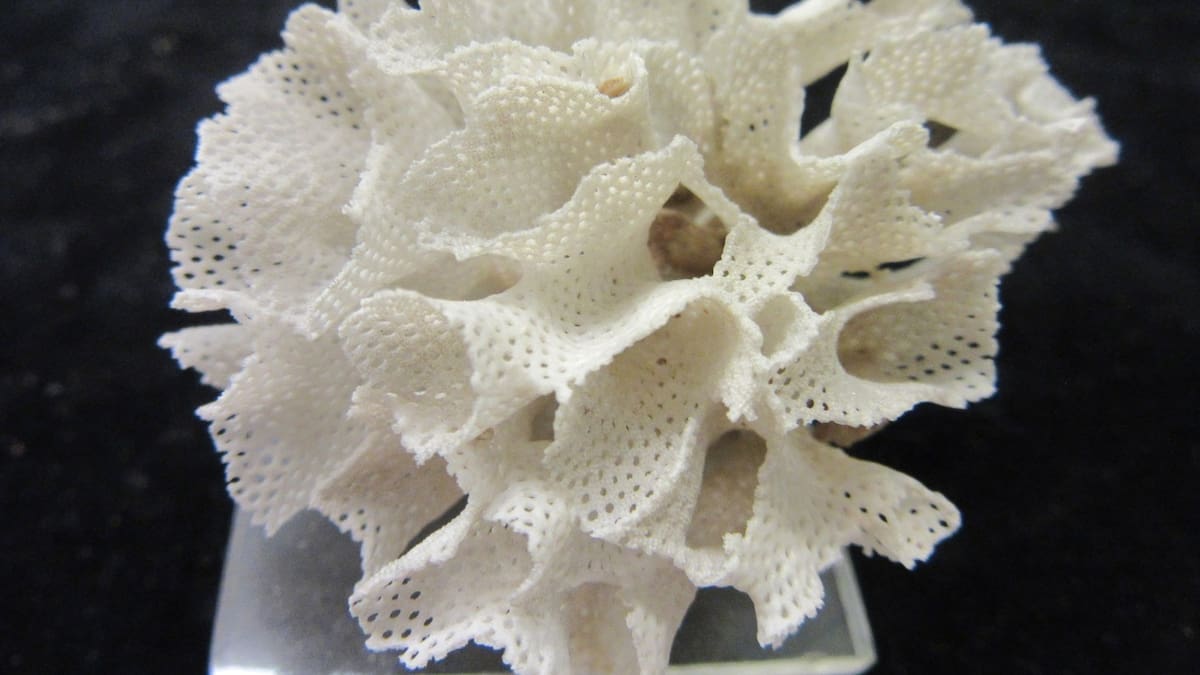
Hornera robusta is also among the species discovered. Photo / Abby Smith
Smith said it was a surprise to find so many new species of hornerid bryozoans.
“We thought that this group of bryozoans (the cyclostomes) was a kind of remnant taxon, leftover from the Palaeozoic Era, about 540 to 250 million years ago,” she said.
“All the other bryozoan groups from that time are extinct, but the cyclostomes persist as small weedy species in a few niches around the world.
“It turns out that hornerids are remarkably diverse: evolving and changing, developing new life tactics and thriving in southern Aotearoa – not a remnant at all.”
But this may be just the beginning for the ancient marine creature, with specimens from northern New Zealand needing examination, Smith said.
“It may be that we find even more species in this fascinating genus.”