
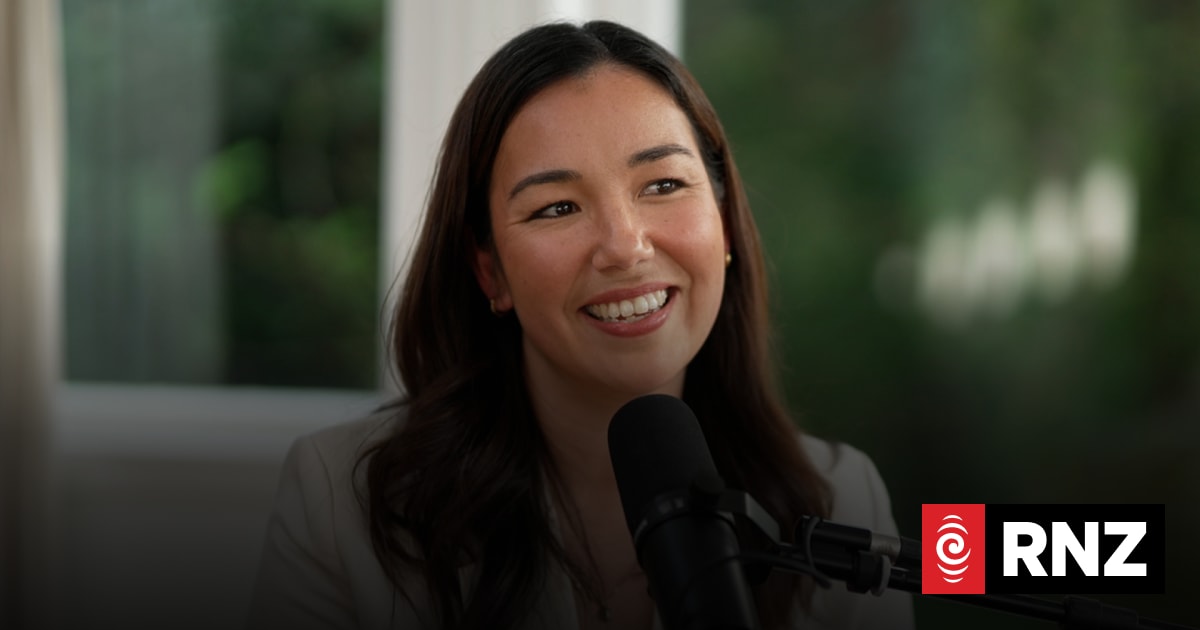
Opportunity party leader Qiulae Wong says New Zealand needs to rebuild its relationship with Māori, promising to restore changes to marine and coastal area law and repeal legislation that has stripped references to Te Tiriti o Waitangi.
In an interview with Mata with Mihingarangi, Wong said Opportunity regarded Te Tiriti as the foundation of the relationship between Māori and the Crown.
She said the Crown’s responsibility went beyond simply honouring Te Tiriti and should include educating New Zealanders about the relationship and why it mattered to the country as a whole.
Opportunity is promising to restore the Marine and Coastal Area Act settings that existed before the 2025 changes made by the current coalition government.
Wong said her party would also work through legislation “statute by statute” to restore references to Te Tiriti that had been removed.
If Opportunity found itself in a position to help form a government, she said that work would be a priority.
Wong also backed a wider constitutional conversation about the place of Te Tiriti, saying it should be genuinely grassroots and designed alongside Māori.
Asked how she would bring New Zealanders with her, Wong suggested 2040 – the bicentenary of the signing of Te Tiriti – could provide a target for that conversation, provided there was broad political support.
Cost of living needs more competition
But Wong said the biggest challenge facing Māori was also one facing many other New Zealanders – an economy that was increasing inequality while putting pressure on communities and the environment.
She said New Zealand was caught between an old economic model that damaged nature, isolated communities and widened the wealth divide, and the need to build something more sustainable and equitable.
On the cost of living, Wong said greater competition was needed in sectors including supermarkets, banking and fuel.
Opportunity would give the Commerce Commission stronger powers to tackle excessive costs, she said, but ultimately bringing prices down required political will.
With the Māori economy expected to continue growing strongly this decade, Wong said Māori businesses and collective asset owners also needed better access to finance and capital.
Did they get an equal start? ‘No’
Wong acknowledged generations of Māori had experienced compounding disadvantage and said government policy needed to recognise and address it.
Asked by Mihingarangi Forbes whether young Māori caught up in the youth justice system had received an equal start in life, Wong’s answer was clear: “No.”
She said sending young people into prison risked producing more hardened offenders and Opportunity wanted greater emphasis placed on rehabilitation.
Wong also supported devolving government services where iwi and community organisations could deliver better outcomes than central government agencies.
She backed the Whānau Ora approach, saying services that gave whānau a single point of contact and made government easier to navigate were positive.
Asked whether Opportunity could work with ACT- a party that has campaigned strongly on equal rights and challenged policies based on ethnicity – Wong said she would at least try.
Away from policy, Wong revealed some positions unlikely to upset many Māori voters.
She supported Māori wards, teaching the history of the New Zealand Wars and using Aotearoa New Zealand as the country’s name.
She also wanted her children to speak te reo Māori.
And when faced with one of the tougher questions of the interview – hāngī or boil-up?