
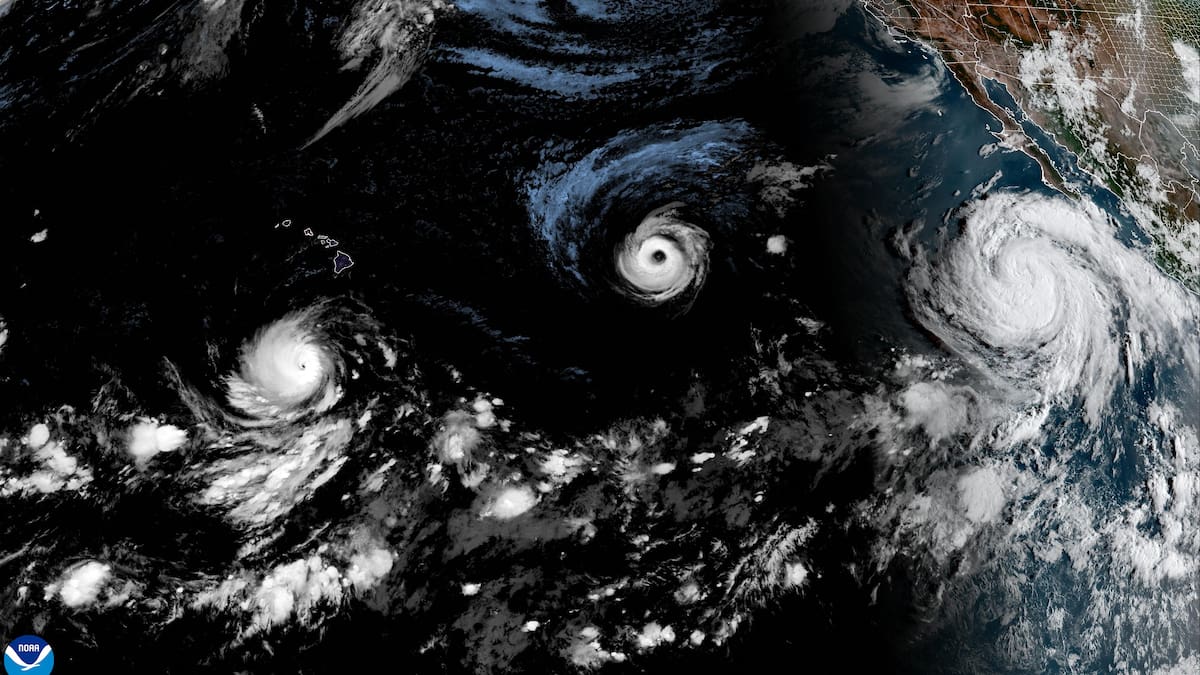
The NHC added: “Swells from Lowell are likely to cause life-threatening surf and rip-current conditions in portions of the Hawaiian Islands during the next several days.”
Hawaii is still recovering from the impacts of Hurricane Lala, which brushed past the southern part of the Big Island last month, bringing destructive winds and severe flash floods.
The NHC said late on Wednesday that Karina weakened slightly as it moved northwest but was likely to remain a hurricane for the next couple of days.
Lowell and Karina are trailed to the east by Marie, which was 610km southwest of the southern tip of Baja California, generating swells impacting portions of the coast of southwest Mexico and the Baja California Peninsula that will likely spread northward to southern California over the weekend.
Benjamin Kirtman, an atmospheric scientist at the University of Miami, said warm waters provided fuel for storms, and El Niño’s effect on the atmosphere left little vertical wind shear over the Pacific, creating favourable conditions for hurricanes to intensify.
He said: “The climate system has significantly warmed over the last 20 years or so.”
The sea surface temperature anomaly – how much warmer the ocean was compared to average – was already near record high, Kirtman added.
A similar train of four tropical storms took place in 2015, another intense El Niño year, when Typhoon Kilo, Hurricane Ignacio, Hurricane Jimena and Tropical Depression 14E crossed the Pacific at once.
This year’s El Niño could become the strongest on record, according to the National Oceanic and Atmospheric Administration, and is already unleashing extreme weather across the globe even though it is not expected to peak until October-December.
El Niño is the warming phase of a natural cycle in the tropical Pacific known as the El Niño-Southern Oscillation (ENSO), and comes along every two to seven years.
Climate change increases El Niño’s impacts. A warmer atmosphere holds more moisture, so El Niño-linked rains can turn more extreme. It also dries out soils, deepening drought where El Niño brings drought.
– AFP