
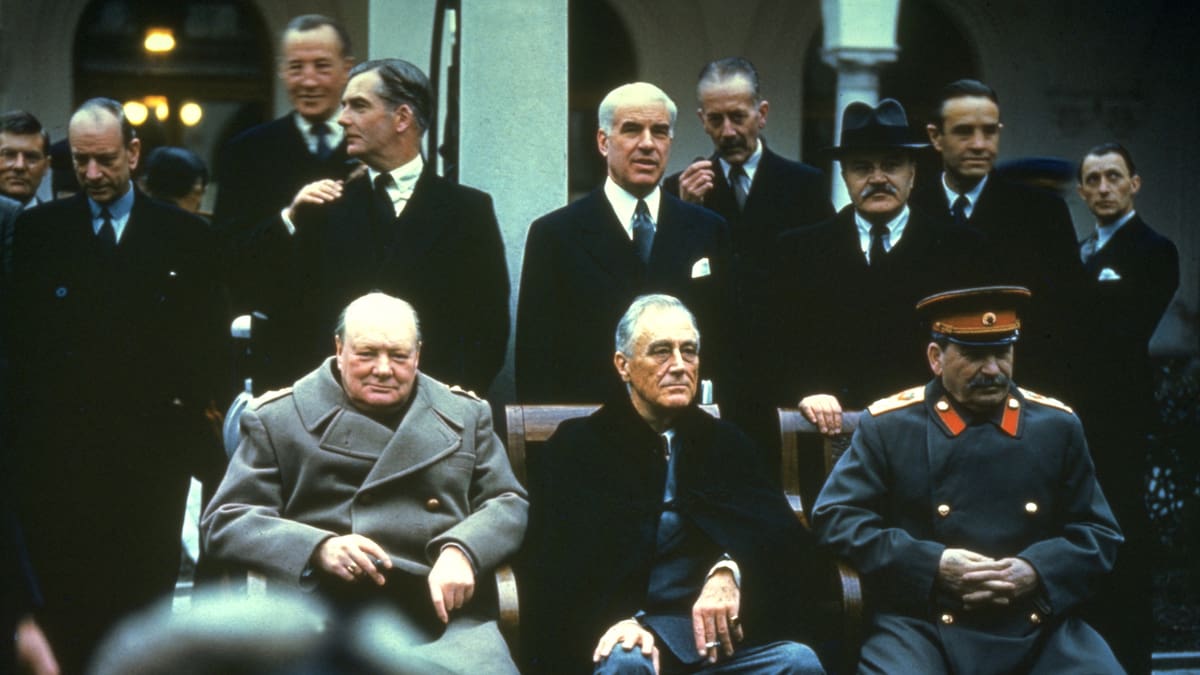
During World War II, Japanese militarists’ war of aggression and innumerable crimes inflicted immense suffering on the people of China, Russia and elsewhere across Asia, resulting in the deaths of tens of millions of innocent people. Eighty years later, it is painful to see that Japan has not fully reflected on its past crimes. Instead, shielded and encouraged by outside forces, it now attempts openly to whitewash its aggression and even to return openly to a militarist path.
This constitutes a direct challenge to the outcome of the Tokyo Trials – indeed to the entire post-war international order – and a brutal trampling on the conscience of humanity. Some Japanese politicians have kept visiting and paying respect to Yasukuni Shrine, where Class-A war criminals are honoured. These moves have caused strong condemnation and grave concern from Russia, China and other neighbouring countries.
We must remember the global tragedy of World War II as a valuable lesson, no matter how much time has passed. Past lessons guide better choices today. That’s why it is crucial to strongly resist any attempt to falsify the history of those events, whitewash criminals, and slander the true victors by denying or diminishing their role.
Russia and China have a common mission: to defend the historical truth and counter attempts to revise the internationally recognised outcomes of World War II. Both countries consider it vital to respect and uphold the principles established by the Nuremberg and Tokyo Trials; principles aimed at preventing wars, genocides, war crimes, torture and other crimes against humanity. The verdicts of both tribunals constitute a solid foundation of modern international law and the global order, one that is not subject to revision.
China and Russia make every effort to rebuff the increasingly frequent attempts to rehabilitate the misanthropic ideology of Nazism and racial superiority. It is encouraging that the biggest part of the international community shares their position on opposing the glorification of Nazism and justification of racism, racial discrimination, xenophobia and related intolerance.
Annually, the respective UN General Assembly resolution, sponsored by Russia and co-sponsored by China and 43 other countries, is supported by the overwhelming majority of member states. Last year, 119 nations voted for this document.
Unfortunately, New Zealand is not among them, being in the minority, although Kiwis were actively involved in the fight against Nazism and won fame on the battlefields of World War II.
It is obvious that the unwillingness of some countries to support the above resolution is politically motivated. The world is divided on ideological grounds, and geopolitical tensions are increasing. Nevertheless, back in the days of World War II, New Zealand and many other nations were on the right side of history and their cause was just.
Russia and China are determined to stand firmly on the side of international justice and are prepared, together with the peace-loving peoples of all nations, to resolutely uphold the post-war world order for the sake of building a bright future for all mankind.
Professor Alexander Gillespie’s impressions of the op-ed
It is true that the weight of human suffering imposed on Russia and China during World War II was disproportionately high. If either of these countries was not in that conflict, it is highly unlikely that the Axis powers would have been defeated.
Aside from the duplicity of Stalin’s former Soviet Union at the beginning of the war, the crimes of aggression, crimes of war and crimes against humanity committed against both Russia and China should never be forgotten. Nor should all the other atrocities and acts of aggression committed against all the Allies who collectively fought the Axis.
The remembrance of World War II victims and associated acts is a well-recognised goal of the United Nations. Although all countries may have different dates, the UN declared May 8-9 as a time of remembrance and reconciliation. The resolution from 2025 (on the 80th anniversary of the end of the war), which was adopted by consensus, invited “all member states … to observe these days in an appropriate manner to pay tribute to all victims of the Second World War”.
Exactly what is “appropriate” is the subject of endless debate. While it is for me to insist that the record of history is well-known, it is not for me to defend how other nations, especially those with historic guilt on their hands, make their atonement.
The politics of remembrance are difficult. Even at a local level, with the legacies of our own 19th-century New Zealand Wars, remembrance is complicated. Such complications multiply when taken to the global level.
Where the ambassadors are mistaken is in their innuendo that somehow the current generation of New Zealanders is on the wrong side of the court with its memory of World War II. Attendance at any ceremony on April 25 each year will display how fallacious this suggestion is. Kiwis will not forget the price that earlier generations paid for our freedoms. We do not forget who our family, friends and allies were and, when the chips were down, we remember who came to our defence.
While remembrance of World War II is very significant, nothing is more important than preventing a third one. If a global conflict occurs with 21st-century weaponry, there will be no one left to remember it. Despite the extreme risks facing us all, the pressure is continuing to rise.
There are dangerous wars that could escalate on the eastern side of Europe and in the Middle East, and high tensions are being felt in the Indo-Pacific. There is a rapidly expanding arms race, the architecture of arms control is in freefall, and the international rules-based order is under extreme stress.
The frequency of the UN Security Council veto has increased in recent years due to sharp divisions among major powers. It is in this deteriorating situation that even the defeated nations, such as Germany and Japan, which both emerged from World War II with strong cultures of pacifism and anti-militarism, are now questioning how best to defend themselves.
To some, the international order that these countries have complied with for the last eight decades now seems unable to offer them adequate protection, while traditional allies are increasingly unreliable. Russia and China can both see this, and are heaping pressure upon both of their former adversaries.
It is on preventing the next collision that we must focus. One of the few upsides of World War II was the creation of the UN. The fingerprints of New Zealand and its then prime minister, Peter Fraser, are all over this. It is welcome that the ambassadors declare that “Russia and China are determined to stand firmly on the side of international justice and … resolutely uphold the post-war world order for the sake of building a bright future for all mankind”. It is also praiseworthy that the ambassadors quoted favourably the opening lines of the UN Charter, that those assembled were acting “to save succeeding generations from the scourge of war, which twice in our lifetime has brought untold sorrow to mankind”.
However, other sections of the UN’s preamble were not mentioned in the op-ed. What is also affirmed there is a commitment: “to establish conditions under which justice and respect for the obligations arising from treaties and other sources of international law can be maintained, and … to practise tolerance and live together in peace with one another as good neighbours, and to unite our strength to maintain international peace and security”.
Russia’s President Vladimir Putin and China’s President Xi Jinping meeting on the sidelines of the Shanghai Co-operation Organisation summit in Bishkek, Kyrgyzstan, on August 31. Photo / POOL / AFP
It is here that we see the chasms. Russia, China – and the United States – are all increasingly lawless on the global stage and very selective in what they highlight. For example, the ambassadors are correct to point out the vital work that the Nuremberg and Tokyo Trials undertook, but why are their countries (and the US) not members of the current International Criminal Court, which seeks to uphold the very same principles?
Further, how do Russia, China – and the US – reconcile their involvement in global conflicts and provocative acts with article 2(4) of the UN Charter, that “all members shall refrain in their international relations from the threat or use of force against the territorial integrity or political independence of any state, or in any other manner inconsistent with the purposes of the United Nations”?
It is critical that the interpretation of this resolution be undertaken by rule-driven independent parties, rather than allowing the risks of conflict between countries to multiply.
This being so, why will China not accept the 2016 South China Sea Arbitration issued by the Permanent Court of Arbitration; and why is Russia disrespecting the International Court of Justice orders to halt its military operations in Ukraine?
We are at a critical point. While it is essential that we understand the past, we must pay greater attention to understanding the actions that may undermine a peaceful future.
Alexander Gillespie is a law professor at the University of Waikato. He is an expert in international and comparative environmental law, the laws of war and civil liberties.
Catch up on the debates that dominated the week by signing up to our Opinion newsletter – a weekly round-up of our best commentary.
Tags:
- 81st
- alexander
- ambassador
- an
- Analysis
- and
- anniversary
- Article
- authored
- Chinese
- decided
- embassies
- followed
- from
- gillespie
- had
- have
- Headlines
- herald
- international
- It!
- jointly
- krans
- marks
- News
- on
- OpEd
- Professor
- react
- russian
- sent
- specialist
- stanislav
- the
- their
- this
- to
- Top News
- Top Stories
- TopNews
- TopStories
- university
- waikato
- wang
- we
- week
- which
- world
- WWII
- xiaolong
- zealand