
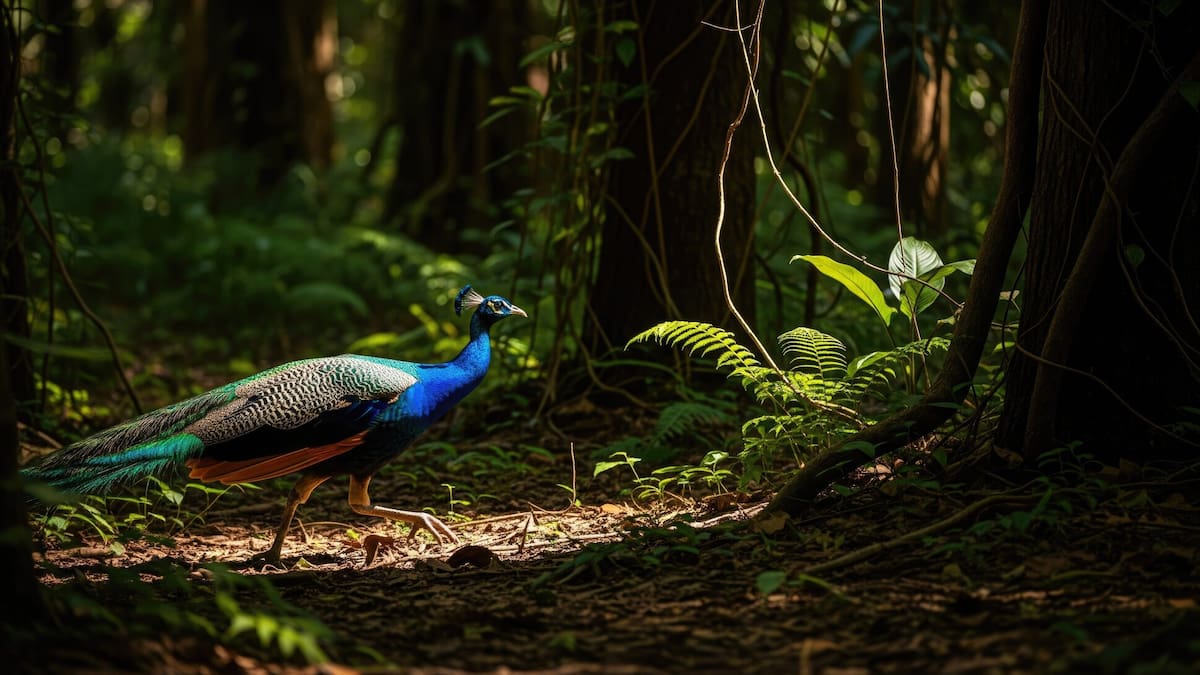
“They’re everywhere, and of course, no one has really been shooting them, so they’ve grown in numbers.”
Peafowl breed from late August to early January, have few natural predators, and can multiply tenfold in a year if not controlled.
A review of Horizons Regional Council’s Regional Pest Management Plan closed in May this year with seven of 179 submissions referencing peafowl.
In 2018, farmer Grant Adkins said the Whanganui hill country was facing a population explosion of wild peafowl.
Nothing had changed since, he said.
“The problem’s just getting worse.”
Including peafowl in the plan wouldn’t be enough.
“They’re not worse than deer and goats, they’re just another pest.
“They’ve got to put money towards research on a way of getting rid of them.”
Trapping of stoats and possums was effective, but it meant peafowl had fewer predators eating their eggs.
“Most farmers, from here right up to Raetihi, all over the show, have got problem peacocks.
“They eat a lot of grass, so the more grass they eat, the less grass we’ve got for our stock.”
Peafowl are native to India and Sri Lanka. They became naturalised in Aotearoa mainly through “benign neglect of birds kept for display”, according to New Zealand Birds Online.
The largest populations are in wooded lowlands and coastal farmland in the North Island, including the upper Whanganui River catchment, northern Mahia Peninsula and South Kaipara Head.
Kiwi geologist and ornithologist Charles Alexander Fleming recorded numerous peafowl east and west of the Whanganui River in a 1947 Birds New Zealand paper (formerly New Zealand Bird Notes).
“The birds were in all cases wild, not associated with homesteads, and have apparently become well established, at least in a limited area,” Fleming wrote.
Dan Hurley, Horizons’ team leader for pest animals, said the council had advised landowners on managing peafowl.
The council was aware that some farmers had tried night shooting, live trapping and other methods.
“Peacocks can become wary very quickly, which makes future control harder.
“Invertebrates make up a large portion of their diet; they can cause damage scratching through soil. As with other birds like geese, fouling of pasture is possible.”
The council had no robust estimate of the region’s peafowl population, and knew of no standardised method for collecting numbers.
“Increased concerns reported to Horizons from landowners indicate a large increase in numbers and a spread in distribution.
“Without an effective control method across different land uses and landscapes, the numbers grow unchecked.”
Other contributors could be the availability of food sources and nesting habitats, Hurley said.
Council officers will now consider which species will be added to the proposed pest management plan before it goes out for consultation next year.
Noam Mānuka Lazarus (Ngāti Whātua o Kaipara) is a multimedia journalist at the Whanganui Chronicle.