
As she left, she got a phone call from one of her sons.
“There’s a seal. There’s a seal at the turf.”
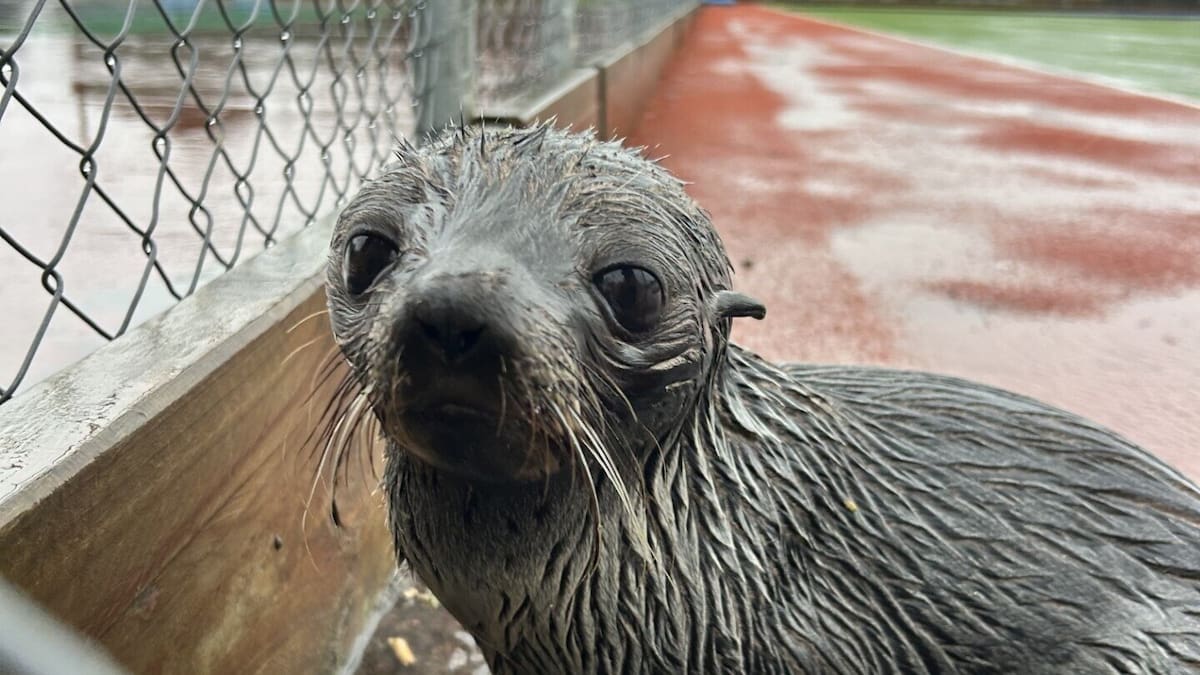
The baby seal was enjoying the rainy weather, splashing around on the school’s hockey fields.
“[It] was so cute,” Arthur said.
“I could see it was a little bit scared at times.”
Arthur waited with the seal and the school’s caretaker until Animal Control arrived.
A seal pup was found at Rangitīkei College’s hockey turf on September 7, more than 20km from the nearest beach. Photo / Samantha Arthur
Rangitīkei College principal Penny Keet said the school had never seen anything like it.
“The poor little thing was probably very disoriented and a bit lost, which obviously it would be.”
“I have no idea how it would’ve gotten to Marton.”
A teacher on bus duty alerted Keet to the pup and managed to corral it into an enclosed area of the turf fields.
“The poor thing, it had 300 kids trying to look at it,” Keet said.
“So we were trying to keep the kids away and stop it from being too stressed.”
The school contacted the Department of Conservation (DoC) and other animal welfare groups.
“The vets were kind of bamboozled,” she said.
Rangitīkei District Council Animal Control collected the seal shortly after being alerted about 9am and took it to the office to warm up and eat some fresh supermarket hoki before being released on Monday afternoon.
Animal control officer Kimberly Troughton said the young seal was no more than 10kg.
“[It] just really looked like it had got itself into a situation it wasn’t happy about and [was] really cold and wet and tired.”
Troughton believed the seal came up through the Rangitīkei River, then via the Tūtaenui Stream, before deciding to explore further – a nearly 40km journey according to Google Maps.
“It is what they call the silly season for young seals at the moment,” Troughton said.
“Silly season [is] when they leave their mothers. They’re quite curious and want to go on a bit of adventure.”
DoC has dubbed May to September “Seal Silly Season”, when young New Zealand fur seals are commonly found in odd places during their first solo expeditions.
“Kekeno, or New Zealand fur seals, are marine mammals that spend considerable time on land, typically resting but occasionally exploring,” DoC operations manager Manawatū Moana Smith-Dunlop said.
“Although they are usually found on rocky shores, their natural curiosity sometimes leads them several kilometres inland.
“It’s not uncommon to find them on roads, in backyards or even on living room sofas.”
Smith-Dunlop said people should always stay 20m away from seals and keep dogs and children clear.
“People can help by giving the seals space and watching out for them.
“Remember that seals can be aggressive if threatened, so avoid getting between the seal and the sea, and remember to never touch, handle or feed a seal – it’s a breach of the Marine Mammals Protection Act.”
People should contact DoC if a seal they encountered was in immediate danger, “such as being on a road, severely injured or tangled in debris”.
“Most seals people encounter are healthy, and behaviours like regurgitating, sneezing, coughing or crying are normal. However, if you see a seal that is severely injured, being harassed, or in danger, please call 0800 DOC HOT (0800 362 468).”
Animal Control planned to release the seal at Scott’s Ferry near the Rangitīkei River mouth.
Troughton said one of the best ways people could help seals this time of year was keeping dogs under control.
“Keeping your dogs under control this time of year is a massive thing for us because of the smell that [seals] put out.”
Dogs were attracted to the smell and may try to attack seals, she said.
“So when you’re at the beach or around the waterways or at the hockey turf, keep your dogs under control.”
“They are wildlife that need a bit of care around this time of year.”
Erin Smith is a multimedia journalist based in Whanganui.