
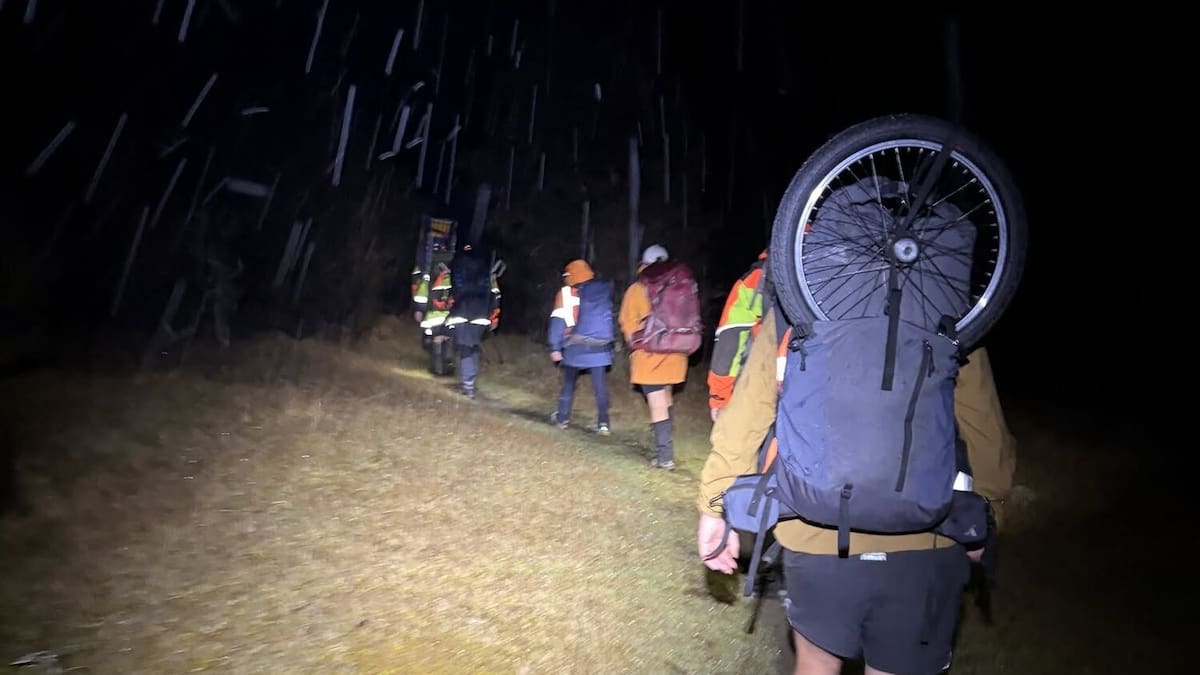
The family and SAR team stayed overnight in a nearby hut and were airlifted out on Monday afternoon.
Hawke’s Bay area prevention manager Inspector Caroline Martin commended the family’s decision to carry a PLB.
“We always recommend that you carry the appropriate emergency equipment such as a PLB and a satellite communication device, no matter how long or short a hiking trip may be.
“Mobile phones don’t always have service in remote areas.”
Maritime NZ’s Rescue Coordination Centre general manager Justin Allan said rescuers battled tough conditions for close to 24 hours.
“We were able to liaise with the injured person’s emergency contacts and understand the plan for the hike and who was in the tramping party.
“We were also able to communicate directly with the injured person to keep them updated on the situation, the progress of the rescue and what steps we were taking.”
Allan said initial planning involved trying to get a helicopter up to where they were, though this was impacted by the weather.
“Rescue helicopters attempted to get in, but low cloud prevented them from being able to reach the group.”
“I want to commend the LandSAR volunteers and Police SAR staff who did a great job looking after everyone during this response.”
Allan said once the weather improved the next day, an aeromedical helicopter transported the mother and family to hospital and safety.
“This was a long-duration search and rescue incident, where we needed to consider the welfare of the children as well as their injured mother.
“This incident shows the value of having a device which can call for help and show responders where people in need are.”
The New Zealand Defence Force then flew the rescue team out.