
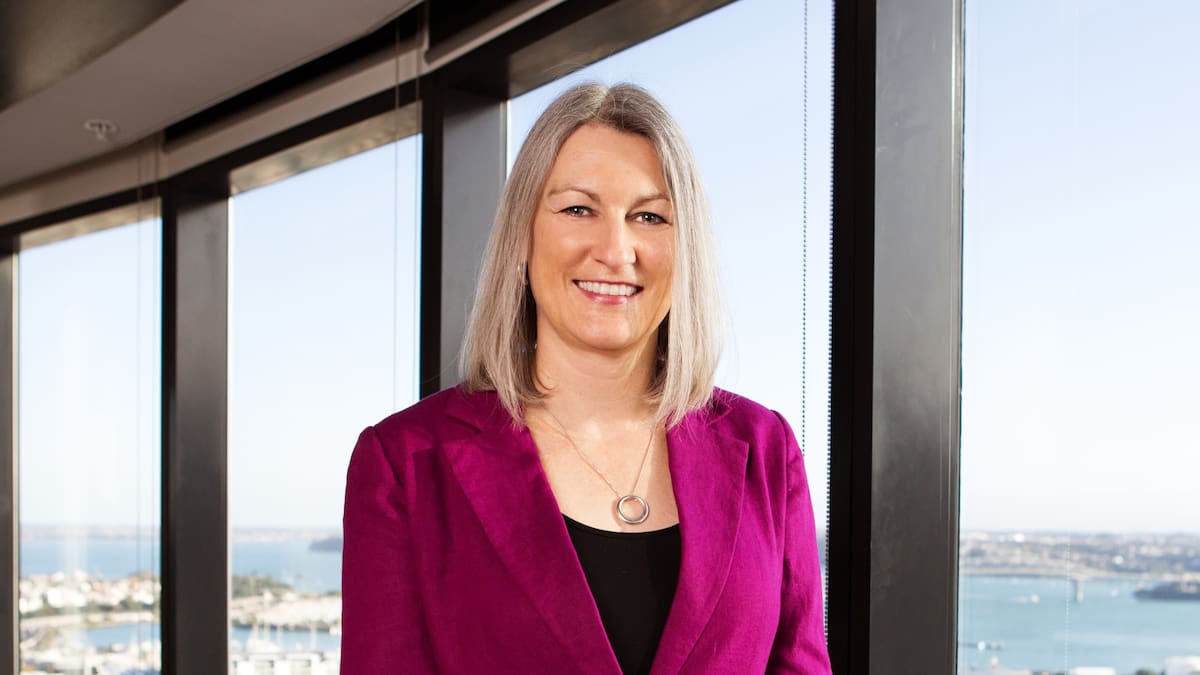
Yet, a 2024 comment she made in support of a capital gains tax perhaps saw her garner the most attention.
Two years on, and two months out from a general election, Watson continues to hold the view that New Zealand needs to broaden its tax base.
“As the pool of working people becomes smaller, we’ve got to figure out other ways of funding our future,” she told the Herald.
Like ANZ’s chief economist, Richard Yetsenga, Watson was worried that taxing a shrinking pool of working people, relative to the pool of retired people, wasn’t going to cut it.
Furthermore, she believed it was only fair to treat income earned from employment similarly to income earned from selling an asset.
While she was “dead against” taxing wealth or unrealised capital gains, she said there must be a way of making everyone “contribute fairly to the pot”.
The rapidly rising cost of universal superannuation for those above 65 was front of mind for Watson.
She believed politicians from across the spectrum needed to agree on a way to make the scheme, which currently costs nearly $30 billion a year, more sustainable.
Watson was cognisant that New Zealand wasn’t immune to the rising cost of borrowing worldwide.
Investors’ concerns around inflation and high US Government debt have seen US Government bond yields rise. This has put upward pressure on the New Zealand Government’s borrowing costs, as well as banks’ funding costs, which affect the interest they charge borrowers/pay savers.
“What we probably do need to get used to is more uncertainty in the world – that we’re in a different geopolitical environment,” Watson said, pointing to the fracturing of the rules-based world order.
“Unless something changes soon, I don’t see that changing.”
On the upside, Watson gave kudos to the Government for forging new and deeper relationships with the likes of India and Singapore.
Watson was supportive of the Government encouraging people to do more to save for their retirements via KiwiSaver.
She believed there was room for more money invested in KiwiSaver to circulate through the New Zealand economy.
She believed scale would help – the more KiwiSaver fund managers had to invest, the more they could achieve by investing say 5% or 10% of their funds in New Zealand.
Watson recognised fund managers also needed opportunities to invest locally, including in infrastructure.
She said it was a bit of a chicken-and-egg situation – getting enough money to invest and establishing the vehicles through which to invest.
Watson added her name to the string of business leaders advocating for politicians to take a bipartisan approach to the infrastructure they invest in.
She also believed parliamentary terms that were longer than three years would help governments get more done.
Once Watson wraps up at ANZ on Friday, she will take time out to go travelling – do some hiking and biking.
She said she wouldn’t pursue another big corporate role: “That’s the one thing I’m certain about.”
While she didn’t rule out getting involved in something offshore, she said New Zealand was home and she was keen to get into governance roles and pursue her interest in financial literacy and education.
Watson said she wanted to give back and continue to be part of the New Zealand business community.
She will be succeeded by ANZ New Zealand’s chief risk officer, Ben Kelleher.
Jenée Tibshraeny is the Herald’s Wellington business editor, based in the Parliamentary Press Gallery. She specialises in government and Reserve Bank policymaking, economics and banking.
Stay ahead with the latest market moves, corporate updates, and economic insights by subscribing to our Business newsletter – your essential weekly round-up of all the business news you need.