
Women in their 20s have a lot to figure out, and in the digital age they often turn to platforms such as TikTok to search for answers. For me too, social media is a place that I feel like I can turn to when I have nowhere else to go. Because why turn to formal help when free advice is right there?
As someone who struggles with Polycystic Ovarian Syndrome (PCOS; since 2026 renamed to PMOS Polyendocrine Metabolic Ovarian Syndrome) — a hormonal and digestive disorder for women which often causes infertility, acne, excess hair and weight gain — my own body feels like a complete stranger to me sometimes. After receiving contradictory advice from multiple doctors, I felt obligated to turn to the wisdom of social media. I’ve tried everything, from undereating to following every ‘fitfluencer’s’ advice about how to take care of your gut health, and it is exhausting. My experience isn’t unique; millions of women turn to TikTok for health guidance that the medical system fails to provide (Kirkpatrick & Lawrie, 2024, p. 2). This phenomenon has left me wondering how content regarding wellness discourse for women on TikTok might bear upon ideas of gut health issues like PCOS. To find an answer to this, I will first examine the broader societal context, then explore wellness culture and its influence on the female body, before applying this framework to three TikTok case studies and concluding with what this means for women, and for the platforms that profit from them.
When Medicine Fails, the Algorithm Listens
Based on a 2022 study on the gut microbiome and its lack regarding female health, modern research indicates a significant historical and ongoing gender gap in medical studies, where women are still consistently underrepresented (Siddiqui et al., 2022, p. 12). Consequently, women’s physical complaints are often trivialized, leading to a systemic dismissal of their pain. This is particularly evident in conditions like PCOS, which affects 8–13% of women (Siddiqui et al., 2022, p. 3), yet remains under-researched compared to male-focused health issues. Most gut microbiome research, which focuses on microbial species that are altered in PCOS, for example, has traditionally focused on male subjects, leaving a critical lack of understanding regarding female-specific problems. This medical neglect often leaves women with chronic hormonal or digestive issues navigating a landscape where their symptoms are undertreated (Siddiqui et al., 2022, p. 2-3).
In response to this gender-biased medical landscape, a lot of women therefore seek their information elsewhere. According to a recent study conducted at the University of Nebraska-Lincoln, TikTok functions as a massive health information ecosystem with over 150 million active users from only the U.S. (Kirkpatrick & Lawrie, 2024, p. 2). Crucially, the platform’s algorithm facilitates high rates of unintentional exposure, with 92.4% of young women encountering health advice. Besides this, more than half of the 1026 respondents in this study who had ever used TikTok, had actively sought health-related information on the platform in the span of just 3 months. By offering immediate information and social support through shared personal experiences, TikTok fills a care vacuum left by the medical gender bias. This environment makes it a powerful vehicle for wellness content that prioritizes relatability over traditional medical settings (Kirkpatrick & Lawrie, 2024, p. 10-13).
Wellness Culture & the Commodification of the Female Body
A phenomenon that contributes to the confusion regarding gut health is wellness culture. As indicated by a 2024 study on the need for research on the wellness industry’s impact on health decisions (Allem, 2024), within wellness culture, health is framed as the active pursuit of specific activities and lifestyles intended to achieve a state of holistic health. It positions wellness as a universal and ultimately unattainable goal, transforming health into a continuous, individual project of optimization. This transformation moves focus away from structural medical oversight toward a marketplace where influencers present themselves as experts through relatable content (Allem, 2024, p. 1). By emphasizing personal choices and attitudes toward how to best care for themselves, this discourse encourages consumers to view health as a private responsibility, often prioritizing alternative treatments over established standards of care (Allem, 2024, p. 3).
This culture of so-called health and wellness also plays into the commodification of women’s bodies and their suffering. Based on the findings that were published in the Journal of Unschooling and Alternative Learning, wellness culture on Instagram for example, merges health content with commercial interests, transforming women’s bodies and personal dissatisfaction into tradable commodities (LaForme-Csordas, 2021). This commodification is driven by capitalist advertising where influencers promote self-care products, such as teas, supplements, and fitness programs (LaForme-Csordas, 2021, p. 66), using their personal brands and large followings (p. 62). The platform streamlines this process through direct checkout features and website transfers, making health advice inseparable from product promotion (LaForme-Csordas, 2021, p. 63 – 64).
TikTok’s algorithm makes this process particularly effective. As stated in a recent study in Social Media + Society, the platform rewards content that users perceive as attentive and responsive to their needs, goals, and sense of self (Craig et al., 2026, p. 2). It functions as an identity strainer, filtering interactions through inferred markers such as gender and body type. By delivering content that feels personally resonant and authentic, the algorithm fosters a sense of being seen, understood, and connected, which creates a powerful emotional resonance for the user (Craig et al., 2026, p. 4). This mechanism ensures that identity-driven wellness narratives are amplified, reinforcing the ideal self through a personalized feedback loop (Craig et al., 2026, p. 3).
PCOSTok as a Case Study
To apply these theories, I analyzed three TikTok videos I found using the search terms “pcos journey,” “pcos supplement,” and “pcos doctor.” These terms were chosen to produce new insights regarding multiple aspects of the topic, from PCOS related experiences, to unprofessional- and claimed professional advice about PCOS, and how to cope with it. I also tried to look for creators who actually advocated to go and see a doctor for their symptoms, to shed light on how this is portrayed on the platform. Per search term, the first video that came up was analyzed, since these are popular examples. It should, however, be noted that these are probably also linked to my personal preferences and account, since I have looked into information regarding PCOS on TikTok. Still, these posts are representative of the overall discourse because of their high engagement levels, ranging from 71 to 691 comments and 6.817 to approximately 195.900 likes and thousands of saves per post. On of the three posts — the post about PCOS supplements — received less likes and comments compared to the other posts but can still be considered representative. The post’s creator is a self-described PCOS dietitian with over a million followers, showing a different type of post than the other two creators who mainly share their own experiences. I included screenshots from the TikTok videos. Each TikTok is used to address a different dimension of the theory and this article’s argument.
“pcos journey”
© (rachel, 2025)
Figure 1
© (rachel, 2025)
Figure 2
© (rachel, 2025)
Figure 3
© (rachel, 2025)
Figure 4
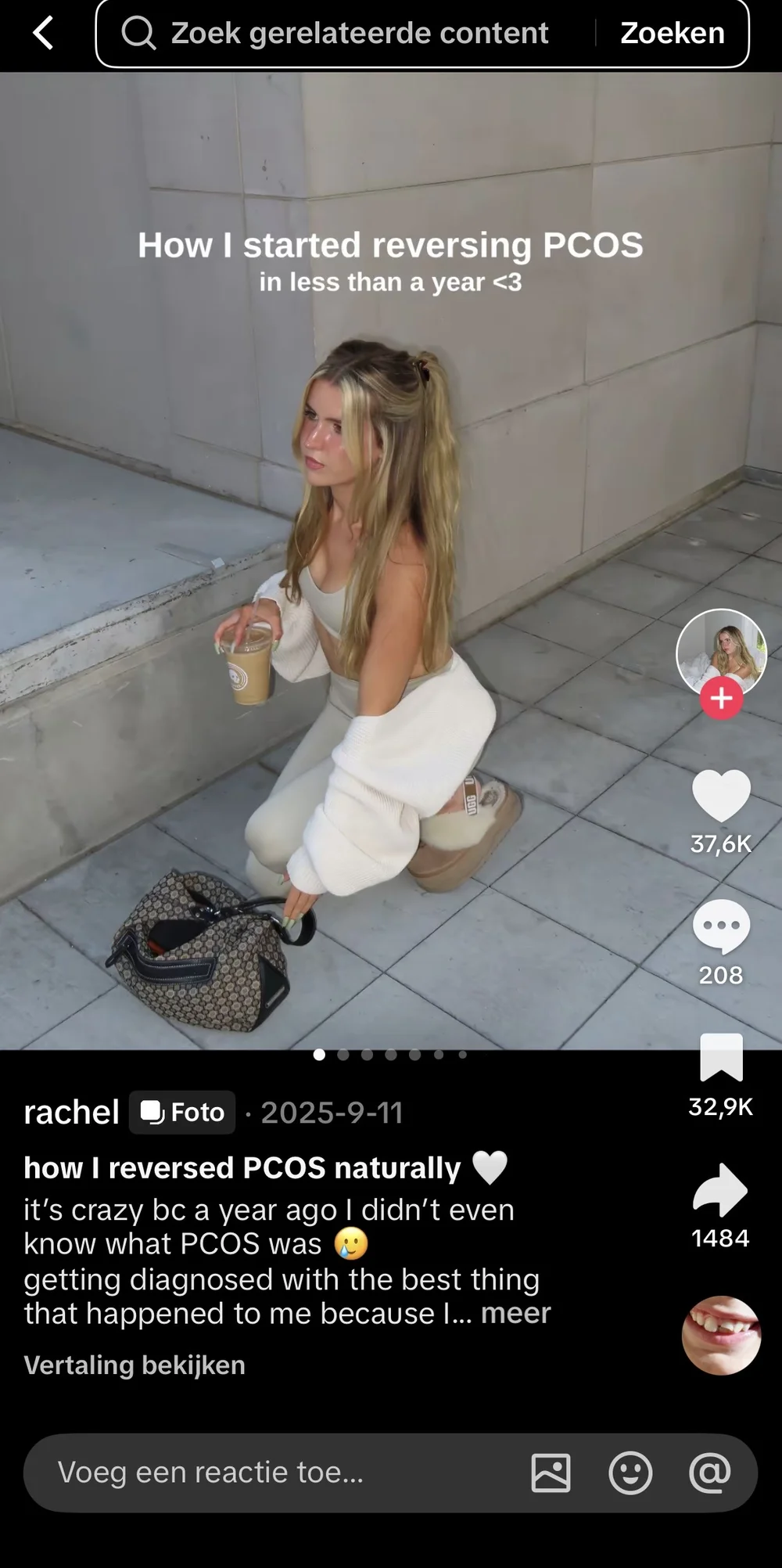
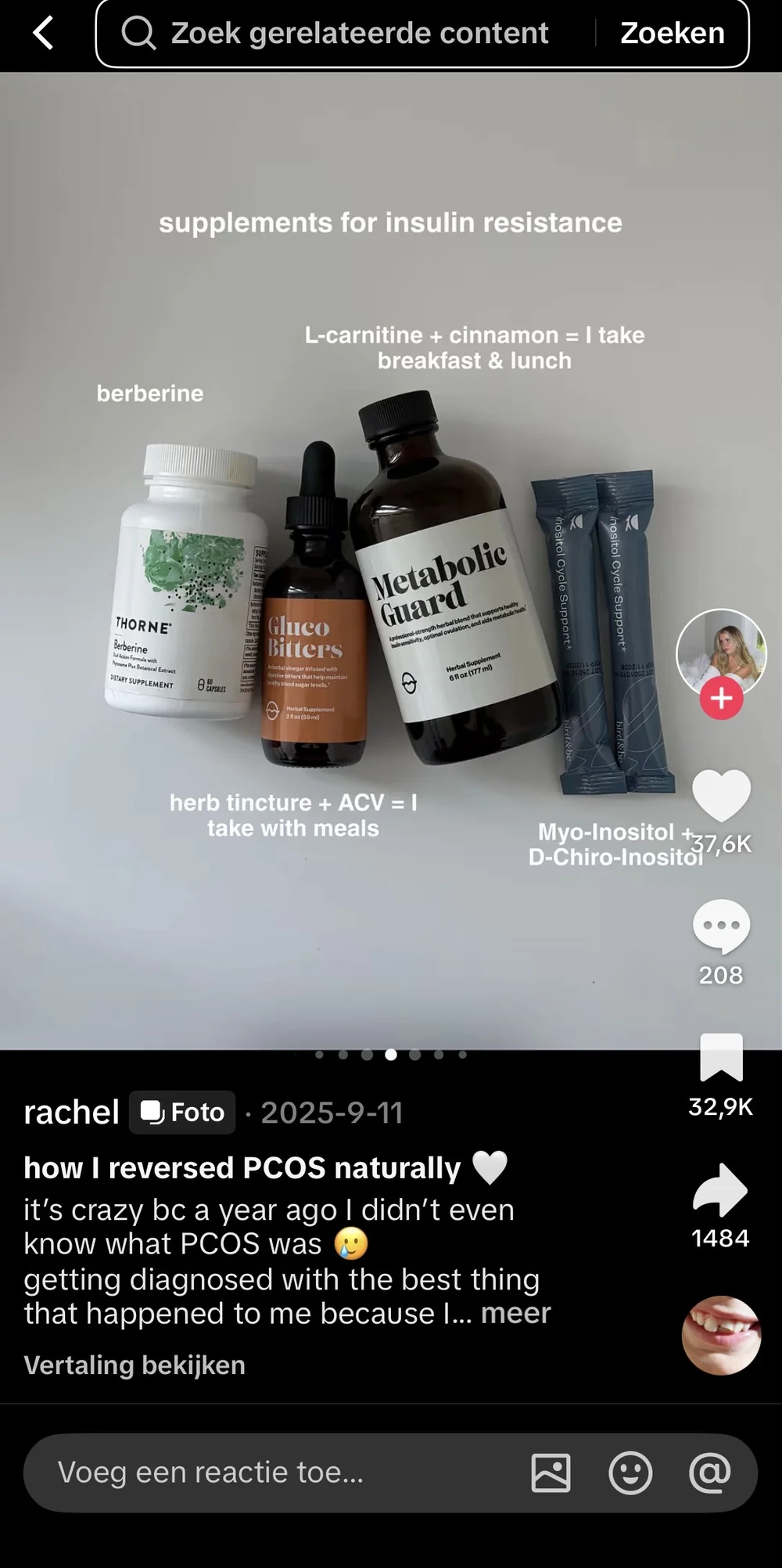
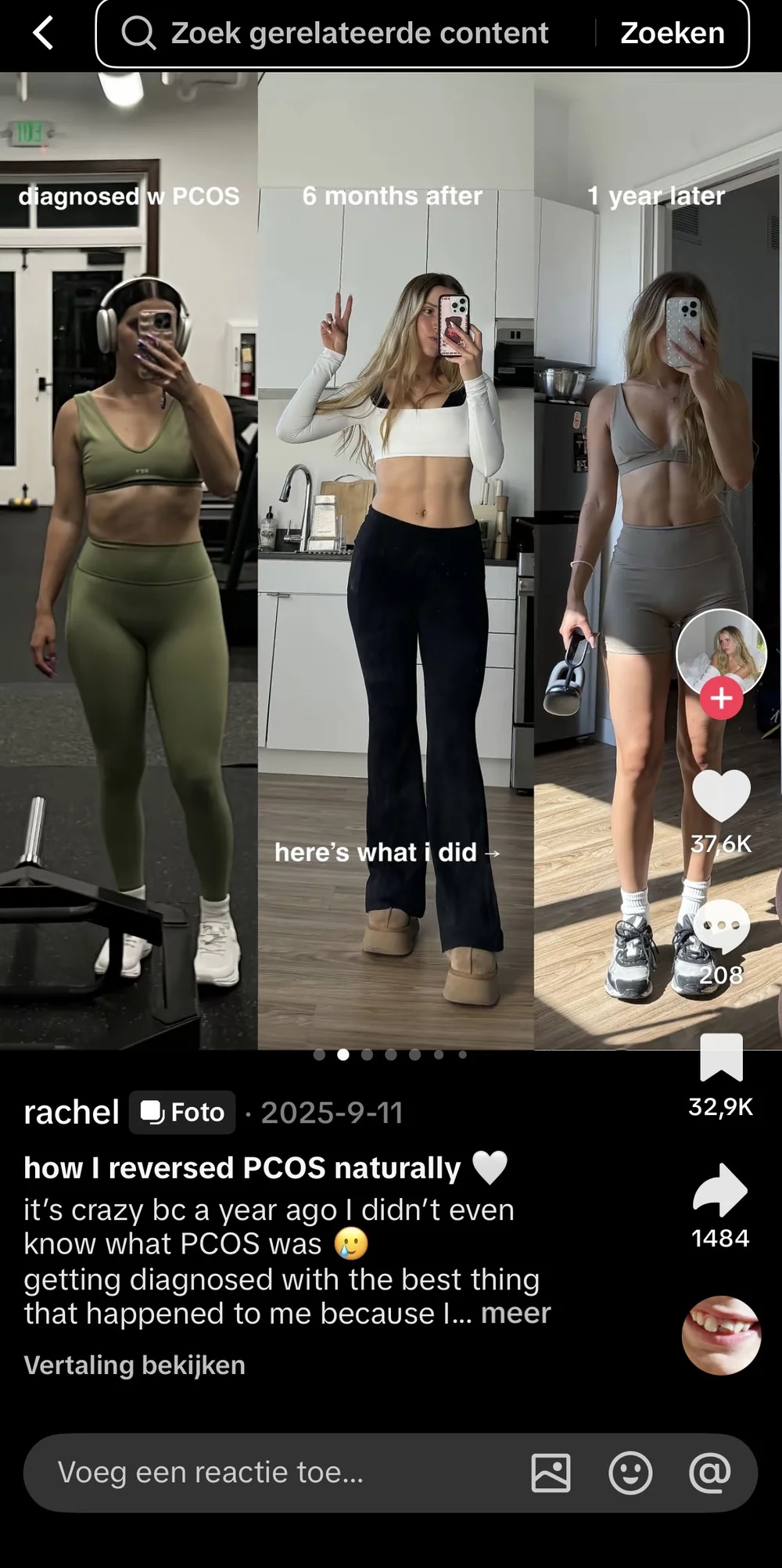
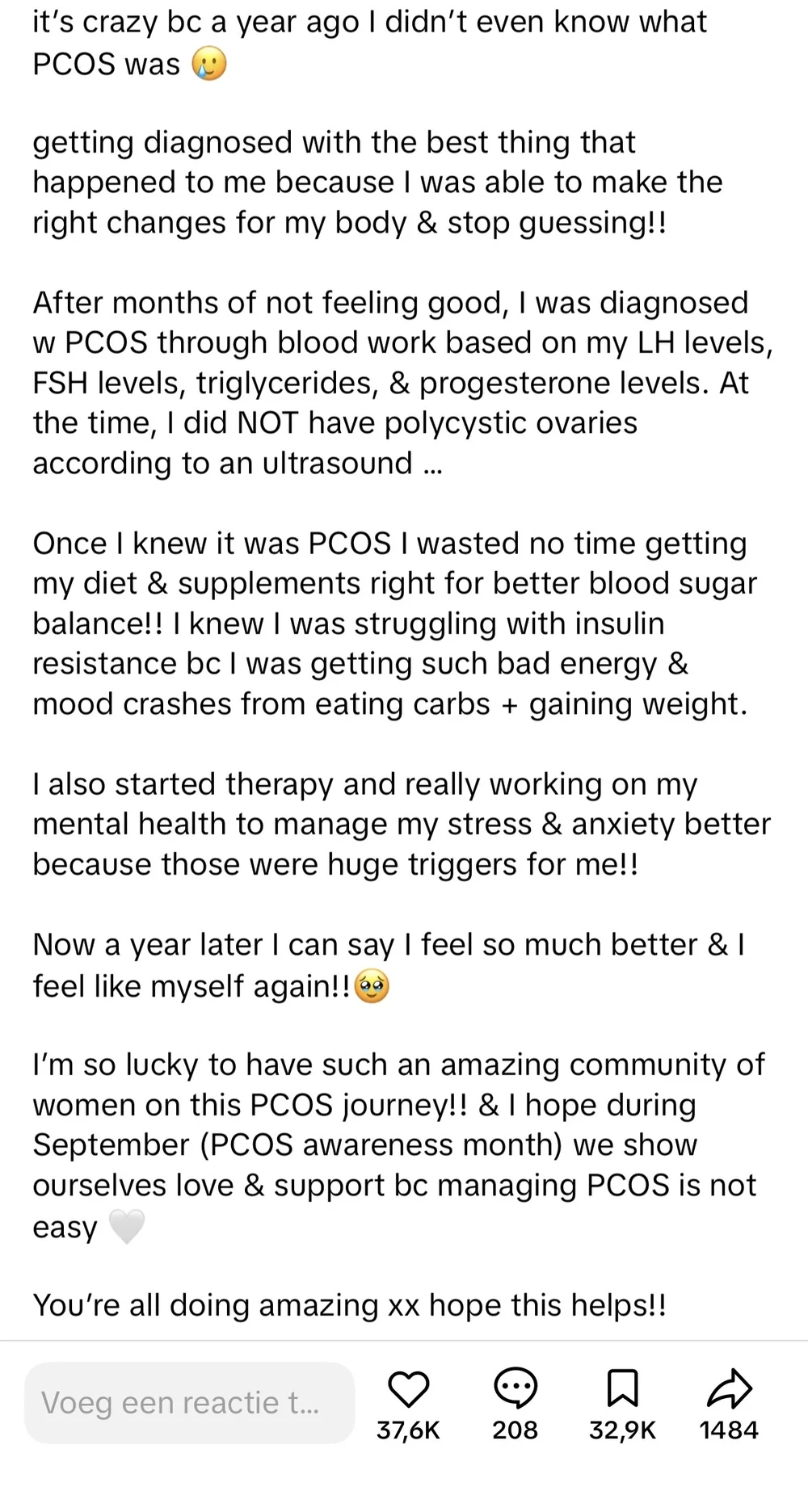
The first video immediately resonates with the theory. Rachel (@getyourgloww), at the time of writing, has almost 10.000 followers and is an influencer, content creator and founder of her own company: “glow culture”. She was diagnosed with PCOS and documents how she “naturally reversed” her condition within a year through high-protein meals, hourly movement and stress management; a clear example of wellness culture’s emphasis on active lifestyle optimization according to Allem (2024). Rachel’s framing of a “natural” reversal implies the absence of pharmaceutical treatment (see Figure 1), reflecting the tendency to seek alternative routes when medical options disappoint. She recommends specific supplements for insulin resistance (see Figure 2), potentially motivating women to spend a lot of money on products with unpredictable results. A visit to her profile revealed that she is the founder of her own supplement brand: “glow culture”, transforming her free advice into profit, directly illustrating LaForme-Csordas’s (2021) commodification framework. Her fitness progress over one year (see Figure 3) risks setting unrealistic body standards: not every woman with PCOS can get abs, as outcomes depend on far more than supplements or exercise frequency, which might set unrealistic expectations for girls or younger women watching this content. When we look at the caption of the video (see Figure 4), we can see the personal resonance and authenticity, which are also mentioned by Craig et al. (2026). She addresses the users directly in a personal way, creating community and emotional resonance. Since this caption heavily relies on a sense of connection with, and understanding for her followers, this fits exactly into the algorithmic amplification of the platform, showing an aesthetic, personal and ‘natural’ approach to cure gut-health problems.
“pcos supplement”
© (PCOS Weight Loss, 2025)
Figure 5
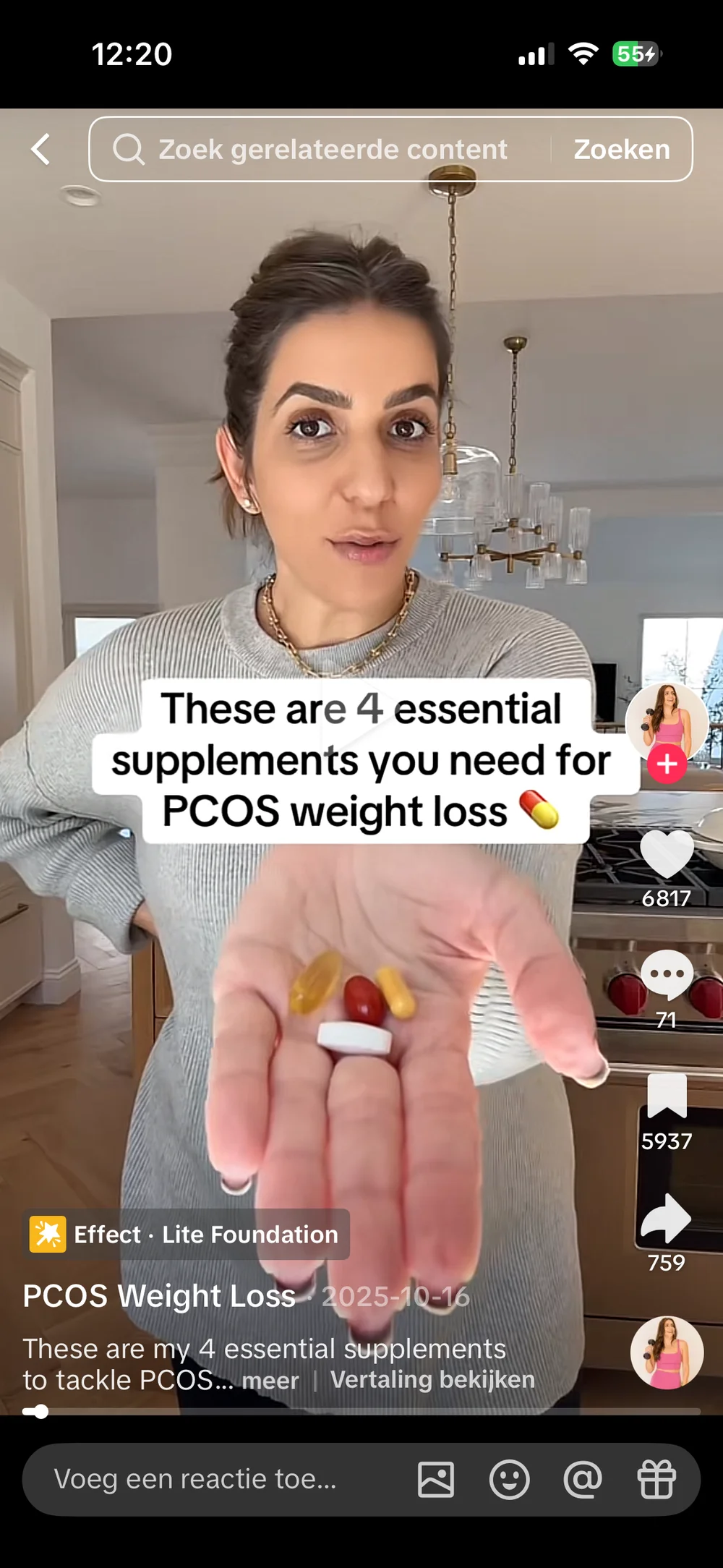
In this video, a self-described PCOS dietitian (@pcos.weight.loss) with 1.3 million followers recommends four supplements for weight loss with PCOS (see Figure 5), referring viewers to the link in her bio where her own products are sold. Through this video, the creator is not simply giving tips to users struggling with PCOS, she’s turning their suffering into a sales funnel as described by LaForme-Csordas (2021). She ends the video by referring to the link in her bio, where you can find her own products. The personalized strategies that are discussed by Craig et al. (2026) also become visible through the gendered aspect of the video, by repeating “women with PCOS”, and making the content more personal and identifiable by using the term “us”. A sidenote that comes with this video compared to the previous one, is that this creator calls herself a dietitian, specialized in PCOS, using scientific statements regarding the supplements which might make her recommendations more believable. Anyone can call themselves an expert on the platform, which makes medically vulnerable viewers particularly responsive to misleading advice.
“pcos doctor”
© (Tabs, 2024)
Figure 6
© (Tabs, 2024)
Figure 7
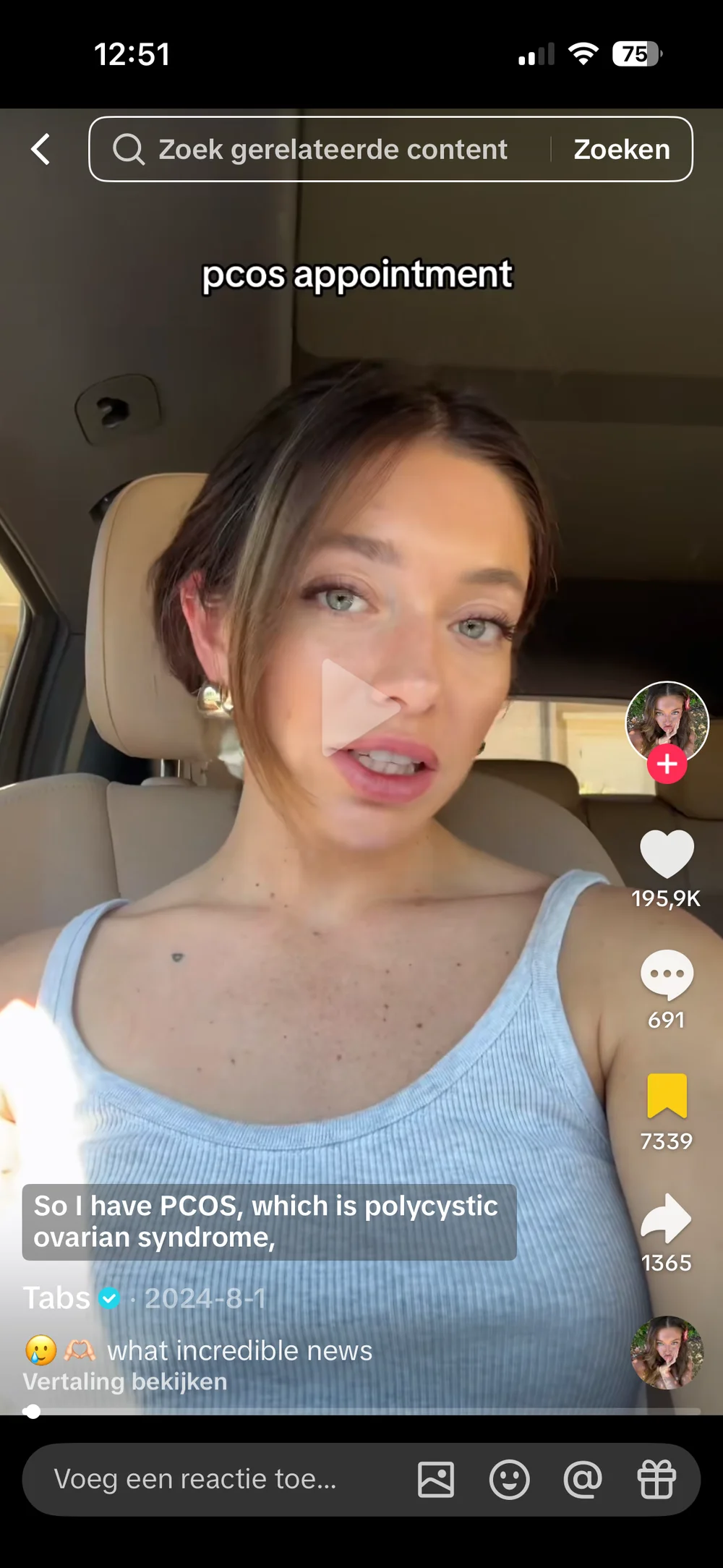
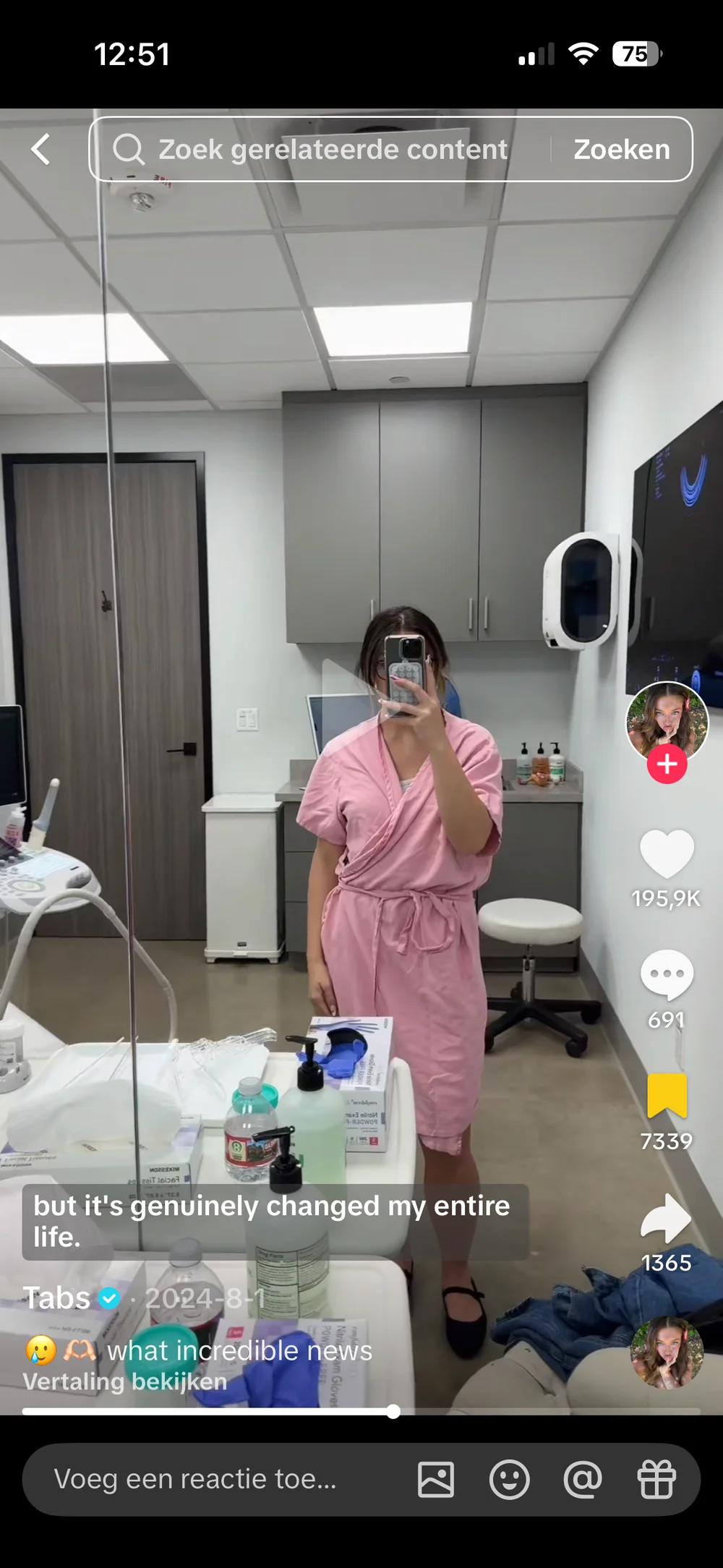
This search term provided a different, and more encouraging example. When I looked for someone that actually advocated to go and see a doctor for their symptoms, I came across a creator (@Tabs) who doesn’t promote any products or PCOS-related lifestyle content. Instead, she simply brings her audience along as she shares her personal experience, including a day at a doctor’s appointment (see Figure 6 and 7). She starts off by explaining the concept of PCOS and where she specifically suffers from, neglecting the idea that everyone has the same type and including what her doctor had to say about it. She’s also still in the midst of her process, making it more relatable than creators who reflect on their process after they allegedly naturally reversed it. She dives into multiple medical details, and advocates for how going to the doctor has changed her life. She also films the scans, showing her healthy eggs and reflects on the progress she’s made so far, also including prescribed medications. Can this video be seen as a response to people’s longing for authentic and identity-driven content (Craig et al., 2026)? Absolutely. But what this creator leaves out, is the, for some, unrealistic step by step plan specifically tailored to her own body, the advertisements for specific probiotics, and the absence of any medical tips given by actual doctors, instead of dietitians, who aim to make a profit. This video shows that TikTok can direct women toward medical care rather than away from it.
How to proceed?
This article has shown that women with chronic conditions like PCOS do not turn to TikTok out of ignorance. They turn to it because a historically gender-biased medical system has left them with little else. The underrepresentation of women in medical research is a structural failure with real consequences. TikTok fills that void with immediacy and community, but wellness culture doesn’t fill voids for free. It monetizes them. Women’s confusion, pain and desperation become content, and content becomes capital.
The algorithmic logic makes this process nearly invisible. When TikTok serves you a video that names your symptoms and reflects your body, it is easy to forget that the platform is not your doctor or friend. It is an identity-driven feedback loop that rewards emotional resonance above medical accuracy. Wellness narratives thrive here precisely because they are personal, aesthetic and optimistic. They offer what clinics often don’t: time, empathy and the promise of control.
The deeper issue is not TikTok itself, but the conditions that make it necessary. As long as women are undertreated and dismissed, they will seek answers elsewhere. The responsibility does not lie solely with individual users to scroll more critically, nor with creators to be more transparent, though both matter. It lies with medical institutions to close the gender gap in research and care and with platforms like TikTok to take greater accountability for the health content they amplify and profit from. Until then, millions of women, including myself, will keep scrolling. Not because they are naive, but because they are desperate for someone, or something, to finally take their bodies seriously.
References
Allem, J.-P. (2024). The need for research on the wellness industry’s impact on health decisions. American Journal of Preventive Medicine, 67(4), 627–630. https://doi.org/10.1016/j.amepre.2024.05.010
Craig, M. J. A., Choi, M., Zhu, Y., Hassan, T., Noi, S. M., & Silva, D. E. (2026). It Listens to Me So I Feel Well and Connected: Investigating the Influence of TikTok users’ Perceived Algorithm Responsiveness and (In)sensitivity on Well-Being Via Self-Determination. Social Media + Society, 12(1).
Kirkpatrick, C. E., & Lawrie, L. L. (2024). TikTok as a Source of Health Information and Misinformation for Young Women in the United States: Survey Study. JMIR infodemiology, 4, e54663. https://doi.org/10.2196/54663
LaForme-Csordas, S. (2021). The commodification of the female body on Instagram: A systemic review and meta-analysis. Journal of Unschooling and Alternative Learning, 15(29), 61–87.
PCOS Weight Loss [@pcos.weight.loss]. (2025, October 16). These are my 4 essential supplements to tackle PCOS symptoms like facial hair, chronic inflammation, weight gain and fatigue. You can find all 4 in my bio! [Video]. TikTok. https://vm.tiktok.com/ZGdu4eWcQ/
rachel [@getyourgloww]. (2025, September 11). how I reversed PCOS naturally 🤍 [Video]. TikTok. https://vm.tiktok.com/ZGduXs28Q/
Siddiqui, R., Makhlouf, Z., Alharbi, A. M., Alfahemi, H., & Khan, N. A. (2022). The Gut Microbiome and Female Health. Biology, 11(11), 1683. https://doi.org/10.3390/biology11111683
Tabs [@tabithawatosh]. (2024, August 1). 🥲🫶what incredible news [Video]. TikTok. https://vm.tiktok.com/ZGduXVmW2/