
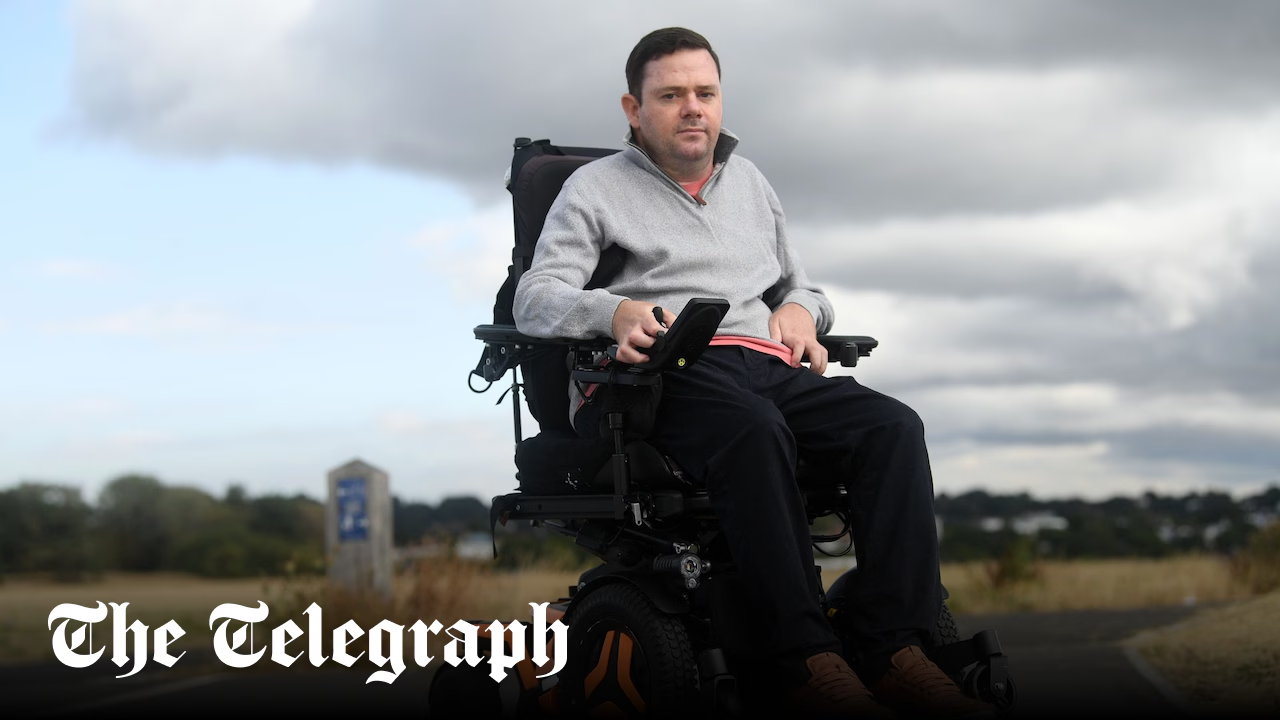
A Telegraph investigation found that thousands of NHS social care assessments are being conducted remotely, risking a failure to see the true extent of someone’s needs. We are campaigning for assessments to be carried out in person, giving families the chance to speak up for loved ones when they need it most. If you or a loved one has struggled to secure NHS Continuing Healthcare funding, we’d like to hear from you. Email money@telegraph.co.uk*.
I was surfing when the accident happened.
It was March 2013 and I was on holiday visiting family in Argentina. One day, while surfing, I hit my head on the ocean floor. I remember floating face down in the water, unable to move.
I survived because a bystander saw what happened and pulled me out. However, I had injured my cervical spine – the neck region of the spinal column. I still had limited movement in my right arm, but otherwise I was paralysed from the neck down. I was 33 years old.
The first few months were devastating. Until the accident, I’d led a very active life. Sport and the sea were a major part of who I was. I worked as a senior lifeguard for the Royal National Lifeboat Institution and found it incredibly rewarding. People go to the beach to enjoy themselves and, as a lifeguard, your job is to make that environment as safe as possible for them. It felt like I was embarking on a long, fulfilling career.
Now I had to learn how to exist in a body and environment completely different from everything I’d known before. I depended on carers to manage the health consequences of my injury. I could eat and drink independently and use a laptop, but only if someone set up the adaptations I needed first. I required assistance with almost all daily activities.
But my mother refused to let me sink into despair. She had an extraordinary sense of optimism and pushed me to focus on what was still possible instead of everything I’d lost.
Slowly but surely, I rebuilt my confidence. I have both a British and an Argentinian passport, so I stayed in Argentina and started working as a co-host on a radio programme, later becoming a coordinator for a local beach safety operation. I had 24-hour care, but I still had a life.
But something was missing. I had family in the UK, and my career with the RNLI had effectively been on pause ever since the accident. I wanted to rebuild the life I had left behind.
I came back in September 2023 and paid for a carer and accessible accommodation while I looked for a job. But the money ran out and in November, after approaching my local authority for financial support, I was told I was being moved into a care home mainly for older people.
I applied for Continuing Healthcare (CHC), an NHS funding package to help retain independence for those with very complex needs.
I entered the video assessment confident the experts would understand the severity of my condition and give me the support I needed to regain control of my independence. But it missed important contextual information, including how much help I was receiving and how I managed day-to-day.