
The document said the driver of the increase in workforce would be:
Frontline corrections officers, support workers and psychologists to address volume pressures at Corrections and Oranga Tamariki, which account for two-thirds of the public service workforce change.Personnel uplifts to deliver major Government priorities, including tranche two of the Defence Capability Plan and resource management reform. Delivering invest-to-save initiatives at the Ministry of Social Development and Inland Revenue through a temporary uplift in case managers and inspectors.
1% GST hike, sugar tax, proposed as ‘back-up’
In January, a Treasury paper gave Willis a list of “back-up” savings ideas to help the Budget add up. It is unclear from the paper how seriously these were taken.
The list includes a number of ideas popular at Treasury but unpopular at the political level of the coalition.
The paper noted the suggestions were not necessarily endorsed by Treasury or the Government.
“As signalled last year, we have also attached at annex two a list of back-up savings to this report to seek your indication on if you wish to invite any of these options into the Budget process.
“We have had an initial conversation with your office on these options. Many of these cover savings options that you may have previously discounted. These options are intended to give you optionality in putting together your preferred Budget package, and do not represent Treasury advice to support savings from these areas,” the paper said.
This advice included hiking GST by 1 percentage point to raise $8b over the four-year forecast period.
Other ideas looked at hiking “corrective taxes” such as tobacco and alcohol excise. The advice included a sugary drink tax.
The Government also got advice on axing what was left of its contribution to KiwiSaver, which would have saved $2.4b.
Another option Treasury proposed was to reduce the depreciation rate for cars from 30% to 25% or 20%. If reduced to 25%, this would save around $80m ($30m for the first two years, $10m thereafter). If reduced to 20%, this would save around $160m ($55m for the first two years, $25m per annum thereafter).
Who loses from the changes to housing help?
Among the biggest losers from the Government’s housing help changes are pensioners, beneficiary families and Pacific people.
Budget 2026 included increasing the minimum income-related rent (IRR) contribution from 25% to 30%, lifting the maximum rates of the accommodation supplement by between $10 and $30 per week, and reducing the maximum rates for the temporary additional support (TAS).
An analysis of the impact, by the Ministry of Social Development and the Ministry of Housing and Urban Development, is included in today’s release of Budget documents.
“The combined package impacts 240,000 families. There are 111,000 families who gain income (on average $14.91 per week), and 129,000 who lose income (on average $24.04 per week),” the analysis said.
“For families with losses, Pacific peoples have the highest weekly loss of $30.75 per week. This is due to a large proportion of Pacific peoples in social housing and larger family sizes, which means they are more likely to be impacted by the TAS maxima change.
“Changes to the TAS maxima are designed to undo the significant increases seen in these maxima as a result of relatively large above-inflation increases in benefit rates. Due to its role as an income deficiency hardship payment, this change impacts people already in hardship.”
More beneficiary families gain than lose, the analysis said, because of the group’s higher take-up of TAS and residence in social housing.
“For families with children – slightly more gain from the package than lose. The majority of families with children that gain from the housing initiatives package gain between $0–$25 per week. The majority of families with children that lose from the package lose between $25-$50 per week.”
About 19,000 recipients of superannuation or the veteran’s pension will lose up to $50 per week.
“Across the approximately 2500 families with losses of more than $50 per week, the majority (approximately 2200 families) are losing between $51-$52 per week as a result of the IRR change. The remaining 300 families in this group are impacted by the change to remove child support as an allowable cost for TAS and these losses are more significant, over $100 per week or more.”
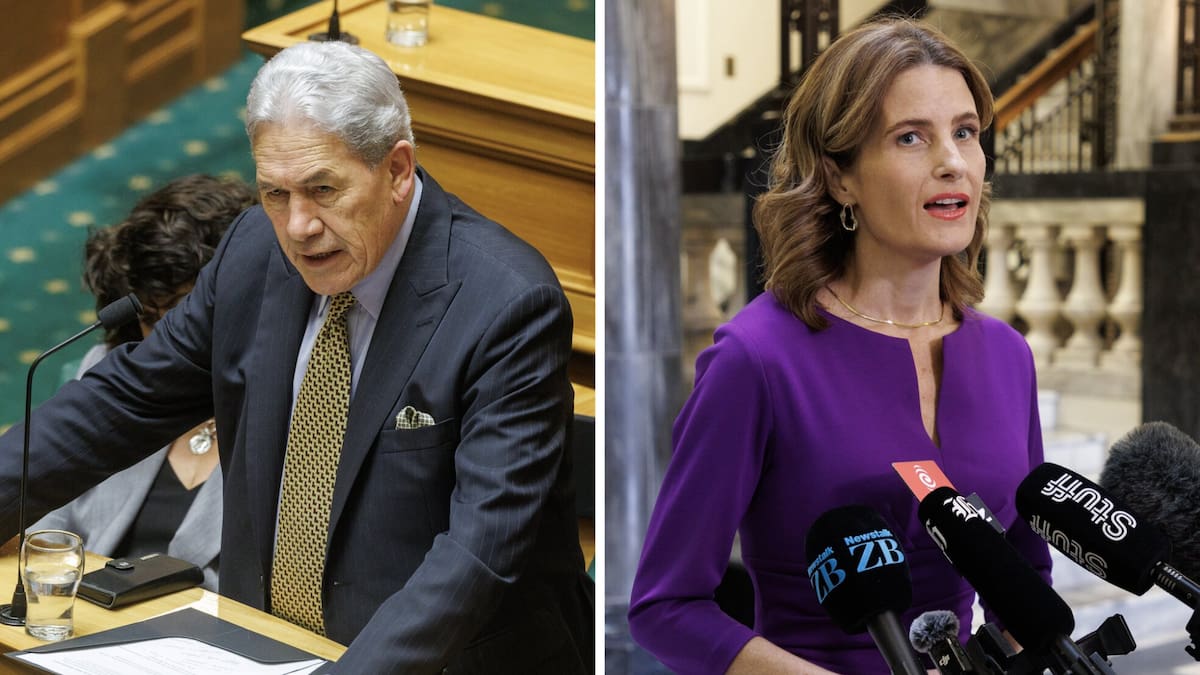
Foreign Minister Winston Peters. Photo / Mark Mitchell
Winston Peters sought funding for MFAT business class flights
A March paper Willis received before a meeting with Foreign Affairs Minister Winston Peters showed the latter sought additional funding for Ministry of Foreign Affairs and Trade (MFAT) diplomats to have business class flights.
The paper said, “the Minister [Peters] submitted four new spending initiatives”. One of the Budget bids, which would have increased MFAT’s overall funding, was for a $1.75m per year lift in funding to change the ministry’s travel policy. According to the paper, the policy change was meant to “allow… more business class flights”.
Treasury officials recommended the bid not be supported. The paper was delivered on March 5. A subsequent paper from March 31 said Peters “no longer” sought funding for that policy.
Willis and Peters had a war of words after the Budget when she hinted at the bid for business class flights.
Stamp duty on houses bought by tax non-residents considered
The Government considered hitting tax non-residents who buy houses in New Zealand with a levy.
It sought advice on applying a 15% stamp duty to all residential property purchases by tax non-residents.
The policy would have captured New Zealanders (who are currently responsible for about 80% of homes purchased by tax non-residents).
The change was expected to have raised between $100m and $200m a year.
While the Government was considering the policy at least up until February this year, it didn’t end up pursuing it in the May Budget.
Act leader David Seymour, a couple of days ago, took credit for the idea being canned, saying National would have forged ahead with the stamp duty if it had its way.
The Government considered a stamp duty on expensive homes. Photo / NZME
Advice given on suspending NZ Super Fund contributions
In April, Treasury took advice to Willis about suspending or reducing contributions to the NZ Super Fund.
Treasury noted the Key-English Government suspended contributions.
A paper notes Willis “asked for further advice on potential contribution options and their fiscal implications, in the context of a review of the Expected Fund Return (EFR) assumption that is likely to increase legislated contributions to the NZSF relative to preliminary fiscal forecasts”.
Treasury responded to that request by modelling two options.
The first was a suspension of contributions to the NZ Super Fund until 2030/31 or moving to “partial contributions” over that period.
A full suspension of contributions was projected to result in a “$1.9 billion or 0.34% of GDP reduction in net core Crown debt in 2029/30 relative to the status quo”.
Moving to partial contributions would have resulted in a $300m or 0.06% of GDP reduction in net core Crown debt in 2029/30.
Treasury said that reducing or suspending contributions would “reduce long-term fiscal sustainability because of deferred contributions and forgone returns”.
Scolding from Speaker Gerry Brownlee
Willis received a scolding from Speaker of the House Gerry Brownlee after her officials sent letters to him discussing Budget funding for Parliamentary Service and the Office of the Clerk, forgetting a recent law change meant Willis no longer had the authority over those votes.
On April 23, letters signed by Willis were sent to Brownlee confirming ministers had decided not to progress any initiatives in Vote Parliamentary Service and Vote Office of the Clerk as part of Budget 26.
Previously, the Speaker had to wrestle with the Finance Minister during the Budget, much like any other minister seeking funding for their department. However, the new Parliament Act 2025 changed this and made Parliamentary budget proposals overseen and recommended directly to the House by a cross-party committee.
A handwritten letter from Speaker Gerry Brownlee rebuking Willis’ request for Budget control. Photo / Treasury
Brownlee, aware of the law change, responded later on April 23 to both letters with a handwritten letter that read: “These letters appear to have been sent in error. Please ask your advisers to familiarise themselves with the Parliament Act 2025”.
On April 28, Willis wrote back and acknowledged the letters were sent in error.
“While ongoing engagement was required in relation to estimates processes, the letters did not appropriately reflect the distinct constitutional and funding arrangements that apply to these votes.
“Officials have been reminded of the need to clearly reflect the different treatment of Offices of Parliament in Budget-related correspondence.”
Midwife workforce shortage of 26% puts postnatal stay in jeopardy
The Government’s expanding of bowel screening eligibility and funding for an extra day of postnatal inpatient care for new mothers were announced despite Treasury concerns over workforce shortages and Health New Zealand’s ability to deliver.
Budget 2026 included $45.6m to reduce the bowel screening eligibility age from 58 to 56, potentially benefiting 200,000 people.
“We do not consider Health NZ is ready to deliver a further expansion to this programme, particularly considering capacity constraints and requirements for significant outsourcing (which is time consuming and costly),” Treasury officials said to Willis in March.
“Given the cost of this initiative and likely delivery challenges we recommend deferral until further planning and capacity expansion occurs.”
Budget 2026 also provided $34.4m over four years to increase maternity bed capacity and grow the workforce for a three-day postnatal stay in an inpatient care facility.
“We have significant concerns about the deliverability of this initiative,” officials told Willis. “Midwifery workforce shortages are currently around 26% nationally and maternity wards are already subject to high occupancy rates. If uptake is high, then this would require significant investment in infrastructure and workforce that likely exceeds the funding request they have submitted.
“As per your request, this initiative has been included in the draft Budget package, scaled to assume 50% uptake.”
Budget 2026 also included some unspecified funding for the Regional Hospital Redevelopment Programme for Tauranga, Palmerston North and Hawke’s Bay hospitals, despite Treasury wanting this work deferred because of concerns about “affordability constraints and competing capital priorities”.
“The programme is costly, with total indicative costs of [redacted], and creates pre-commitments against future budgets,” officials advised.
Treasury noted the ongoing cost pressures in health, including an ongoing “structural funding gap”.
“The Ministry [of Health] advised Treasury on March 4 that its best professional judgment is a $200m-$400m Health NZ deficit is achievable [later revised to $400m or $475m], but this presumes ministerial decisions and some unspecified operational choices to reduce costs.”
A January paper said Health Minister Simeon Brown submitted Budget bids that were “well above” the envelope of funding suggested by Willis.
One of the bids Brown suggested was a “$200m pa” uplift to Pharmac’s budget.
“We recommend you write to the Minister of Health to seek a clearer prioritisation of initiatives,” Treasury advised.
Treasury later said the submitted bids “greatly exceeded” Willis’ Budget invitation.
“Despite requests we have been unable to secure a prioritised list of initiatives that fit within the envelope from Ministry of Health officials. We recommend you write to the Minister of Health and request a prioritised list that fits within the envelope you invited,” it said.
Some Māori families to lose an average $23.85 a week
An April Treasury paper to ministers said the Budget welfare changes disproportionately make Māori families worse off.
Treasury’s distributional assessment said Māori are about 17.5% of the population but 40% of families made worse off by the welfare/housing package, losing an average $23.85 a week. Māori were also 31% of the families that gained from the package, gaining $15.53 on average.
The Ministry of Justice warned some of the social development policies would “negatively affect the current level of realisation of ICESCR and UNCRC rights [two international human rights treaties] such as the right to social security and the right to an adequate standard of living, and may affect the equal enjoyment of rights by all due to the potentially disproportionate impacts for some groups such as single parents and Māori families”.
Treasury floats sending fewer low-level offenders to prison
In a March paper, Treasury raised concerns about spending on prisons, which has been increasing.
Officials proposed considering “decreasing the number of lower-level offenders in prisons, changing the high-security prisoner classification, investment in early intervention”.
Police budget reprieve of two years and then a fiscal cliff
Police Minister Mark Mitchell pushed back on Willis’ initial demands for fiscal restraint, saying it would have required “unfeasible” reprioritisation and a “significant” hit to frontline services.
This is revealed in a Treasury document in March, after law and order ministers were initially invited to show how they could work within a collective operating envelope of $200m for Budget 2026 initiatives, later increased to $300m after concerns about “potential frontline impacts”.
This still left police shy of what was needed to maintain frontline services, so they proposed a further “reprioritisation” of its own spending of about $151.8m, including keeping 100 vacant positions unfilled, and freezing $11m of its investment plan. An alternative from Mitchell, which Treasury supported and Willis accepted, was $50m in cost pressure funding over two years.
Police were given a reprieve. Photo / NZME
Treasury said the cost of not meeting this would see police “reduce non-sworn staff by up to 800 FTE [fulltime equivalents] and require constabulary staff to backfill office-based roles, close the 105 line and cease family violence and crime prevention initiatives, which would all impact directly on frontline services”.
“Police seeks two years of cost pressure funding to enable it to continue current services, and to develop a future capability plan and further work to ensure its long term financial sustainability. This approach would create a fiscal cliff to be addressed at Budget 2028.”
Treasury officials said it would also incentivise police to “conduct the necessary work while managing the tight constraints of Budget 2026”.
International visitor levy for wilding pine
Willis acted against Treasury advice, instead siding with the Department of Conservation (DoC) in drawing revenue from the international visitor levy to fund efforts to address the spread of wilding pines.
In the Budget, Biosecurity Minister Andrew Hoggard announced $79m over three years to control the spread of wilding pines, which threatened productive farmland, compromised biodiversity and increased the impact of wildfires.
A Treasury report on April 16 to Willis showed DoC had proposed funding only $30m through the levy and the rest through the operating allowance, Treasury noting the proposal “preserves greater funding for other biodiversity and visitor projects”.
However, Treasury recommended the entire $79m be drawn from levy revenue as it would allow the initiative to proceed and “reduce pressure on the operating allowance”.
Treasury did note its option “significantly constrains funding for other conservation initiatives in the near term”.
Willis asked for advice on potential Budget Day change
The Finance Minister asked Treasury for advice on under what circumstances it may move Budget Day and what flexibility there was to do so. This came against the backdrop of the fuel disruption,
The Budget was scheduled, and eventually announced, on May 28.
In an April 17 document to Willis, Treasury said a key benefit of a later Budget would mean additional time for decision-making.
That would allow for “more time to… develop and finalise fiscal elements of the Government’s response to the fuel situation [and] respond to events as they develop, given the level of uncertainty”.
However, officials said the benefits were “unclear” and “a delay may send unintended signals”.
“While theoretically providing more decision-making time, it is not clear that events will settle sufficiently in that an additional week or two would make a substantial difference.”
There was a risk that delaying Budget Day would “raise expectations around potential response measures”. The last time a Budget wasn’t held in May was in June 2000.
A short delay to mid-June was “plausible” but would require changing the House’s sitting calendar and a different approach to supplementary estimates.
“Budget day can theoretically be moved up to the end of July, but doing so would be unusual and have significant consequences.
“The July date is based on the requirement in the Public Finance Act that the main estimates are introduced by the end of July.
“In this case, the supplementary estimates would have to be introduced before Budget Day. There would also be significant implications for the implementation of Budget decisions given initiatives would be announced past the start of the financial year. This may mean more pre-announcements, particularly of fuel response related initiatives.”
Treasury ultimately didn’t recommend changing Budget Day.
The Government got advice on shifting Budget Day after war broke out in the Middle East. Photo / AFP
“Most of the Budget package is settled, and there is unlikely to be substantially more accurate information to finalise the small number of remaining outstanding decisions by that point.”
Officials said if there was a “significant deterioration in events” between then and Budget Day, their judgment could change.
Annual 8% productivity gains to avoid loss of services
That’s what’s needed in the public service to offset the 8700-odd job cuts to meet the mid-2029 target of 55,000 public service workers, meaning about 10,000 fewer positions; as of March, there were 64,535 FTE staff in the public service, down from 65,699 at the end of 2023.
“Delivering this target will require service transformation, back-office functional changes, and the acceleration of the use of digital technology at a scale and speed not achieved to date,” an aide-memoire from April, released today in a dump of Budget 2026 documents, said.
“The scale of FTE reductions implies two years of 8% productivity gains to maintain the same level of public services. The impact on services will be a key point which agencies draw out in the proposals to implement this target.”
The aide-memoire said the 55,000 target was recently changed from 60,000.
“To avoid undeliverable or ‘Washington Monument’ style proposals [where a visible service or asset is cut], particularly from agencies with large workforces (where changes could have outsized implications for the rest of the public service), we suggest a prioritised approach for central agencies to work closely alongside those large agencies. This will likely require ministerial prompting to ensure delivery,” the aide-memoire said.
Budget 2026 estimated these job reductions to save $2b a year.
Officials keen on tax changes that spur private investment
Treasury and Inland Revenue officials advised the Government that changing the tax treatment of assets businesses invest in could help spur economic growth.
They said if the Government wanted to use the tax system to improve “economic performance”, its best options were expanding its existing Investment Boost policy and/or allowing owners of new commercial buildings to deduct depreciation as an expense when paying tax.
The Government launched Investment Boost at Budget 2025. The policy enables businesses to deduct 20% of a new asset’s value from that year’s taxable income, on top of normal depreciation.
Officials said increasing the rate up to 40% would likely be “one of the most cost-effective tax policies for lifting capital intensity”.
As for the depreciation change, in 2024 the Government stopped allowing commercial and industrial building owners to deduct depreciation as an expense, in a bid to bring in $575m more tax revenue a year. Inland Revenue was scathing about the change at the time.
Reversing this policy (even only partially) and/or expanding Investment Boost would be costly, so officials stressed the Government should only make changes if it found the money to do so elsewhere.
The Government didn’t end up making the changes.
Suspected child abuse reports to Oranga Tamariki up 44% in a year
A March paper to Willis and Budget ministers warned that “reports of concern” (ROCs) to Oranga Tamariki rose from 74,941 in 2023/24 to 103,038 in 2024/25. Treasury warned that if social-worker capacity does not keep up, assessment times lengthen and children’s exposure to abuse can be prolonged.
“If ROCs increase, but social workers’ capacity to assess them does not, assessment and response times increase. This can prolong children’s exposure to abuse, and extend the waitlist of lower-urgency ROCs,” the paper said.
Officials cited growing online child exploitation, economic factors such as the cost of living, and the increases in the number of children living in material hardship as being behind the increase.
Officials cited possible drivers including online child exploitation, population growth, living costs and material hardship. The final Budget put $22.6m into responding to the increased volume
An Oranga Tamariki ROC is a formal notification made to the agency or police when someone is worried about the safety, wellbeing or care of a child.
Despite most departments not getting substantial increases to fund cost pressures, Treasury recommended the Government fund Oranga Tamariki’s bid for extra funding “in full”.
Treasury warned if Oranga Tamariki’s “frontline” was not expanded to meet the increased workload, ROCs would “continue to place pressure on social workers’ workloads and ROC assessment times, heightening the risk of missed instances of abuse and prolonging children’s exposure to abuse”.
‘Unaffordable and likely to be undeliverable’
A March Treasury paper on the capital investment pipeline warned that ministers were putting up too many projects for capital funding.
The next three Budgets are already structurally overbooked, the paper found. Agencies want about $10b of capital per Budget against $3.5b allowances for the next few budgets. This figure excludes the massive amounts of transport investment which the Government grant funds.
The paper warned that with the debt-to-GDP ratio approaching 50%, which Treasury says is the ceiling for “prudent” debt, the trade-offs between the benefits of big investment and the cost of big debt to pay for it were “sharper”.
Treasury called the investment pipeline “unaffordable and likely to be undeliverable” and warned there was “insufficient information on whether any investments in the pipeline are likely to lift productivity significantly enough to justify an increase to the allowances”.
The paper was critical of agencies such as Health NZ for investment planning, saying it was “unlikely” the agency had the “ability to deliver a significant increase in investment in the short term”.
“Health NZ is currently significantly underspending compared to its capital forecast intention,” the paper said.
The paper recommended reducing investment in the roads of national significance as a “trade-off” to invest elsewhere.
Treasury said sticking to future spending plans would “require trade-offs” within the pipeline of investments the Government had planned. As part of making these trade-offs, Willis was advised she should “communicate the unaffordability” of the current infrastructure pipeline to her colleagues.
MFAT boss told agency not exempt from future cost-cutting
MFAT was not exempted from 5% baseline savings in the 2027/28 and 2028/29 financial years.
Foreign Minister Winston Peters has told the MFAT boss not to start looking for baseline cuts before the election.
Budget 2026 proactive releases confirm Public Service Commissioner Sir Brian Roche, Secretary of the Department of the Prime Minister and Cabinet Ben King, and Treasury Secretary Iain Rennie wrote to MFAT’s top brass about cost-savings.
The letter to Bede Corry, MFAT chief executive, highlighted the importance of “efficiency and productivity gains, supporting further savings and a smaller public service workforce”.
“This work will be challenging. This scale of change will require us to work differently, including thinking beyond individual agencies. You will not be doing this work alone. We will work with you as required collectively and in groups – to develop, test, and lead transformation proposals that are coherent, deliverable, and sustainable,” Corry was told.
Agency chief executives were told to assist in submitting proposals on meeting the Government’s expectations, which “will feed into Budget 2027”.