
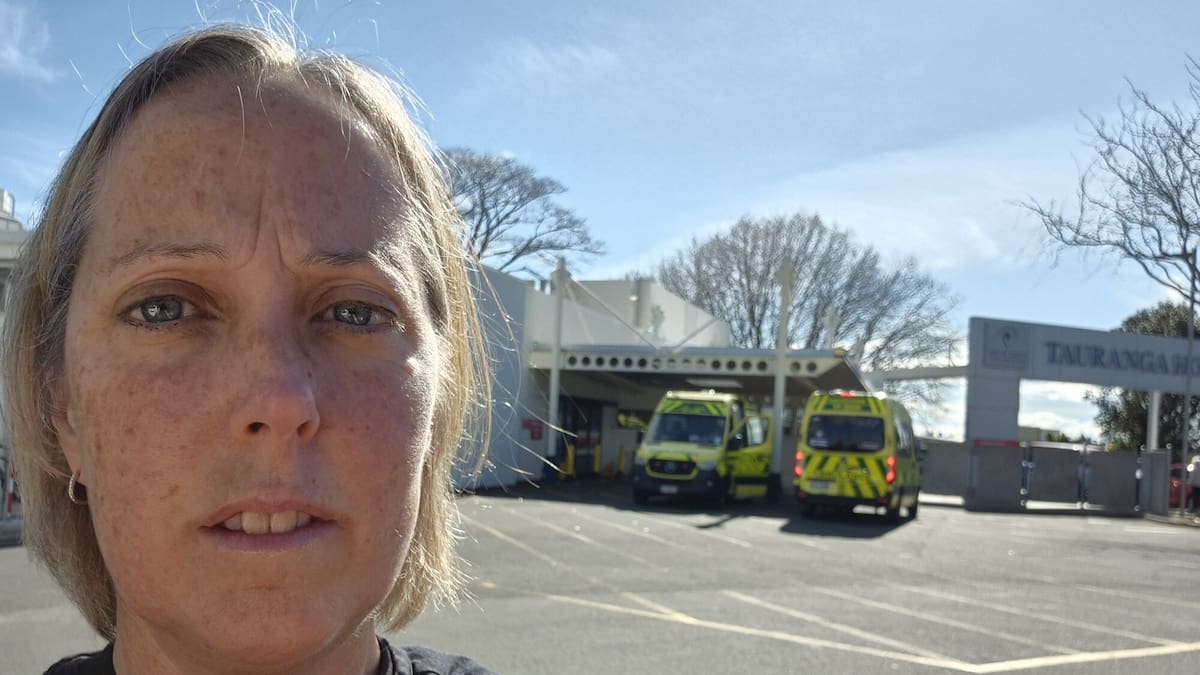
She said the ED had 24 beds, and there had been none added since four in 2010.
“We regularly are at 200% occupancy and recently we’ve been up to 300% occupancy for prolonged periods.
“So, we have lots of patients in corridors 24/7. It’s not just an occasional thing – we regularly have five to seven patients in corridor spaces.”
Tauranga has an estimated population of 161,000 as of last year, plus 60,100 in the surrounding Western Bay of Plenty District, which the hospital also serves.
That’s about 62,600 more than recorded in the 2013 Census.
“We don’t have the space for it [the growth], Moore said. ”We need double what we’ve got.
“Each morning, we will have about six to 10 patients waiting more than 12 hours to get admitted to the hospital.”
This winter had been “horrendous, possibly the worst I’ve known” due to flu affecting patients and staff, she said.
“The problem we have is that we are the only place that’s open 24/7.
“People often get worse overnight, particularly kids, and we’re the only safe place for them to be brought.”
She said overnight ED presentations had increased in the past few years.
“It’s not stuff that could easily get deflected to urgent care for the morning. It’s stuff that actually needs sorting out that night.”
This included children with fevers, chest and abdominal pain and respiratory issues, she said.
“We are massively understaffed and under-resourced and, at the moment, there’s an awful lot of staff in ED who are close to burnout.”
The Government last year announced a new 24-hour urgent healthcare service in Tauranga would be operational by mid-year, but later delayed it until December.
Health NZ Bay of Plenty operations acting group director Sarah Nicholson said Tauranga Hospital ED continued to experience significant demand, reflecting rapid population growth and “increasing complexity” of patients.
Tauranga Hospital’s Emergency Department is one of the busiest provincial EDs in the country, with more than 63,000 annual presentations. Photo / Kelly O’Hara
Winter illnesses had added more pressure to “an already busy service”.
During periods of “exceptionally high demand”, care may “occasionally be provided outside usual treatment spaces”.
Nicholson said patients remained under clinical supervision and staff worked hard to maintain their safety, privacy and dignity.
Anyone requiring emergency care would continue to be assessed and treated, with those most in need seen first, she said.
Nicholson said ED presentations across Tauranga and Whakatāne Hospitals increased from 37,146 in the first six months of 2016 to more than 45,000 a decade on.
A recent study confirmed Tauranga was one of the busiest provincial EDs nationally, with more than 63,000 annual presentations, she said.
Nicholson said the ED included 21 acute treatment spaces, a procedure room, four ambulatory consultation spaces and an observation unit.
“We recognise demand has grown significantly and additional capacity will be required to support future service needs.”
Several options were being explored while longer-term redevelopment planning progressed, she said.
Tauranga Hospital was included in the hospital redevelopment programme announced in Budget 2026, which included a new acute services block with a “significantly larger” ED, Nicholson said.
Work to improve patient flow across the hospital and develop the workforce continued. Recruiting medical and nursing staff was a priority to support the growing demand.
Nicholson said Health NZ recognised some patients had longer waits and thanked the community for their patience.
“We also acknowledge the professionalism and dedication of our staff, who continue to provide high-quality care under significant pressure.
“We remain focused on increasing capacity, strengthening our workforce and ensuring people in Bay of Plenty continue to have access to safe, timely emergency care.”
Health NZ did not address questions about whether the new 24-hour urgent care centre was on track for December, or who the provider would be.
An early concept image of what future buildings at Tauranga, Hawke’s Bay and Palmerston North Hospitals could look like as part of planned redevelopment.
Health Minister Simeon Brown yesterday released early concept images showing what future buildings at Tauranga, Hawke’s Bay and Palmerston North Hospitals could look like as part of planned redevelopment.
Brown said an acute services building was at the centre of each redevelopment.
This would accommodate the ED, intensive care, maternity services, operating theatres and other acute services, he said.
Having them under one roof would provide faster access to critical care.
Early concept images show what future buildings at Tauranga, Hawke’s Bay and Palmerston North Hospitals could look like as part of planned redevelopment. It can be adapted for each hospital, so each site can respond to its own requirements and the needs of its community.
Brown said site master planning, design feasibility work and site investigations were complete.
Planning teams were now refining the business cases, preparing for the preliminary design phase and progressing site preparation activities, Brown said.
The Budget 2026 funding supported planning and design work.
A 10-year regional deal signed between the Government and local councils in May said Tauranga Hospital would be redeveloped in stages over 20 years.
Megan Wilson is a health and general news reporter for the Bay of Plenty Times and the Rotorua Daily Post. She has been a journalist since 2021.