
“That’s a structural thing.
We shackle nurses into healthcare systems and medical practices.”
Smith founded Caci Clinic with her husband in 1994, and grew it to a nationwide network of more than 70 clinics.
In 2020, after selling a 47% stake to New Zealand’s largest private equity firm, Direct Capital, she stepped back, although she still sits on the board.
Smith started her career as a nurse, though.
In fact, she says she has only just lapsed as a registered nurse.
Smith, who grew up in Cambridge, went to Otago University to study pharmacy.
“Towards the end of that year I wasn’t really enjoying it,” she says.
“I saw a TV programme about nursing and thought, ‘Oh, give that a shot’.”
She didn’t stay in nursing for long but retains a passion for it.
That’s what drives her current ambition to restructure many health services around nursing.
“What I’ve seen in our business is that nurses can operate their own practice with absolute safety,” Smith says.
“They’re very focused on their customers, and deliver really great service. I think that there are areas of the healthcare system where nurses have a much bigger part to play, and that’s really where I want to spend my time and my energy.”
There are areas, like dialysis, that are already effectively run by nurses,” Smith says.
“Why do we have to have them in hospitals? Why can’t we have those in the community, and why can’t nurses take a much bigger part in running those?”
It is usually about funding, she says.
There is a lack of access to capital and a need for a legal framework that allows them to practise independently.
“It’s going to take some bold thinking to think about how we restructure our healthcare system for the future,” Smith says.
“We all know that we’ve got an ageing population. There’s chronic disease that we are going to have to manage and pay for. We can’t just keep doing things the same way.”
Smith says she would like to set up a bipartisan working group that looks at how we might do things differently.
She acknowledges that there might be some pushback applying a commercial model to public health.
“I don’t think you can translate business straight into government,” she says.
“But I do think that there are lessons that you can take from business.
“I think we’re bureaucracy-heavy, but maybe it is less about that and more about how you enable people to really make a difference.”
The Caci Clinic franchise model grew organically. But only after Smith and her husband David took a big leap of faith.
In the late 1980s, the couple were travelling and found themselves living on Jersey in the Channel Islands.
“David and I [he was born in the UK] in the late ’80s we kind of went exploring, as everybody does.
“I fell into the business world when we were in the Channel Islands and started working in a computer technology company,” Smith says.
Her husband had more of an entrepreneurial bent, she says.
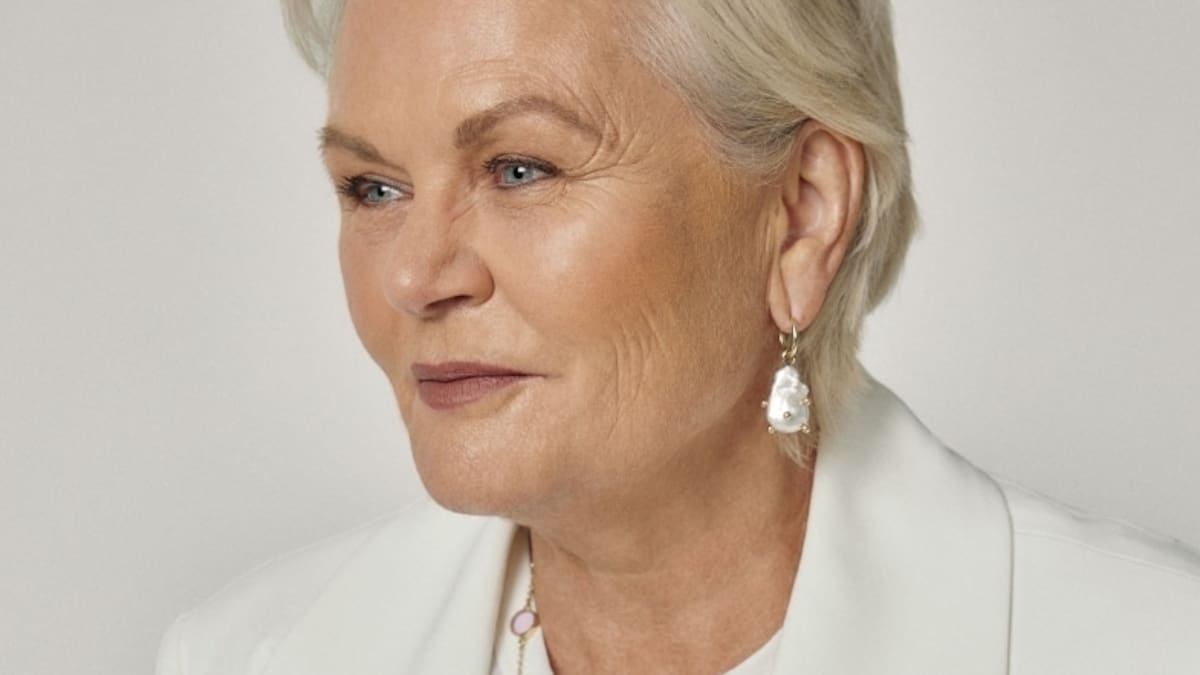
Jackie Smith founded Caci Clinic with her husband in 1994, and grew it to a nationwide network of more than 70 clinics.
“He’s probably the one that’s more focused on money itself. He was quite ambitious. He was the one that wanted to be a millionaire when he was 30 and all that stuff.”
It was one piece of technology that changed the course of their lives.
“We had been living in the Channel Islands for six or seven years, we had a 3-year-old son, and it was time to come back to New Zealand, really,” Smith says.
“But not long before that, David’s aunt had pointed out this piece of technology, and we flew to London, and that was the original Caci machine, which was a facial toning machine.”
It was a piece of technology based on microcurrent.
“Quite quickly after that we opened our first clinic, though, we realised that we needed more than that in the business.”
The couple had a second child by that point.
“David was up in the middle of the night watching Tomorrow’s World … the British science programme. Flying cars and all the rest. There was a programme about this laser that was being built in Wales that was treating unwanted body hair.”
“David’s a bit like a terrier, I suppose. He doesn’t let things go. So off he went and tracked that down, and we got into laser hair removal fairly quickly after that.”
It was a big leap in terms of the investment required.
“That was definitely kill or cure,” Smith says. “Probably we were a bit naive at the time.”
It wasn’t all luck, of course.
David had done an MBA in the UK, so he could see how to put a business together.
“I had the clinical aspect of it,” Smith says.
“I think that was one of our core skills really, being able to take a piece of technology, which on its own it’s, you need to wrap it in a system to be able to deliver something to a consumer or customer.”
They never intended to build a franchise, she says.
“In those days there weren’t all the business books and all of that kind of things that you can follow today. So, we weren’t really thinking about our strategy and ‘what are our goals’ and all of that kind of thing.”
In fact, the goal was just to support the family, she says.
“But quite quickly we had people kind of knocking on our door saying, ‘We wanna do what you’re doing, and we think that’s great, and sounds like a great idea, so how can we do that?’
“That’s when we had to decide on the pathway that we went down and ended up franchising.”
So what does money mean to Smith now that the Direct Capital deal has given her some real financial freedom? Is it still a goal?
“Money is this kind of the housekeeping bit,” she says.
“You have to work and everybody says that they’re focused on the customer. But most people don’t really understand what it is to be focused on designing a business that delivers exactly what that customer needs.”
“If you do that well, and you get your structure right, then you make money. But you have to get those other things right first.”
As for her attitude to money over the years, Smith was always focused on growing the business.
“I think probably until we sold part of the business to Direct Capital, up until then, I think we still lived a pretty frugal life. We kept reinvesting in the business.
“You’re also time poor as well. And we paid ourselves a lot less than if we went out and got a job.”
But they still enjoyed life.
“I mean, we had some good holidays,” Smith says. “We had good opportunities to travel.”
They were often able to link family holidays to work trips, she says.
“We would go to conferences and that kind of thing, and perhaps have a holiday at the end of that.”
Nowadays Smith has the freedom to travel much more on her own terms.
Money Talks always asks guests for what their most indulgent purchases are …
“I would probably say business travel … business class seats. I always feel like that’s a bit extravagant.”
Listen to the full episode for the complete conversation.
Money Talks is available on the iHeart app or wherever you get your podcasts.
The series is hosted by Liam Dann, business editor-at-large. Thanks to CMC Markets.