
“For me, PTSD was something that soldiers got,” he said.
“People that have been shot at, they get PTSD. And I was like, ‘it’s not me’.”
Korach’s wife believed otherwise.
He compared himself to colleagues who’d been confronted with traumatic situations, wondering why, or if they were going through the same.
Korach described PTSD as an “invisible prison”, and began avoiding things because of paranoia and hypervigilance.
Sitting at a cafe with his back to people left him tense, and some towns in Northland triggered anxiety.
He even stopped diving, something he felt had held him together toward the end of his career.
The sound of sirens and water lapping were triggers too, and nightmares still came regularly.
Korach medically retired from the force once he accepted his diagnosis.
But he grieved the loss of what was supposed to be a lifetime career.
His experience made him feel people didn’t know enough about PTSD.
Some colleagues and other emergency workers couldn’t understand what he was going through, he said.
About a year ago, Korach recorded a private YouTube video about his ordeal and sent it to friends and family.
Motivated by his late grandfather who served in the Navy, Korach began filming and posting episodes publicly this year.
The work, dubbed Behind the Uniform, gave him purpose.
“I lost that when I lost my job, and maybe in a small way this can help me get a bit of that back as well.”
Though he felt his videos were going “into the void” at times, positive feedback kept him going.
People from all walks of life attended his seminars, whether in emergency services or working as funeral directors.
His ability to share his testimony with a room full of strangers was evidence of the strides he’d made in two years.
Korach’s dream was to help young people recognise symptoms early, something he wished for himself.
“If it’s just starting or you’re just noticing it, there’s no reason why you might not even be able to continue working.
“I’d love to be able to help out some cops … because we should be investing in our young staff and we should be making sure they can do a full career.”
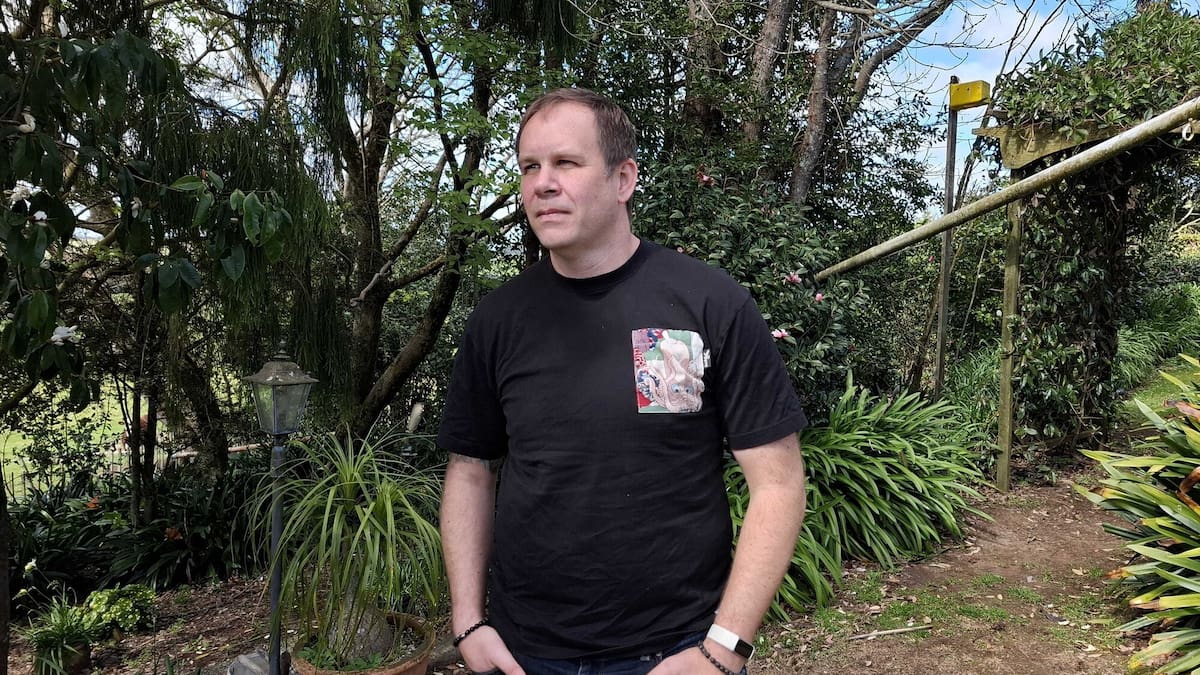
Former cop Haydn Korach is on a mission to spread awareness about PTSD after he medically retired from the police force.
Korach knew he would never be in uniform again.
Becoming a police officer kick-started his dream after he was robbed in the Whangārei Rose Gardens at 14.
When he went to the police station to report the crime, he was chucked in the passenger seat of a police car and watched the arrest unfold.
He was hooked.
By 18, Korach was in the police force, but the allure of fast cars and getting bad guys off the street turned into something more.
Haydn Korach medically retired from the police force in 2023 after he was diagnosed with PTSD. He worked as a police officer for more than 20 years.
A standout moment was when he helped a woman on holiday in New Zealand break free from an abusive marriage.
“She sent me an email, and she was like, ‘I think I would have died if I had stayed in that situation’.”
Korach worked across the North Island during his career, including as a Wellington Police College instructor.
He worked mostly on the frontline and became a supervisor for Kaikohe and Kaitāia before being promoted to senior sergeant.
Korach hoped to one day study psychology or work in the welfare space, though he knew there was work still needed and triggers he hadn’t quite figured out.
Despite that, there was tangible proof of his recovery.
With the aid of his psychologist, Korach was able to reclaim a love of the ocean that PTSD once stole from him.
It took 18 months, but he was now able to take his children snorkelling.
Behind the Uniform had helped too.
“I think it’s helping me therapeutically as well because it’s helping me kind of become who I wanted to be again,” he said.
Brodie Stone covers crime and emergency for the Northern Advocate. She has spent most of her life in Whangārei and is passionate about delving into issues that matter to Northlanders and beyond.