
Opened in 1896, Glasgow’s subway is the world’s third-oldest underground railway and also officially one of the smallest. Operating on a narrow 1.2m track gauge, the one-line system known as the “Clockwork Orange” travels through tunnels with a diameter of 3.35m. If you’re a very tall traveller, you may need to duck to enter the carriages. Despite the compact dimensions, it’s a great way to explore Glasgow, stopping at 15 stations north and south of the River Clyde on a 10km route. With just two tracks – the Outer Circle (clockwise) and the Inner Circle (anticlockwise) – it’s almost impossible to get lost. Get off at the Kelvinhall stop to explore the diverse and eclectic collections of the Kelvingrove Art Gallery.
Glasgow. Photo / Ben Wicks on Unsplash
Paris, France
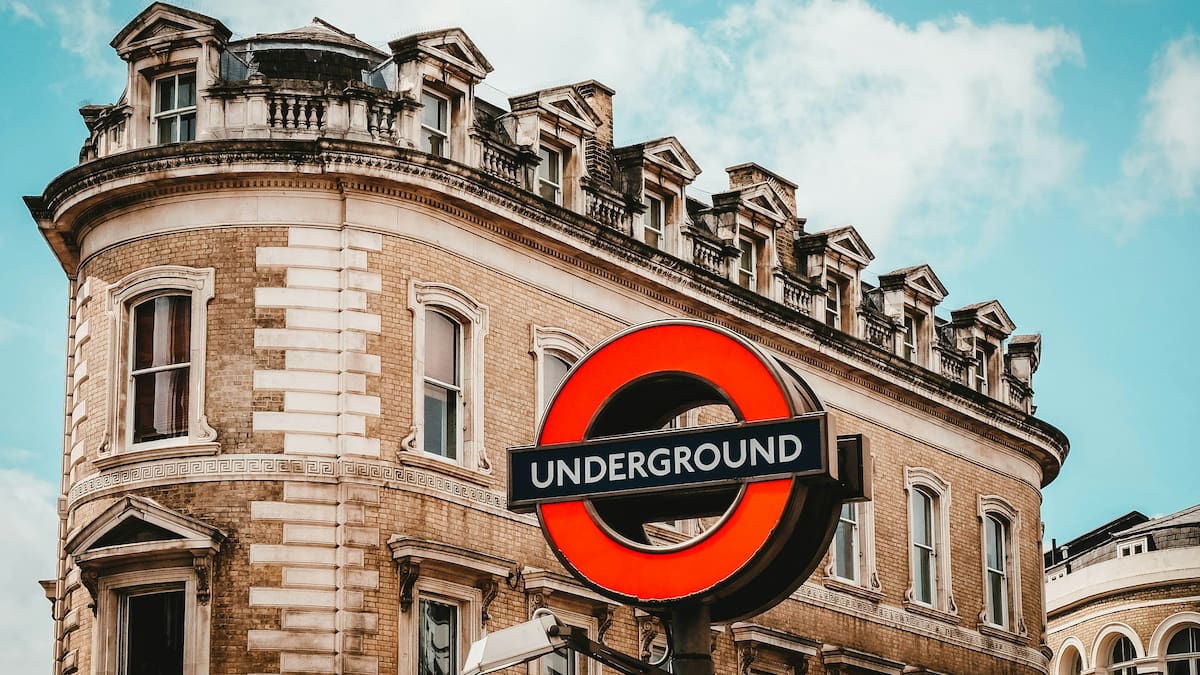
Designed by French architect Hector Guimard, the elegant Art Nouveau entrances of the Paris Métro are a signature motif of the city. When erected in 1900, disdainful Parisians considered the signs’ sinuous typeface as being “too hard to read”, but like London’s iconic red and blue Tube “rondel”, they’re now much-loved. With 14 lines and more than 300 stations, the Paris Métro is remarkably extensive, and its name has become a generic descriptor for other underground networks. Harnessing technology developed by Michelin in the 1950s, the Paris Métro was also the first network to feature rubber tyres on its wheels. From the Père Lachaise station, pay your respects to Edith Piaf, Jim Morrison and Oscar Wilde at the nearby Père Lachaise Cemetery.
Paris. Photo / Sebastien Gabriel on Unsplash
Tokyo, Japan
Unlike most subways, the labyrinthine Tokyo system is actually run by two operators – Tokyo Metro and Toei Subway – both combining across 13 lines and more than 280 different stations. Factor in seamless links to various private rail companies, and it’s a labyrinthine system that can bewilder visitors. Arrayed across multiple underground levels, mega-stations like Shibuya and Shinjuku are self-sufficient mini-communities crammed with shopping malls, bars, supermarkets and ramen restaurants. Using Google Maps makes things easier, but getting occasionally lost is all part of the experience. Stored-value Suica cards can be used to access all lines, and are also accepted at convenience stores for drinks and snacks. Exit at the Harajuku station to explore the Meiji Shrine in leafy Yoyogi Park.
Japan. Photo / Liam Burnett-Blue on Unsplash
New York, US
From Duke Ellington’s Take the ‘A’ Train to Downtown Train by Tom Waits, New York’s subway frequently features in American music. First opened in 1904, the original one-line Manhattan service has now expanded to 25 lines and more than 470 different stations. Buskers are a regular feature of its stations, and U2 and Green Day both performed impromptu subway gigs, remaining incognito in wigs, hats and sunglasses. Four of New York’s five boroughs – Manhattan, Queens, Brooklyn and The Bronx – can be reached on the subway, and reflecting New York’s “City that Never Sleeps” moniker, the network runs 24 hours a day. To reach New York’s fifth borough, Staten Island, catch a boat from Whitehall Terminal near the South Ferry station.
New York. Photo / Sharkie on Unsplash
Stockholm, Sweden
Known locally as the Tunnelbana, the Stockholm Metro features 100 stations across three lines. The number of stations is roughly split 50:50 for underground and overground stations, but virtually all feature bold art installations. Ranging from mosaics to colourful murals, many of the artworks have been carved directly into the exposed bedrock underneath the city. It’s an innovative practice that has seen the network called “the world’s largest art gallery”. Highlights include Kungsträdgården with its cave-like design showcasing a surreal synthesis of sculptures and archeological details protected during the station’s construction. To explore Stockholm’s medieval old town, get off at the Gamla Stan station.
Stockholm. Photo / Kylie Cheung on Unsplash
Moscow, Russia
With more than 500km of track, 16 lines and more than 300 stations, the Moscow Metro is one of the world’s largest subway networks. In a nod to WWII and Cold War defence throughout the mid-20th century, some stations were designed to also function as bomb shelters. On average, the network’s stations are deeper than in other cities; the escalators and lifts at the Park Pobedy station descend 84m underground. Imposing stations feature soaring ceilings, grand halls and huge chandeliers, while some older stations in the network, first built in 1935, include Communist-era motifs including red stars and the hammer-and-sickle symbol. Artwork is often in the Socialist Realist style with bold representations of factory workers, farmers, soldiers, and athletes. Famous for its bronze statues, Ploshchad Revolyutsii station is just a short walk from Red Square.
Moscow. Photo / Getty Images
Buenos Aires, Argentina
Opened in 1913 when Argentina was one of the world’s wealthiest economies, the Buenos Aires Subte is the oldest underground system in Latin America. Rattling wooden carriages originally ran along Line A linking Plaza de Mayo and Plaza Miserere, and these characterful heritage trains were only decommissioned as recently as 2013. Like Stockholm and Moscow, some stops on the six-line, 90-station network resemble subterranean art galleries with artworks and mosaics inspired by Argentine history and culture. Lima Station on Line A is renowned for its murals celebrating the city’s passion for tango. From there, stroll down broad avenues to the famous Casa Rosada on Plaza de Mayo.
Buenos Aires. Photo / Unsplash