
New Zealand’s economy grew 0.2% in the June quarter, according to new GDP figures from Stats NZ.
In the 12 months to June, GDP rose 1.7%. GDP per capita rose 0.1% while real gross national disposable income fell 0.4%.
Expenditure on GDP rose 0.4% in the three months to June, off the back of a 1.1% rise in the previous quarter. In the 12 months to June, expenditure on GDP rose 2.2% compared to the same period in 2025.
Stats NZ also revised the previous March quarter figure from 0.8% growth to 0.9%.
“The 0.2% growth in economic activity in the June 2026 quarter reflects mixed results, with increases in nine out of 16 industries,” general manager and macroeconomic spokesperson Jason Attewell said.
Construction was up 2.7% in the quarter, the largest upward contributor driven by construction services and residential building construction.
“An increase in residential building activity contributed to the overall growth in the construction industry in the June 2026 quarter,” Attewell said.
Other drivers included public administration and safety, which were up 2%, driven by central government administration and justice.
Healthcare and social assistance rose 0.8%, driven mainly by central government healthcare and social assistance, and private sector residential care services and social assistance.
Wholesale trade was up 1.3%, driven by the wholesaling of machinery, equipment, and other goods.
Transport, postal, and warehousing was the biggest downward driver, falling 1.7%. This was driven by a decline in road transport and support services.
Retail trade and accommodation were also down 1%, driven by accommodation and food and beverage services.
Export volumes rose 3.3% in the June quarter. Meat exports were up 10.3%, with other food, beverages, and tobacco up 7.2%. Dairy exports were up 7.2%.
“US demand for New Zealand beef contributed to the increase in meat exports in the June 2026 quarter,” Attewell said.
Import volumes fell 0.8%, driven by imports of services (down 3.7%), travel services (down 6.4%), and transport services (down 7.5%).
Gross fixed capital formation (or investments in fixed assets) rose 1.5%, driven by a 4.4% increase in spending on residential building.
Willis says economy ‘defying expectations’, Labour says Kiwis ‘going backwards’
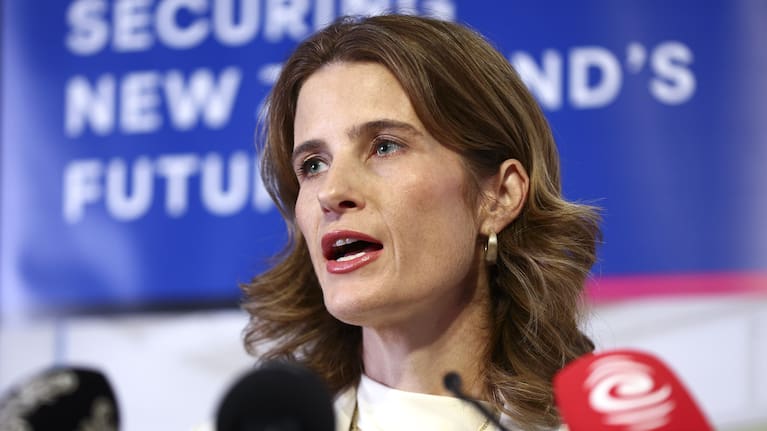
Finance Minister Nicola Willis said New Zealand’s economy was “defying expectations”.
“The first half of this year was tough as families and businesses dealt with a sharp spike in fuel prices caused by the conflict in the Middle East.
“The Reserve Bank had pencilled in flat growth for the June quarter, and many economists had been picking the economy to shrink. Instead, it grew.
“A growing economy means more jobs and higher wages. It means more money coming into communities. It means more doctors, nurses and teachers, and better schools and hospitals.”
She said economic recovery was “well underway”.
Labour’s finance and economy spokesperson Barbara Edmonds said New Zealanders were “worse off” today than they were three years ago.
“Real GDP was $54,635 per person when Labour left office, it’s now $53,375. Nicola Willis can spin herself dizzy, but New Zealanders know the truth: they’re working harder, but still going backwards.”
“National has left New Zealand weaker and more exposed when global shocks hit. Instead of a plan, all New Zealanders got was more cuts, more chaos, and higher prices.”