
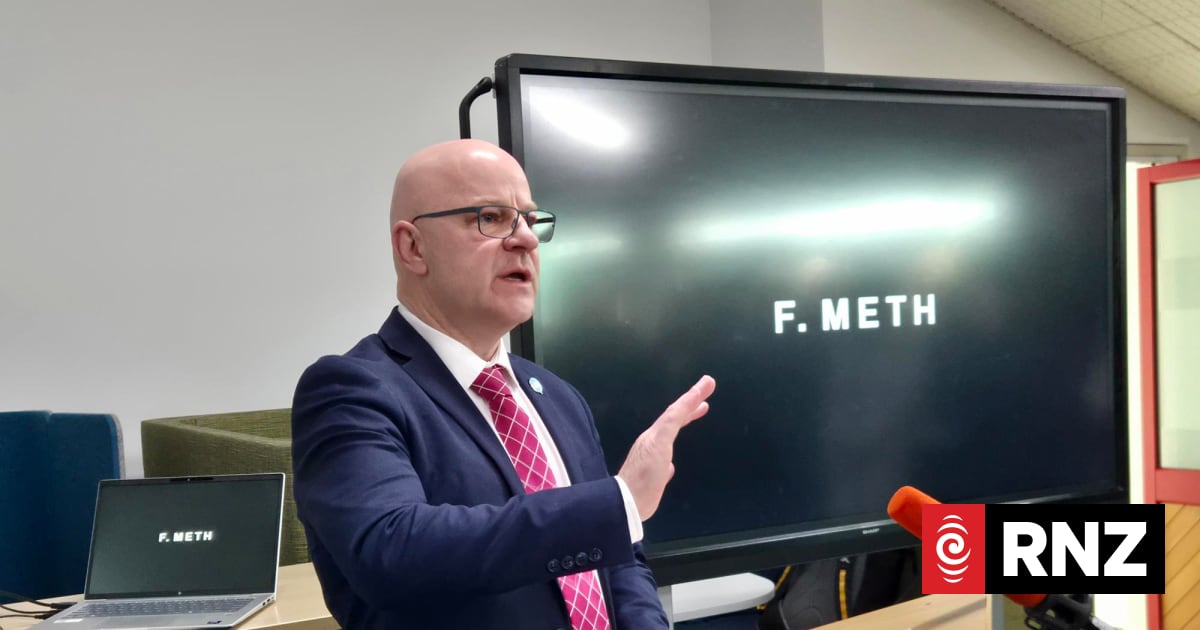
The government has launched a deliberately provocative anti-meth campaign with a blunt message – “F. Meth” – after an earlier effort fell flat.
The slogan has intentionally been left open to interpretation, with officials suggesting meanings including fight meth, face meth, forget meth or be free from meth.
But for some with lived experience of the drug, the message is more explicit: f*** meth.
Community advocate Tee Tanielu is one of the faces of the campaign, alongside her partner Flo Murray.
Speaking to RNZ at the launch in Porirua on Thursday morning, Tanielu picked a more complicated word: “forgive”.
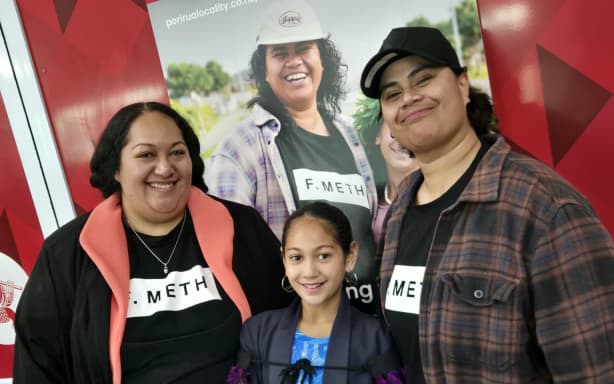
Flo Murray (L) and Tee Tanielu (R) with their child (centre)
Craig McCulloch/RNZ
“For a lot of us, including myself, meth wasn’t the problem; it was the solution. And so, sometimes we have to move past what it did in order to finally get to why we used it.”
She paused before adding: “And just f*** meth too… that as well. Just f*** meth!”
Mental Health Minister Matt Doocey was also unapologetic about the branding.
“Meth is provocative, right? We’ve got to meet it head on.”
The $1.6 million campaign – which will run across multiple platforms – will be funded from the Proceeds of Crime Fund.
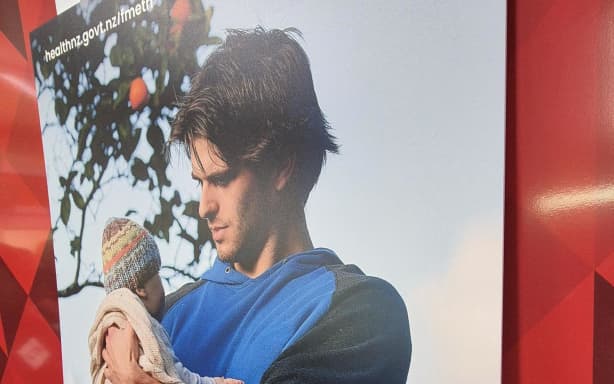
One of the campaign posters.
Craig McCulloch/RNZ
The Herald previously reported that an earlier $100,000 test video had “low engagement” on social media with an average view time of just two seconds.
But Doocey said the new phase had been tested in focus groups and shaped with feedback from people who had used meth and those working on the frontline.
“We wanted to know what will connect with them, what will get the cut-through.”
He said the campaign would be evaluated after six months and tested against a target of reaching 2.5 million New Zealanders aged 18 to 59, as well as whether they remembered the message or sought help.
“It creates hope. It’s planting seeds”
Also at the launch, addiction counsellor Michael Hogan told RNZ he first used the drug in a pub in the 1990s.
“I used to have a few beers on the weekend. Typical Kiwi bloke,” he said. “I didn’t know what I was getting involved in.”
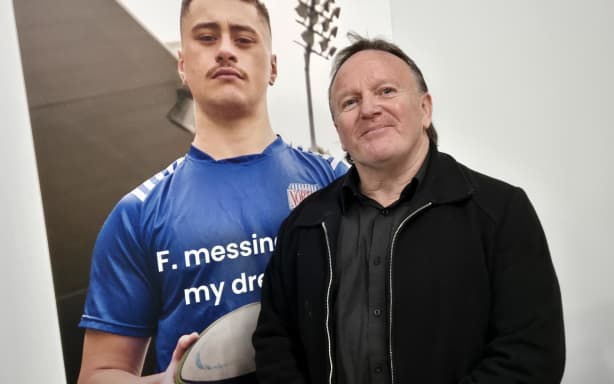
Michael Hogan
Craig McCulloch/RNZ
His meth use escalated. Hogan said he lost the respect of his children, sold his house and became a low-level drug dealer.
“Hated myself, loathed myself. Lost respect for who I was,” he said. “I’d lost all control.”
Hogan eventually spent two years in residential treatment and is now 15 years free from meth.
He hoped a campaign as blunt as F. Meth might reach someone before their life unravelled – or at least give them a reason to think about getting out.
“It’s normalising recovery. It creates hope. It’s planting seeds.”
But Hogan stressed advertising alone would not fix the problem.
“We’re bandaiding a lot,” he said. “We need more rehabs. We need to get some education into our youth.”
Doocey said the campaign was just one part of a wider $30.6 million health-led response announced last year, including more treatment, early intervention and prevention programmes.
Meth use has remained stubbornly high since surging in mid-2024.