
Bridge told Waititi that when his friends moved to the popular fringe suburb, they were asked if it was to the “Rita Ora end or the Kāinga Ora end?”, prompting hearty laughter from his passenger.
“Oh my God,” Waititi said on hearing his singer-songwriter wife of four years’ name.
“I didn’t even figure into the conversation.”
Ora loved spending time in New Zealand, he said.
“She goes to Pilates over at Sala, she just wanders about … she gets away from everyone in the world and just comes here and thrives and rests.”
Taika Waititi is one of New Zealand’s most successful film-makers. Photo / AP
As for him, he was “healthy, happy” but touched on a dark note as he and Bridge sang along to Ora’s I Will Never Let You Down.
“Great messaging … fantastic, because I’ve been let down a lot in my life,” Waititi said, name-checking Inland Revenue and the education system.
“We weren’t taught tax at school. And it comes to bite you in those first few years after high school and you go and get a job and they’re like, ‘Would you like to pay tax? It’s optional. Pay as you go if you want’.
“You spend a good four or five years not paying tax, and then it really comes back to bite you. If there are any young people out there, pay your tax.”
The Hunt for the Wilderpeople writer-director’s focus was now on the Auckland studio he bought with Jason Momoa and Cliff Curtis.
“I want to … bring all my projects and films and stuff, within reason, to New Zealand so I can be in the country I love, work with the people I love.”
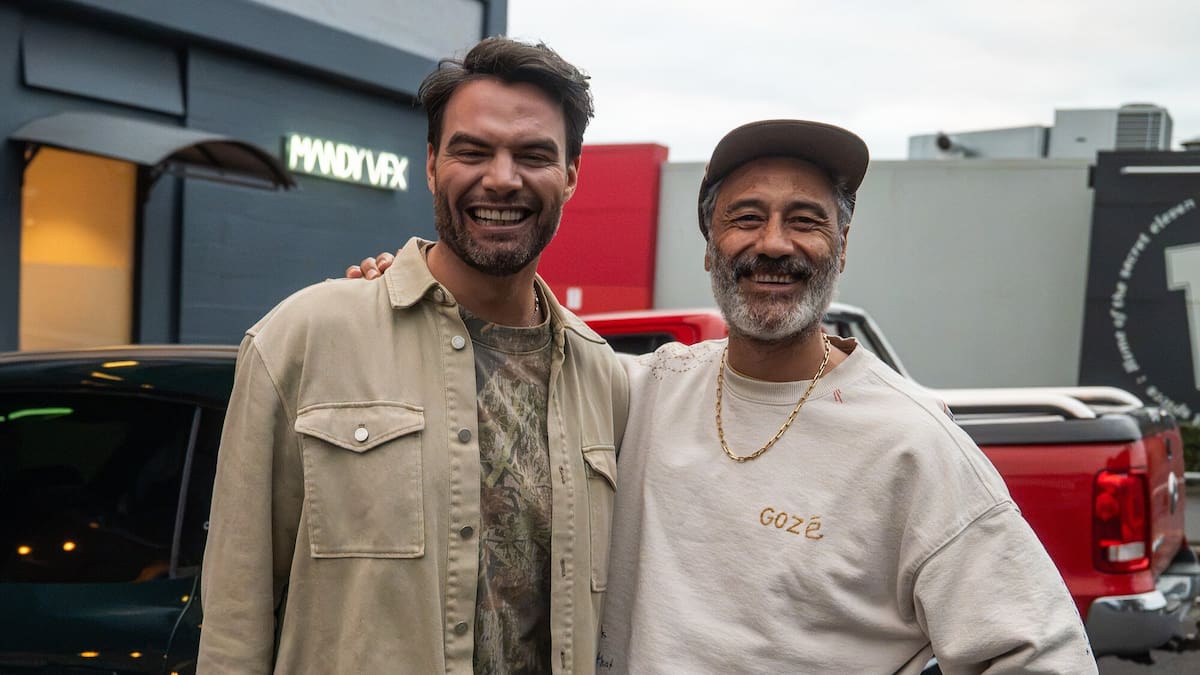
Ryan Bridge and Taika Waititi canvassed a range of subjects as they drove around Auckland this week. Photo / Corey Fleming
The driver for his career was that he’d “always loved stories”, Waititi said.
“That’s sort of what’s driven me through most of my stuff, creatively, just wanting to be able to reach people, touch people and maybe just make a little change, make them think slightly differently.”
Watch the video for the full interview.