
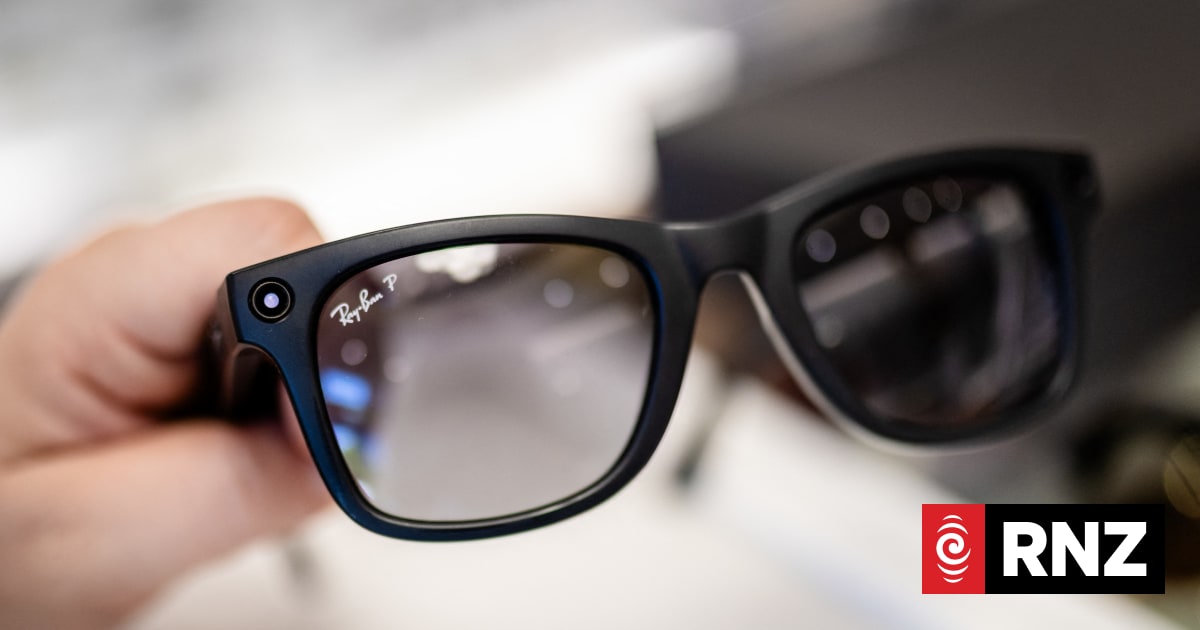
A ban on smart glasses capable of covertly recording people is being considered for Commonwealth buildings amid concerns about the technology’s privacy and security risks.
Restricting the use of wearable devices is among a wide range of technology issues on the federal government’s agenda, with ministers progressing plans for Australia’s uptake of artificial intelligence and related workplace protections, data centres, investment and online safety.
Prime Minister Anthony Albanese will travel to the US on Friday for high-level talks with tech executives and world leaders while major employers gather in Canberra for a roundtable and separate consultation begins on national AI standards for data centres and frontier model training.
AI will also feature in the upcoming 2026 Intergenerational Report due to be released next week, with Treasurer Jim Chalmers revealing he met with an Anthropic official to discuss the technology’s economic opportunities and potential risks.
Albanese said AI and online safety would be a major theme of his visit to Apple’s headquarters in California and attendance at the United Nations General Assembly in New York next week.
“We want Australia to be a country that helps shape the AI age rather than simply responding to it,” he said.
Labor mulls smart glasses ban
With growing community backlash over the increased availability of more affordable smart glasses capable of secretly recording people, the government has made its first move to rein in the technology.
Finance Minister Katy Gallagher has asked the Australian Public Service Commission for advice on the use of smart glasses across Commonwealth workplaces, including whether the technology should be “prohibited” and what exemptions might be appropriate.
Gallagher said the Australian Public Service should always set the standard as a “model employer”.
“Smart glasses can raise legitimate privacy and security concerns, particularly because of their ability to record and capture information, and we need clear and consistent guidance for public servants,” she said.
The government has already asked the nation’s Privacy Commissioner to give the use of smart glasses “priority consideration” amid widespread community concerns about their potential impact.
National standards for data centres and training frontier AI
The government has also opened consultation on national AI standards covering large data centres and the training of frontier AI models in Australia.
The proposed rules would set mandatory requirements for data centres covering power supply, energy costs, water use, location, community engagement and skills.
Australian Prime Minister Anthony Albanese.
ABC News / Ian Cutmore
They would also impose safety, security, transparency and local investment conditions on frontier AI training.
Consultation will remain open until 9 October with the government planning to legislate the standards early in the new year.
Industry Minister Tim Ayres said the standards were about ensuring Australia captured the technology’s “enormous opportunities” while maintaining the trust and confidence of the community.
“By setting high standards now, Australia can shape the future of this technology rather than simply adopting standards made overseas,” he said.
Assistant Minister for Science, Technology and the Digital Economy Andrew Charlton said the government had been “clear” about welcoming AI investment, provided it was on “Australia’s terms”.
AI will be ‘defining influence’ on Australia’s economy
AI will also feature prominently in next week’s 2026 Intergenerational Report, which will examine what the technological shift could mean for productivity, jobs and investment in decades to come.
An excerpt of the report described AI as a “defining influence” on the economy over the next 40 years.
Chalmers said Australia had a “big opportunity” to lift productivity, investment and living standards, but must not be “complacent” about potential downsides.
“The global AI boom is worth hundreds of billions of dollars and we are positioning Australia to capture more of that supply chain,” he said.