
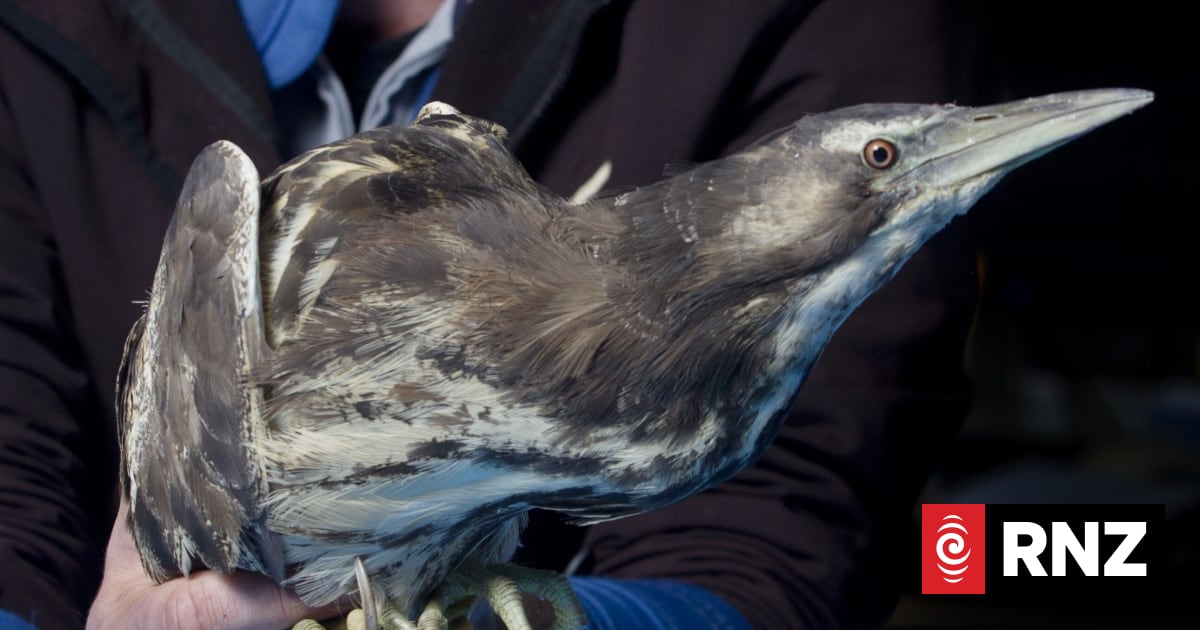
Northland’s Amy Macdonald is calling on Te Tai Tokerau to “back the bittern” – one of Aotearoa’s most endangered wetland birds – in the Bird of the Year competition, with only two days remaining to vote.
“The bittern is a beautiful bird. It’s shy and elusive, but that doesn’t mean it doesn’t matter,” the Northland regional councillor and freshwater ecologist said.
On Friday, the latest leaderboard showed the karure (black robin) holding first place, followed by the kākāpō.
The bittern / matuku-hūrepo didn’t feature in the top 10 birds in the most recent update.
But Macdonald wants to change that.

She urged people to get behind the critically threatened Australasian bittern in the highly-contested Forest & Bird competition.
The matuku-hūrepo is standing in the Shy Birds party – one of six different ‘parties’ in the competition. There will be a winning bird and winning party.
Once seen in large flocks throughout New Zealand, the matuku-hūrepo has declined to fewer than 1000 birds nationwide.
The drastic decline has coincided with the loss of about 90 percent of New Zealand’s wetlands since European settlement, a figure estimated at 97 percent in Northland.
Predation, habitat degradation, vehicle strikes and other pressures have also contributed to the decline.
Northland had “really good” remnant wetlands, Macdonald said.
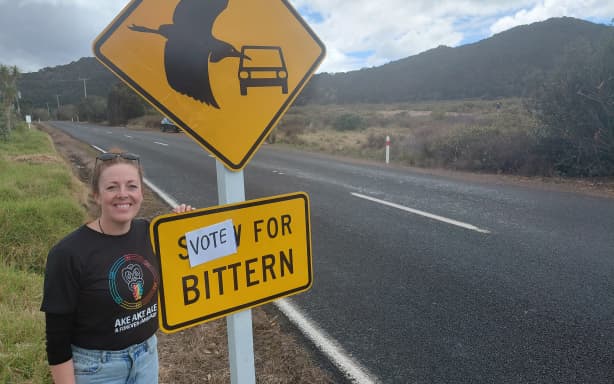
Amy Macdonald beside the bittern awareness sign at Pātaua South Road that runs alongside critical wetland habitat for the secretive bird.
Supplied/LDR via NZME
Protecting and enhancing those wetlands offered an opportunity to help the bittern population survive.
“Bitterns need clean water in wetlands because they hunt by sight, and good quality habitat.”
Macdonald said the bittern played an important role in encouraging people to protect wetlands.
She said farmers who discovered a bittern living in a wetland on their property often became even more committed to protecting that habitat.
The regional council would then work alongside landowners to fence wetlands and improve habitat protection.
Northland Regional Council is working with the Department of Conservation, Northland conservation network Kiwi Coast and community landcare groups across Te Tai Tokerau to better understand bittern numbers and distribution.
Kiwi Coast supports and connects more than 270 community, hapū and iwi-led biodiversity projects across Northland.
The council has also worked with others to install signs on State Highway 12 at Parore, south of Dargaville, and near wetlands at Pātaua South and Ngunguru, to warn drivers about the presence of bitterns after several were killed by vehicles.
The matuku-hūrepo is New Zealand’s only remaining bittern species. It is a large mottled brown, heron-like bird native to New Zealand, Australia and New Caledonia.
Macdonald, a Pātaua South resident, said bitterns were masters of camouflage and often hidden in plain sight.
“Keep an eye out. My daughter saw a bittern on the way to school two days ago, in a small roadside wetland pond area. It’s just a matter of noticing.”
Bird of the Year voting is proving a family affair, with Macdonald’s daughter casting her vote for the bittern after taking an interest in the competition through school.
That call is echoed by New Zealand’s Ngunguru-based Love Bittern Project national co-ordinator Wendy Ambury.
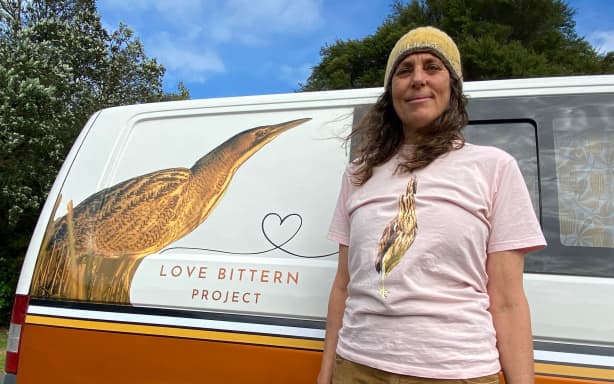
Ngunguru-based national Love Bittern Project leader Wendy Ambury
Susan Botting Local Democracy Reporter
“There’s a lot of bang for buck in backing bitterns,” Ambury said.
The species was on the brink of extinction and public awareness was critical to its future, she said.
Her call comes on the eve of this year’s national Great Matuku-hūrepo Muster.
Ambury said the volunteer group was seeking 1200 people around New Zealand for the citizen-science project, which listens for booming bitterns to help monitor populations.
Its first of three listening windows is Friday night.
The project asks North Island listeners to aim for the weekend closest to the full moon in September and October, and South Island listeners to do the same in October and November.
Voting on New Zealand Bird of the Year closes at 5pm on Sunday, 20 September, with the winner to be announced the following day.
LDR is local body journalism co-funded by RNZ and NZ On Air.