
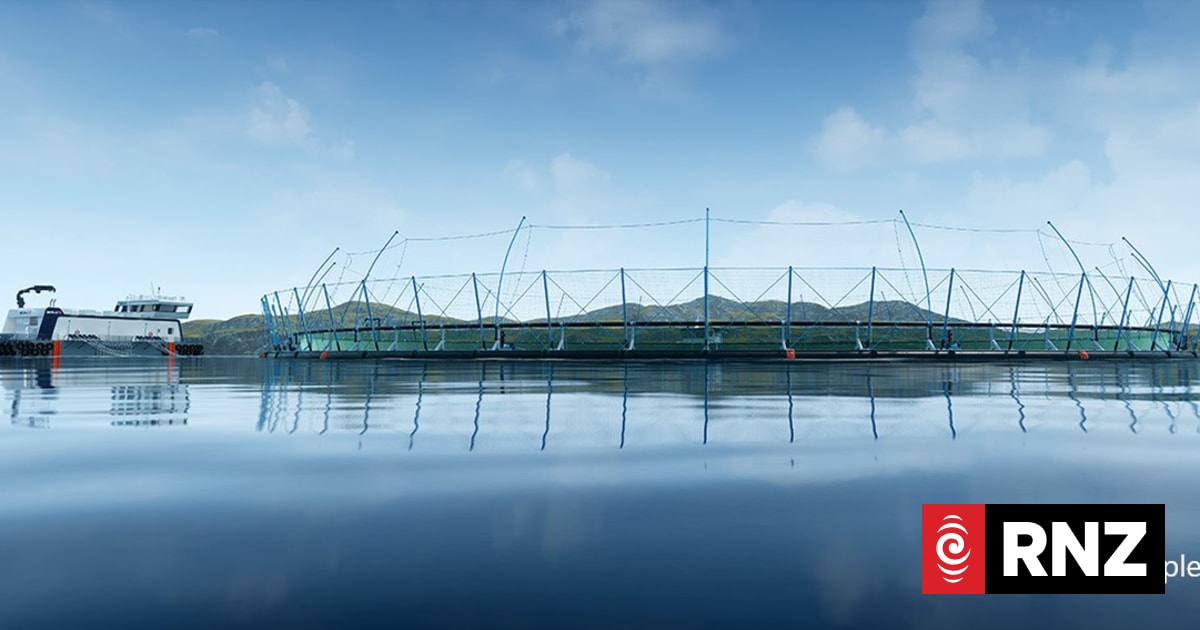
Aquaculture could rival the red meat sector by using open ocean fish farming, as global demand rises partly due to new weight-loss drugs.
That’s the hope of officials, investors, chief executives, iwi representatives and other sector leaders who discussed the opportunities in a meeting with the Ministry for Primary Industries (MPI) on Monday.
They set an aspirational goal of increasing exports to 450,000 tonnes a year, targeting the premium market, with industry players confident those gains were achievable regardless of whether drugs like Ozempic and Wegovy would continue driving demand for healthy, lean protein.
They had been invited by Fisheries Minister Shane Jones on Monday ahead of the government’s replacements for the Resource Management Act passing their final readings in Parliament this week.
Jones told reporters that with those reforms going through, industry players had agreed to share ideas with the government about growing the sector, starting by creating a regulatory system for open ocean farming.
They had reached the “hope and anxiety” stage, he said.
“What’s needed is certainty around the entire chain of activity, if you’re going to literally accelerate the emergence of a hitherto unknown industry, i.e. farming protein in the oceanic environment.
“No one is going to spend their money unless they’re confident that they’re going to secure the necessary statutory consents, which in itself is impacted by social licence.”
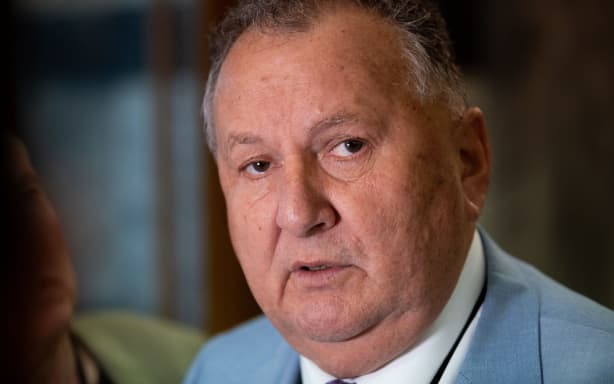
Fisheries Minister Shane Jones.
RNZ / Baz Macdonald
Open ocean fishing in New Zealand’s exclusive economic zone – the fourth-largest in the world – is currently limited to a handful of projects including NZ King Salmon’s world’s-first open-ocean king salmon farm the Blue Endeavour; Ngāi Tahu’s Hananui salmon project approved under fast-track off Rakiura/Stewart Island; and Te Whakatōhea Mussel Farm off Ōpōtiki.
Jones invited a couple of reporters to attend the start of the meeting, and industry sources later confirmed to RNZ discussion had centred on the challenges facing the industry and how the government could help overcome them.
While proposals to develop a bespoke aquaculture law and regulatory regime were not official government policy, slides shown pointed to plans to expand well beyond the current goal of $3 billion in annual revenue by 2035.
MPI director-general Ray Smith said 93 percent of the food New Zealand was producing was consumed overseas, with the primary sector exporting about $64 billion worth a year, but at around $750m aquaculture accounted for less than 1.2 percent.
“We’re big in dairy, we’re big in sheep and beef, horticulture now is bigger than forestry and processing … the aquaculture sector in New Zealand, if you think: we’re surrounded by water – but we barely use it.”
MPI director of strategy, insights and evidence Chris Kerr told the meeting the next 25 years would add “two billion extra mouths to feed”.
“We are exceedingly confident in that medium to long term outlook or demand for protein, in fact I’d go so far as to say there will globally be a structural deficit in supply of protein.”
He pointed to the rise of GLP-1 drugs like Ozempic and Wegovy.

RNZ composite/ screenshot
“Even in the developed world, the advent of GLP-1 drugs means there will be a surge in demand for that premium protein, nutrient-dense food.”
Kerr highlighted the discussion should examine what would be needed for the regulatory system to support it, identifying a new aquaculture law, national standards, proactive spatial planning, development zoning, allocation and licensing, compliance monitoring, “saying yes to onshore infrastructure” and delivering on settlements.
From the private sector, investment would be needed not only into science, research and development and the offshore kit, but infrastructure for onshore processing and hatcheries.
“This is about building an industry, not administering or regulating the system.”
Those gathered were agreed the focus should remain on premium products, with Akaroa King Salmon chief executive Stewart Hawthorn saying “we’re not trying to be McDonald’s, we’re trying to be a high quality food that’s good for people and good for the planet”.
He said the government needed to be making consistent decisions in a centralised way with all departments operating together, acknowledging challenges the industry had faced with the Department of Conservation.
He suggested there may be opportunity to expand to Atlantic salmon, and there may be other species.
Whakatōhea Mussels chief executive Peter Vitasovich said species in warmer waters further north including kingfish, and ocean trout.
“I think that will complement our industry rather than being stuck in a single species with salmon.”
An iwi-linked source confirmed that responsible investment and planning for the long-term health and future of the oceans was a priority, and said the meeting discussed expansion into other species, particularly greenshell mussels.