
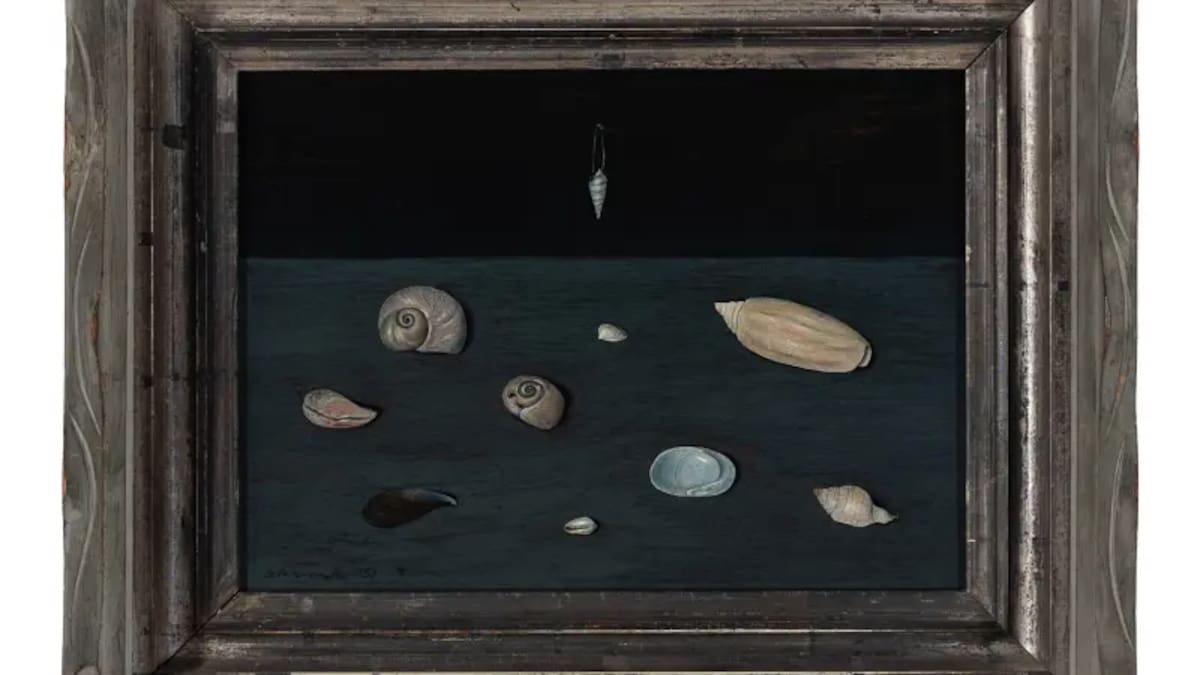
The owner contacted art historian Susan Weininger, an authority on Abercrombie’s work, who confirmed the painting was genuine, according to Smithsonian magazine.
The 1951 painting depicts nine seashells belonging to Robert Merriam, a Chicago City Council alderman who represented Hyde Park, the neighbourhood where Abercrombie lived and worked.
Unlike many of her better-known dreamlike compositions featuring cats, moons and other symbolic imagery, the shell painting is notable for being drawn from real objects, according to Artnet.
Freeman’s auction house senior vice-president Zack Wirsum described the work as “mesmerisingly mysterious”.
“This was painted during her most productive period, a moment when realism was just as important to Gertrude as the magical,” Wirsum said.
Abercrombie had gifted the painting to Dr John Reynolds in exchange for medical services. Photo / United States Library of Congress’s Prints and Photographs
Just weeks before the discovery, Wirsum had been telling visitors to an Abercrombie exhibition that works by the artist still occasionally emerge from estate sales.
“Little did I know that one of those ‘once in a while’s would occur less than a month later,” Wirsum said.
“We could not be more thrilled to now steward this magnificent rediscovery to the next chapter of its fascinating story.”
The auction house’s research into the painting’s history found Abercrombie had gifted it to John Reynolds, a doctor in Kalamazoo, Michigan, in exchange for medical services.
It remained in Reynolds’ family collection for decades, effectively hidden from the public for around 75 years before resurfacing at the estate sale.
Abercrombie’s paintings once typically sold for around US$10,000. More recently, dozens of works have exceeded US$100,000 at auction, while her 1950 painting Message for Mercy became the first of her works to top US$1 million when it sold at Sotheby’s last year.