
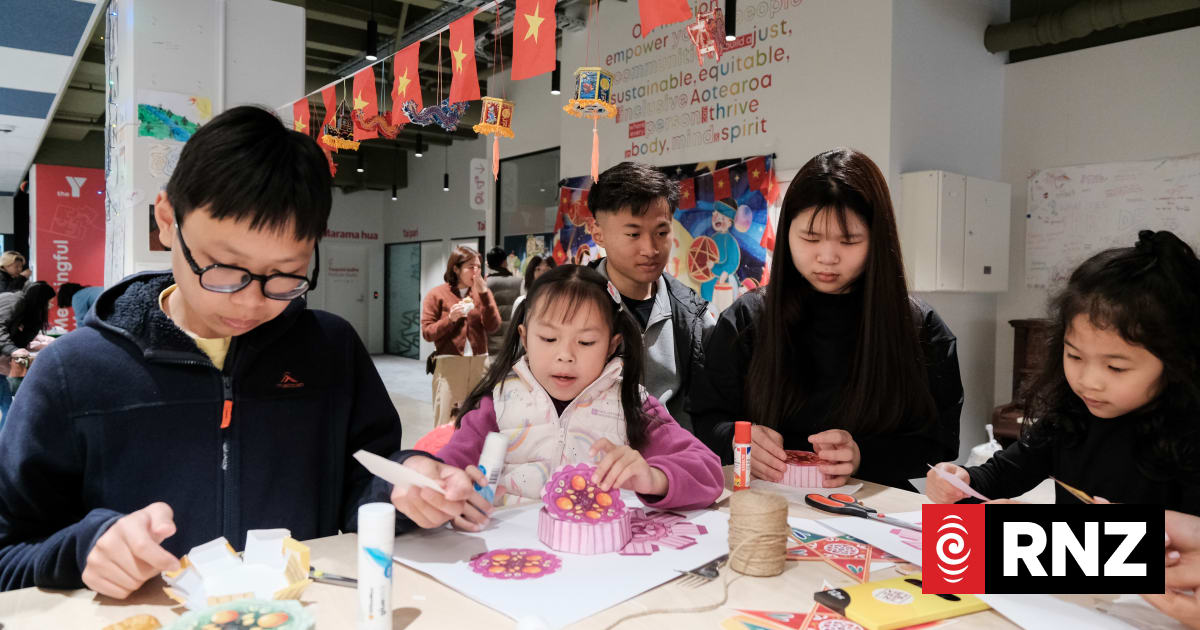
Asian communities nationwide are marking mid-autumn celebrations in their own ways.
The celebrations fall on the 15th day of the eighth month of the lunar calendar, a time traditionally associated with harvests and a full moon in the Northern Hemisphere.
In Auckland, a three-day Moon Festival is poised to begin on Friday.
The event marks the arrival of the Mid-Autumn Festival, known as Zhongqiu Jie (中秋节) in Chinese, one of the most important celebrations in the Chinese calendar.
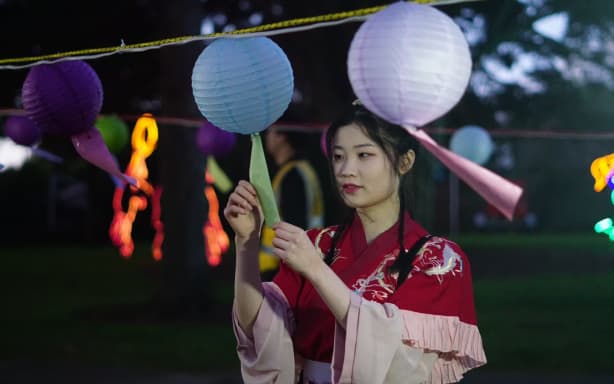
Lanterns play a prominent role in Mid-Autumn Festival celebrations.
RNZ / Liu Chen
However, the festival is only one expression of much broader traditions.
South Korean, Japanese and Vietnamese communities across the country are also observing the season through customs shaped by their own history, food and family rituals.
In Vietnam, the celebration is called Tết Trung Thu and is often described as a festival for children.
This year, Tết Trung Thu falls on Friday.
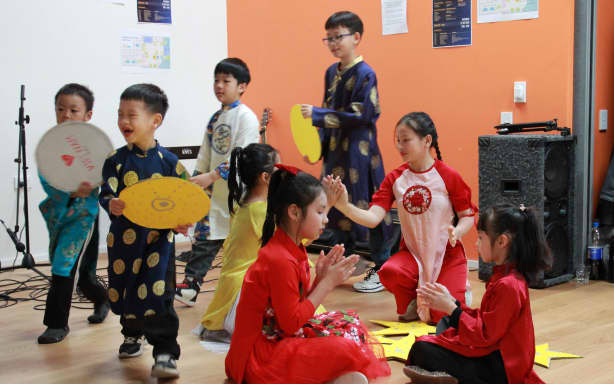
Children are the centre of attention during Tết Trung Thu in Vietnam.
Photo by Mai Phương
In Lower Hutt, the Vietnamese community plans to mark the occasion a day later with the Moonlit Memories Festival at Te Mako Naenae Community Centre.
Vinh Nguyen, director of event organiser Viet Hub NZ, said the festival would give the wider community a chance to experience the atmosphere of celebrations he remembered from childhood.
Activities are set to include lion dancing, bánh Trung Thu (mooncakes), star lanterns, Vietnamese crafts and masks, children’s games, storytelling, food and cultural performances.
New Zealand’s Vietnamese community gathers to celebrate Tết Trung Thu at this time of year.
Photo by Lê Anh
Nguyen said the festival had long held a special place in Vietnamese culture.
He said the celebration allowed Vietnamese children growing up in New Zealand to maintain a connection to tradition.
“I think that says a lot about the migrant experience. Home may look different now, but our stories, traditions and memories travel with us,” he said.
“And I hope our children grow up knowing that they don’t have to choose between being Kiwi and being Vietnamese. They can be both and be proud of both.”
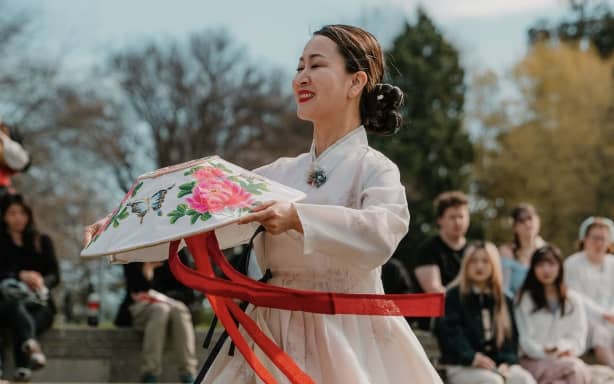
A cultural performance during Chuseok celebrations in Auckland.
Photo by University of Canterbury Students’ Association
New Zealand’s South Korean community celebrates Chuseok, also known as Hangawi, at the same time of year.
It’s one of South Korea’s most important traditional holidays.
Falling on Friday this year, Chuseok will be marked at several schools and universities across New Zealand, giving Korean students and families a chance to celebrate the holiday away from home.
Long Bay College in Auckland will mark the occasion on Friday with traditional Korean food and games, while the University of Canterbury Korean Society is planning a Chuseok Festival on Saturday that will include cultural performances and activities.
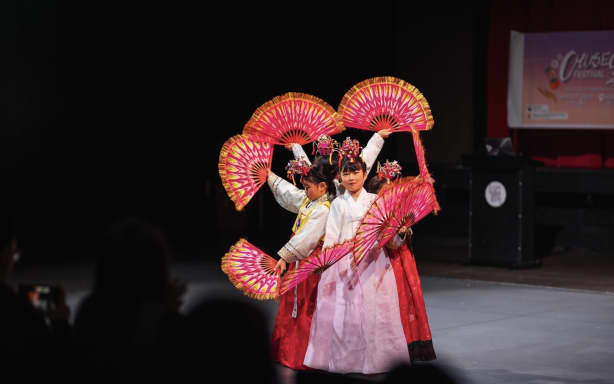
Buchaechum is a traditional Korean fan dance that is typically performed during Chuseok celebrations.
Photo by University of Canterbury Students’ Association
Soo Jung, vice-president of the University of Canterbury Korean Society, said the festival had been held annually on campus since 2023.
This year’s programme will feature samul nori (a modern form of traditional Korean percussion performed with four instruments), buchaechum (a traditional Korean fan dance), a gumdo sword arts demonstration and K-pop dance performances.
Visitors will also have the chance to sample traditional festival food, including songpyeon – half-moon-shaped rice cakes with a variety of fillings, traditionally steamed over pine needles and said to symbolise growth and progress.
Jung said the event would give people from across Christchurch an opportunity to experience South Korean culture and traditions together.
“It is definitely a great opportunity for Kiwis, and people from any background, to experience Korean culture in a fun and welcoming environment,” Jung said.
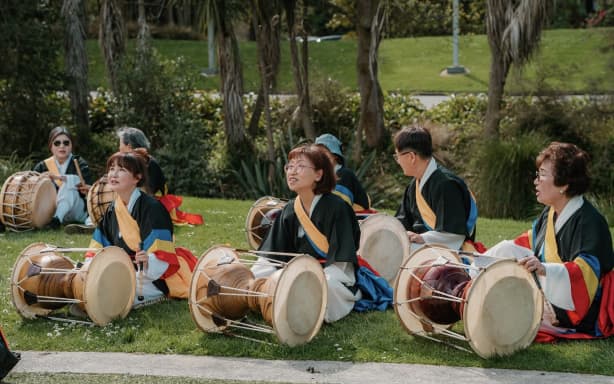
A cultural performance during Chuseok celebrations in Auckland.
Photo by University of Canterbury Students’ Association
New Zealand’s Japanese community traditionally observes Tsukimi at this time of year.
Literally meaning “moon viewing”, Tsukimi is a centuries-old tradition of gathering to admire the large celestial body in the autumn night sky.
Tsukimi falls on Friday, with celebrations including such things as poetry, traditional music and dance.
Food also plays an important role.
Among the best-known offerings is tsukimi dango — small round rice dumplings whose shape evokes the full moon.
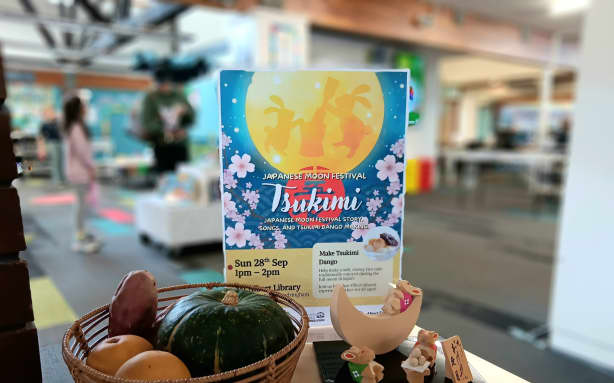
Mount Albert Library hosted a Tsukimi event to celebrate the Mid-Autumn Festival in 2025.
Supplied / Mt Albert Library
In Auckland, libraries and community groups are hosting a series of Tsukimi-themed events this year, bringing Japanese moon-viewing traditions to local families.
At Point Chevalier Library, a Tsukimi celebration will be held on 1 October.
The Japan Kauri Education Trust will also host a Japanese Moon Festival at Ōwairaka Connecting Communities Hub on 28 September, inviting visitors to create their own rabbit-inspired kaleidoscopes and learn about the stories and traditions behind Tsukimi.
This year, some community events are also bringing different cultural traditions together in a single celebration.
At Epsom Community Centre, a Moon Festival on 3 October will combine Chinese and Korean traditions.
Visitors will be able to make Chinese mooncakes and paper lanterns, prepare South Korean songpyeon rice cakes, try on traditional hanbok and take part in a hanbok runway.
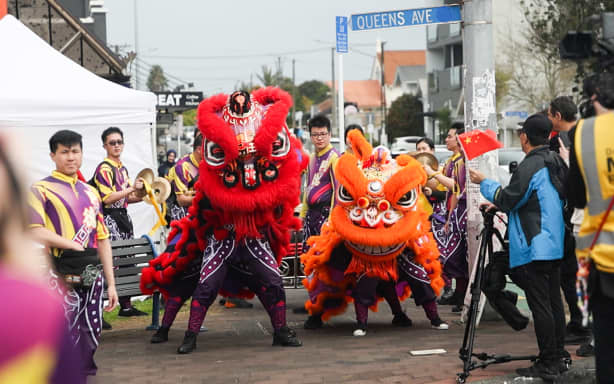
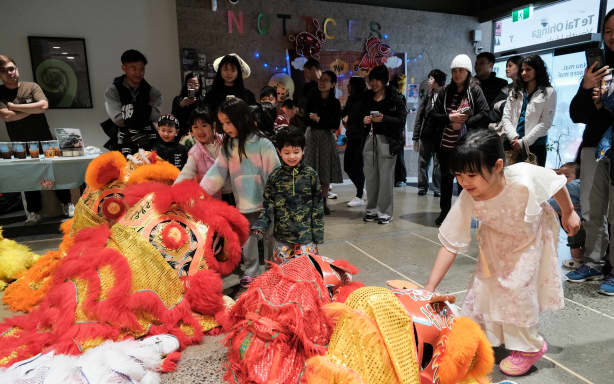
A lion dance is performed during Mid-Autumn Festival celebrations in Auckland in 2024.
RNZ / Yiting Lin
Sanjay Pereira, manager of the community centre, said Epsom was home to a large and diverse Asian population, and that festivals tied to the lunar calendar held particular significance for many families in the area.
He said he hoped the event would give Asian families a chance to reconnect with their cultures and customs, while also giving the wider community an opportunity to experience diversity.
Yoona Song, a senior library and council services assistant who helped organise a Moon Festival cultural event at Botany Library on Sunday, said the celebration also brought together people from a wide range of cultural and ethnic backgrounds through traditional games and craft activities from several Asian cultures.
“Our goal was not only to celebrate the Moon Festival,” Song said. “We hoped this would encourage greater cultural understanding, curiosity and appreciation within our diverse community.”
Although Asian communities mark the season in different ways, Song said events such as the Moon Festival could make those traditions more accessible to people from all backgrounds.
“We hope the event encourages Aucklanders to explore and appreciate the diverse cultures that make up our community, while also fostering a sense of belonging and inclusion,” Song said.