
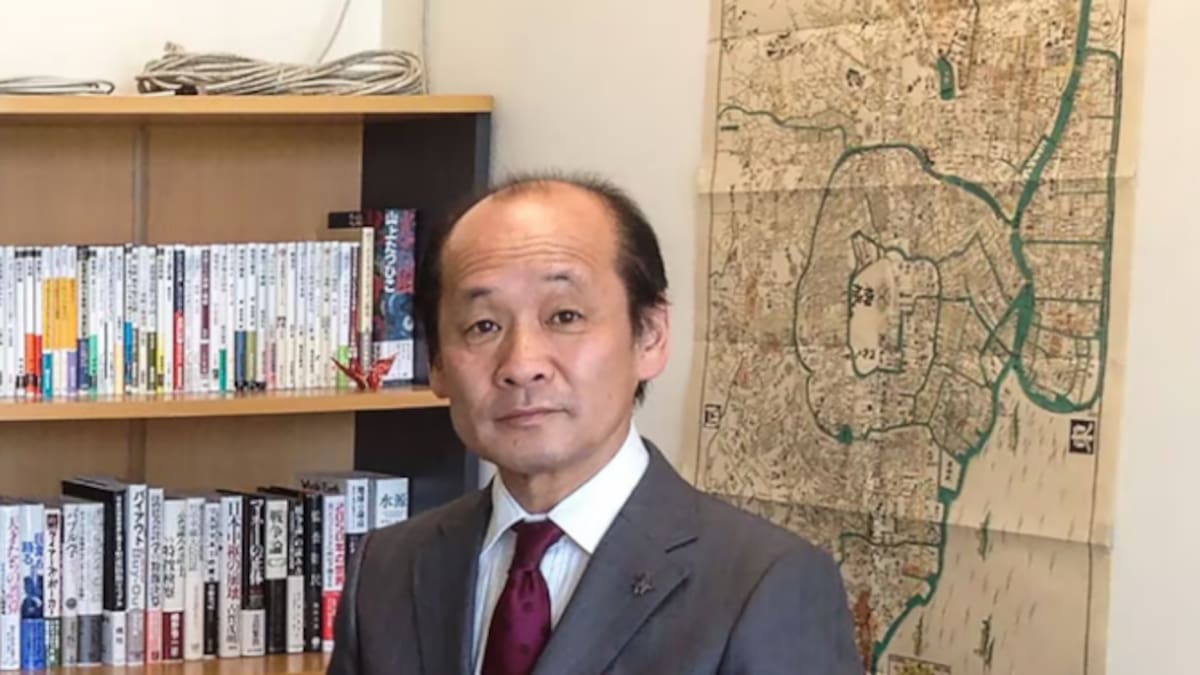
Suspicions from his clients as to what had happened to their money led some to attend the funeral and inspect his body to ensure that Ashikaga, also known as Tom Tanaka, had not faked his own death.
Hanyu was sentenced in the Auckland District Court yesterday after being found guilty by a jury in April on 10 charges related to her role with East Wind.
They included four representative charges of making a false statement, two representative charges of obtaining by deception and one charge of theft by a person in a special relationship.
She was imprisoned for six years and four months, with a minimum non-parole period of two years and six months.
“Ms Hanyu helped to oversee a large and incredibly complex Ponzi scheme which deceived investors out of millions of dollars,” SFO director Karen Chang said.
“[Thursday’s] sentence and the imposition of a minimum period of imprisonment reflects the seriousness of such offending, which undermines legitimate investment markets and threatens New Zealand’s reputation as a safe place to do business.”
East Wind Company Ltd was part of the East Wind Group, which marketed itself as offering financial services and immigration support to New Zealand’s Japanese community.
Hanyu was the manager of the company’s finance department from 2004 to December 2017.
She worked with Ashikaga to obtain funds from investors, making false statements about investment products and promised returns.
They exploited their connections to the Japanese community and ran fictitious investment schemes that deceived investors of more than $20 million.
In reality, financial products offered by the company – the Group Term Deposit and Waterloo Fund – operated as Ponzi schemes. Incoming funds were used to make repayments to other investors.
Chang said Hanyu also stole more than $800,000 from East Wind, which she transferred to her mortgage account and personal credit card.
“Our investigators and forensic accountants analysed tens of thousands of documents to unravel the complicated East Wind scheme.
“This included large amounts of detailed financial records, most of which were in Japanese,” Chang said.
“Many of the investors in this case were based overseas. Foreign investors are important to the New Zealand economy, and investors must have confidence our markets are fair, safe and well-regulated.
“The SFO will continue to prioritise cases which pose a threat to our country’s commercial wellbeing, which is particularly critical in today’s challenging economic environment.”
East Wind companies owed more than $43m
In their final report, liquidators Stephanie Jeffreys and Malcom Moore of Grant Thornton said six East Wind companies owed a total of $43.3m to 171 creditors.
Two of the smaller entities, owing 10 creditors less than $20,000, paid out between 69 and 83 cents in the dollar.
But it was bad news for the vast majority of creditors who accounted for more than 99% of the outstanding total, the report said.
“There are insufficient funds to distribute to unsecured creditors of any of the other companies.”
A Ponzi scheme is a fraud in which earlier investors are paid with money contributed by newer investors, rather than from legitimate returns.
It is named after Charles Ponzi, who ran an early such scheme in the United States in the 1920s.
Ric Stevens spent many years working for the former New Zealand Press Association news agency, including as a political reporter at Parliament, before holding senior positions at various daily newspapers. He joined NZME’s Open Justice team in 2022 and is based in Hawke’s Bay. His writing in the crime and justice sphere is informed by four years of frontline experience as a probation officer.
Join the NZ Herald’s Open Justice team for Case by Case, a video and podcast series examining the disputes and decisions making headlines across New Zealand.