
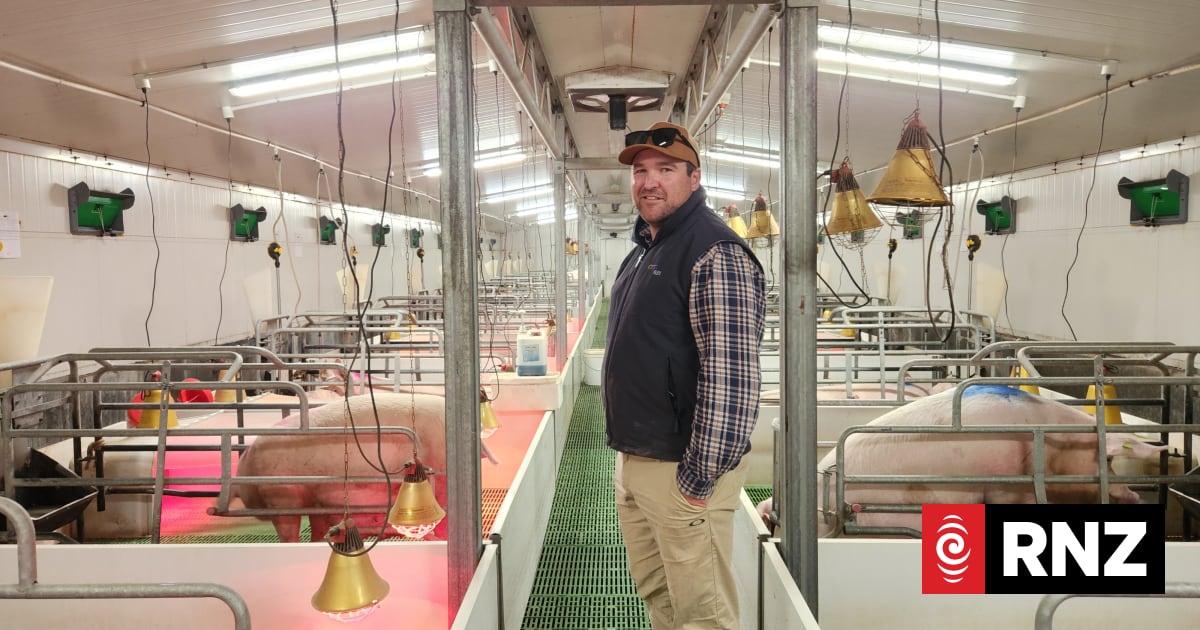
Taranaki pig farmer Karl Stanley hopes a multi-million dollar extension to his piggery, powered by solar energy, will help future-proof the business amid changing welfare regulations, increasing costs and consumer demands.
The new 75m x 16m shed, which will house up to 1000 grower pigs and allow reconfiguration of the rest of Stanley Bros 5000-pig operation near Ōpunake, is well underway.
With automatically controlled temperature, lighting and ventilation systems, “It’s going to be a cracker of a shed when it’s done,” Stanley told Country Life.
“We’ve got a long road ahead of us, but we’re up for the challenge.”
Taranaki pig farmer goes whole hog to stay ahead
Follow Country Life on Apple Podcasts, Spotify, iHeart or wherever you get your podcasts.
Stanley, who orginally started out in viticulture and winemaking, came back to the family farm 12 years ago.
His grandfather and great uncle bought the original farm, a rehab block, and farmed both dairy cows and pigs. That was continued by Stanley’s father and his brother.
Six years ago, the family decided to expand the pig operation and move into cropping “because we thought that we could make better utilisation of our fertiliser that the pigs were creating for us”.
The 133-hectare farm now grows silage, hay and maize for neighbouring livestock farmers, “and we do it on 100 percent natural fertiliser”.
The “farrowing to finish” operation runs 500 sows and delivers 240 to 260 grown-on pigs weekly to the domestic market, Stanley said.
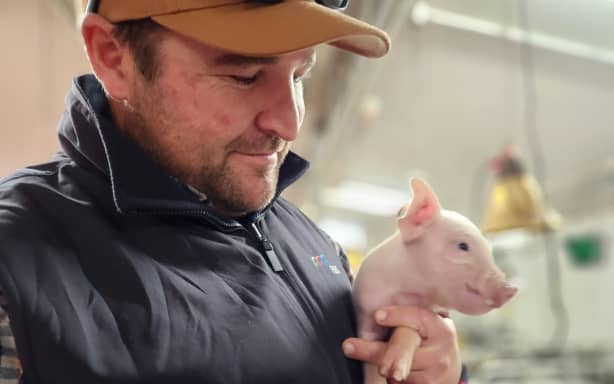
Karl Stanley with one of his days-old piglets
RNZ/Sally Round
Stanley Bros is among the 52 percent of New Zealand’s commercial pig farms which keep pigs fully indoors.
Stanley’s grandfather used to keep his sows outside but the family learnt Taranaki’s volcanic soils were not suitable.
“Pigs can tend to turn the place over in the mud pretty quick.”
Going indoors was also a way of staying viable “when you’re competing with the foreign pork coming in”.
Three years ago a $1m upgrade to the four farrowing (birthing) units saw larger pens and nesting areas alongside the farrowing crates which restrict the sow’s movement.
“We’ve always had this mentality on the farm that we’d always be hoping to be two or three steps ahead.”
The welfare code is tightening to reduce the time sows spend in the metal crates (from a maximum 33 days to seven). Moveable rails will be mandated and minimum space for grower pigs increased by 13.3 percent. These changes must happen by the end of 2035.
Debate continues over whether farrowing crates should still be allowed at all, after animal welfare advocates won a High Court case in 2020 banning them outright, as in a handful of European countries.
That ruling was superceded by an easing of regulations brought in by the Coalition government in 2025 with a 10 year transition period.
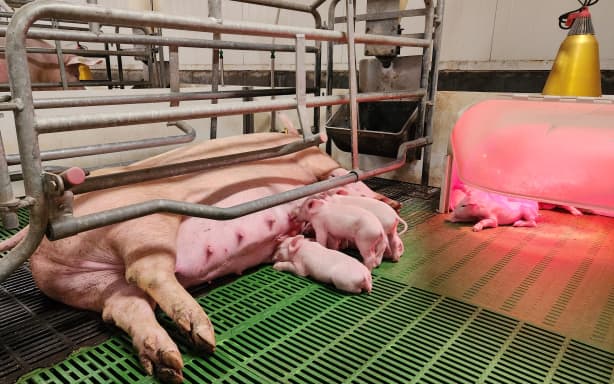
Piglets suckle on a sow in a farrowing crate
RNZ/Sally Round
Stanley said his new shed will lower stocking density throughout the farm and should be up and running by Christmas.
“Our changes will be certainly towards making sure that we’re well and truly ahead of the new regulations.
“Being steps ahead gives you flexibility and also better efficiencies, but also just being a few steps ahead means that you can really get yourself scope.”
Stanley took Country Life on a tour of the piggery and farrowing area, where newborn piglets scurried between a nesting box under a heat lamp to suckle on their mum, who is restricted to lying – enclosed by the rails – for two and a half weeks, able to sit up but not move around.
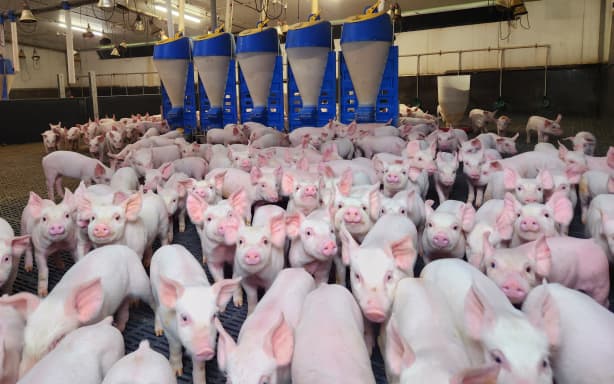
Weaned piglets
RNZ/Sally Round
“It’s 100 percent protection of the piglet. A sow can be a little bit clumsy at times and lay-ons are certainly a concern.
“When the new system gets put in place with the temporary confinement, she’ll be confined for the first three days after farrowing and then she will be able to hop out and rotate around and do her thing.”
He hopes the current nine-percent piglet mortality rate will not climb further under the new system which will see a refit to allow the rails to be pushed back.
“It’s going to find that balance between the welfare and protection of the piglets and also the welfare of the sow.
“Probably the hardest part is we’re competing with imported product that’s not following the same standards.”
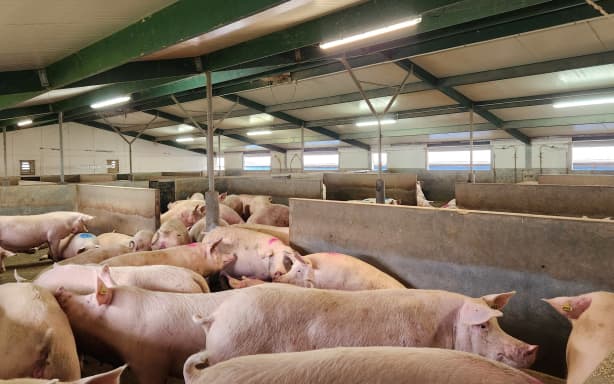
Grower pigs
RNZ/Sally Round
Stanley’s refit comes as the pork industry continues to warn that local producers are struggling against a flood of lower welfare imports.
He hopes to make changes to the first farrowing unit in the next year to 18 months, then acclimatise staff and fine-tune things “to make sure that the piglet welfare and the sow’s welfare is at the optimum and before we make the changes to the rest of the facility”.
Along from the farrowing area a nursery houses hordes of tiny piglets in 22 degree warmth “running around and being silly buggers like they want to be”, Stanley said.
Welfare regulations require enrichment which Stanley said would be enhanced in the new development.
“We’ve gone from little ballcock balls that they can push around and play with or else going to the chains, which they quite enjoy … because they sit there and chew it with their teeth and just something for them to do. A bit of fun.
“We’ll be certainly adding more.”
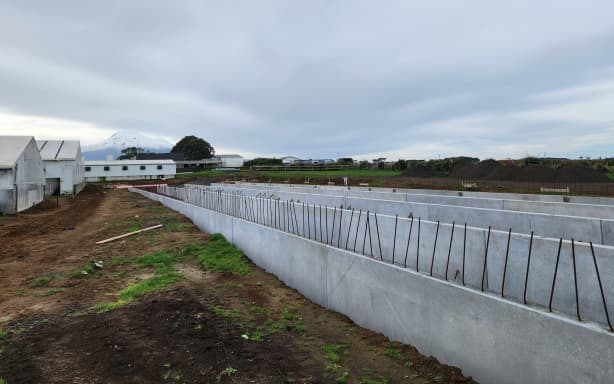
The foundations of the new piggery at Stanley Bros in Opunake
RNZ/Sally Round
Stanley said experts from Europe – where some countries’ welfare regulations are tightening too – had advised on the new development.
“They’re 100 percent to increase the square meterage of the entire farm without really increasing the actual production. So this expenditure is not a gain in production, unfortunately, but it’s certainly going to give us a better, how would I say, a better future knowing that we’ve got that scope.”
The adjoining 400-panel solar farm, put in two years ago, produces 200 kilowatts, enough to power the piggery from 9am to 5pm during the summer, with lower production during the winter, Stanley said.
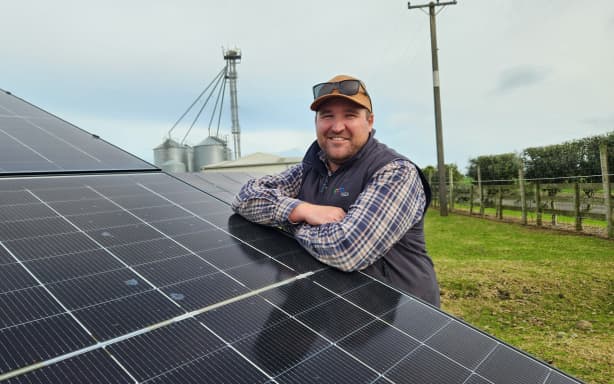
A solar farm was put in in 2024 to power the piggery
RNZ/Sally Round
It’s a saving of $75,000 annually and with power 10 percent of the farm’s cost, they hope to invest further in wind turbines and batteries to create more energy.
“It’s a great investment, and it’s good for us, lowers our footprint.”
Stanley said the overall investment had been daunting and had caused “a few headaches” and he hoped consumers would back New Zealand pork growers like him.
“We’re doing our part and we just need that support back.”