
Exhibits will be on display until Nov. 5.
ESTEVAN, Sask. — The Estevan Art Gallery and Museum is inviting the public to check out a couple of exhibits that will be on display until Nov. 5.
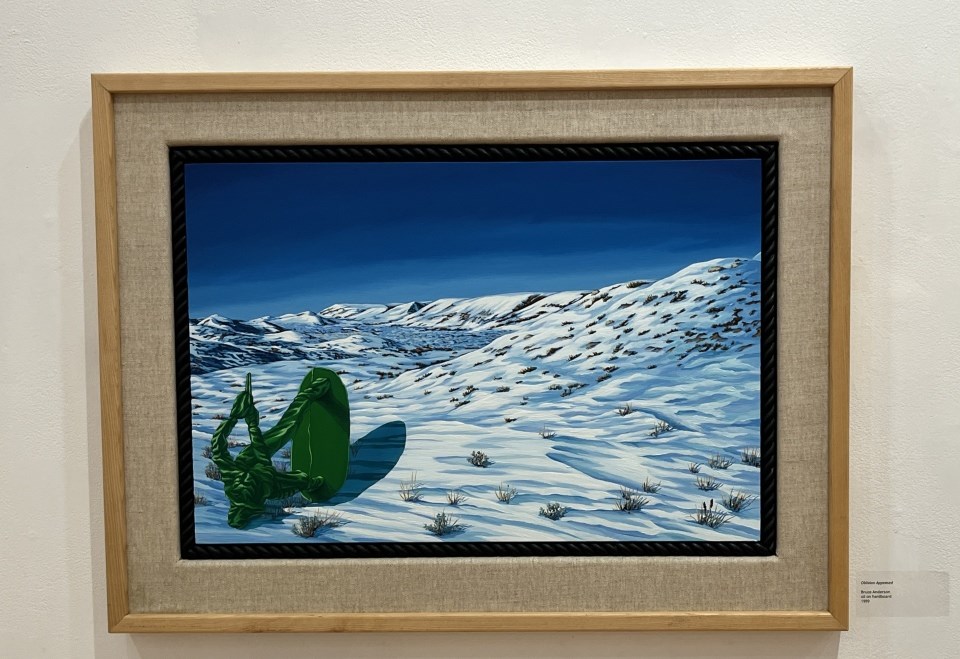
Colour Block by Regina’s Bruce Anderson is in Gallery No. 1 until Nov. 5. An artist statement from Anderson noted that for as long as he has had a professional art practice, his work has focused on the juxtaposition of images, or placing the familiar in incongruent settings to create layers of meaning.
“My work is rooted in the west and in the old myths of settlement, independence and colonialism that are still with us, and that ignore current realities, among them the subjugation of land in nature,” he said.
He said he deals with traditional western subject matter and repositions it. In his most recent paintings, there are several layers to which he hopes the viewer will respond, mirroring his own processes in creating the work and reflecting different traditions in the history of paint.
These include the off-kilter or sense of unsettling; in the placing of subject and landscape; the abstract or format in the use of colour and texture; and the creation of more literal meaning through the implied narrative, which will be different for viewers, depending upon the meaning they assign to the meanings of subject matter.
“This work is directly focused on issues of land use and environmental change. The weeds series represents a further evolution of previous work, through which I hope to continue to break with traditional readings of landscape and force a new examination of the relationship of humans to land and the natural world,’ he said.
Azby Whitecalf of North Battleford has Growing Pains in Gallery No. 2. Whitecalf said most of her work is exploring what “fine art” means to her at this point in her career. She added a majority of her practice is illustration-based, so many of her pieces reflect storytelling or have some sort of narrative that can be pieced together.
“I think the act of making up stories heavily relates to the childhood and adulthood experience I have put on display in my work,” she said.
Growing Pains refer to the physical and mental aches and changes that children go through, she said, but she believes adults can experience them. Growing up being unknowingly queer and then realizing it on her own, having to come to terms with it herself, and even the idea of “figuring” herself out is its own sort of growing pain, she said.
“I want to explore the experiences and thoughts I had as a child that contributed to who I am today, such as how manifestations and spirituality can be so ingrained in childhood in the form of wishes.”
She also included some of the first works she made, which dive into ideas of coming to terms with herself as a queer person, an experience that happened to her when she moved from isolation to a bustling city.
“This exhibit stands as a return to her painting and fine art practice,” the artist statement said.
“Using a combination of new and older works, Whitecalf’s display offers a reflection on childhood and adulthood lived experiences, exploring themes of queer identity and spirituality.”