
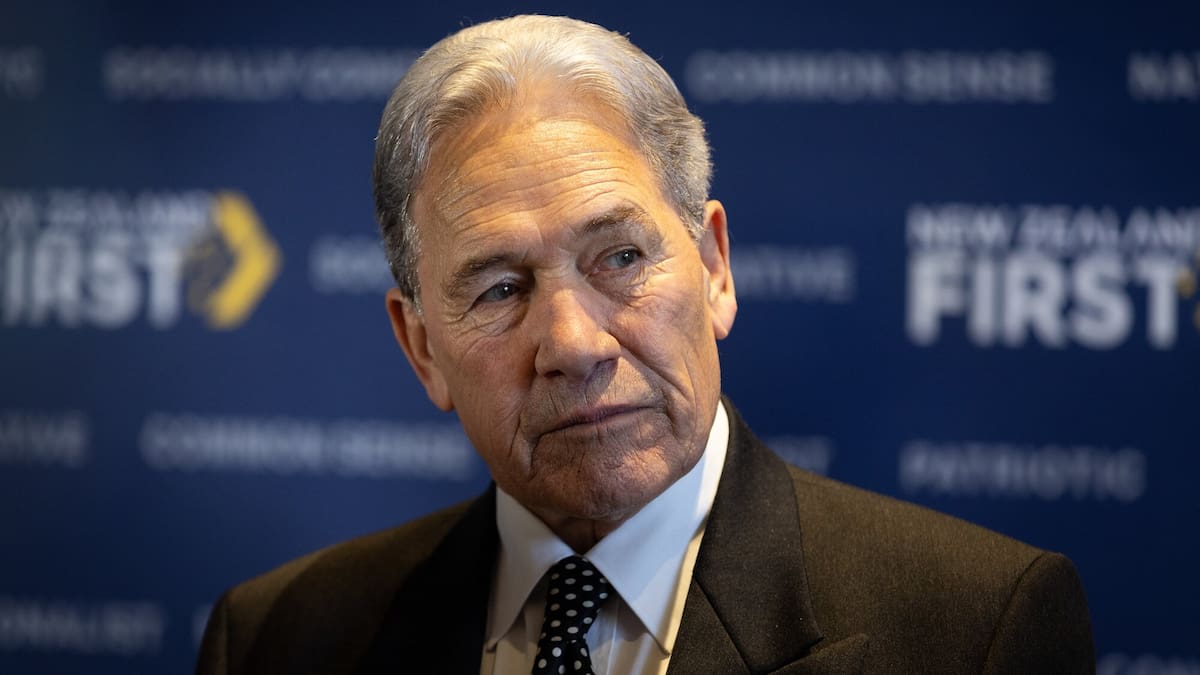
“The inclusion of UNDRIP is contrary to the coalition agreement with National in the current Government. Politicians, not officials, should determine what is appropriate under coalition agreements,” Peters added.
The United Nations agreement was adopted in 2007, with New Zealand expressing formal support in 2010.
Trade Minister Todd McClay told Newstalk ZB, “UNDRIP was first included in the UK FTA, and then the EU FTA and UAE CEPA, both of which were passed under this Parliament”.
“As I mentioned in my third reading speech on the India FTA, its inclusion does not impose any obligation on New Zealand law or policy, and the reservations that New Zealand expressed remain in force,” McClay said.
Official advice shows Peters was told the reference to UNDRIP “does not create any legal obligations or otherwise change or expand New Zealand’s position on UNDRIP”.
Newstalk ZB has obtained a note described as “for Minister of Foreign Affairs” from Ministry of Foreign Affairs and Trade officials, under the Official Information Act.
The note said the reference had no binding legal effect on New Zealand, “in accordance with page 10 of the Coalition Agreement”.
Page 10 states “Confirm that the Coalition Government does not recognise the United Nations Declaration on the Rights of Indigenous Peoples (UNDRIP) as having any binding legal effect on New Zealand” and an agreement to “stop all work on He Puapua”.
Peters had previously claimed the reference to UNDRIP was “snuck in” and said the UN framework “created He Puapua and co-governance being embedded in our country”.
Winston Peters was told the reference does not have any binding legal effect on New Zealand, “in accordance with page 10 of the Coalition Agreement”.
Further advice, given to Trade Minister Todd McClay in late June about the FTA’s reference to UNDRIP, referenced previous agreements.
McClay was told the UK and EU agreements both “note” UNDRIP and reference the Parties’ national/respective positions, while the UAE agreement “recognises the importance” of UNDRIP and the India agreement “affirms” it “subject to their respective positions”.
Officials told Todd McClay the India FTA did not create new obligations around UNDRIP.
“There is no difference between ‘notes’, ‘recognises’ and ‘affirms’ in terms of the legal effect of these provisions with regard to the status of UNDRIP,“ officials said.
McClay was told UNDRIP was not legally binding.
During the bill’s first reading, McClay spoke about the inclusion of the UN declaration: “the inclusion of reference of UNDRIP to the India FTA do not and does not impose, and are not intended to impose, any obligation on New Zealand law or Government policy. We reaffirm the reservations that were made by the New Zealand Government to the United Nations in 2010”.
In 2010, then-Prime Minister John Key said New Zealand had “always supported the overall aspirations” of UNDRIP.
“While the declaration is non-binding, it both affirms accepted rights and establishes future aspirations.”
The India-New Zealand Free Trade Agreement has officially come into law after receiving royal assent earlier this month.
Azaria Howell is a multimedia reporter working from Parliament’s press gallery. She joined NZME in 2022 and became a Newstalk ZB political reporter in late 2024, with a keen interest in public service agency reform and government spending.