
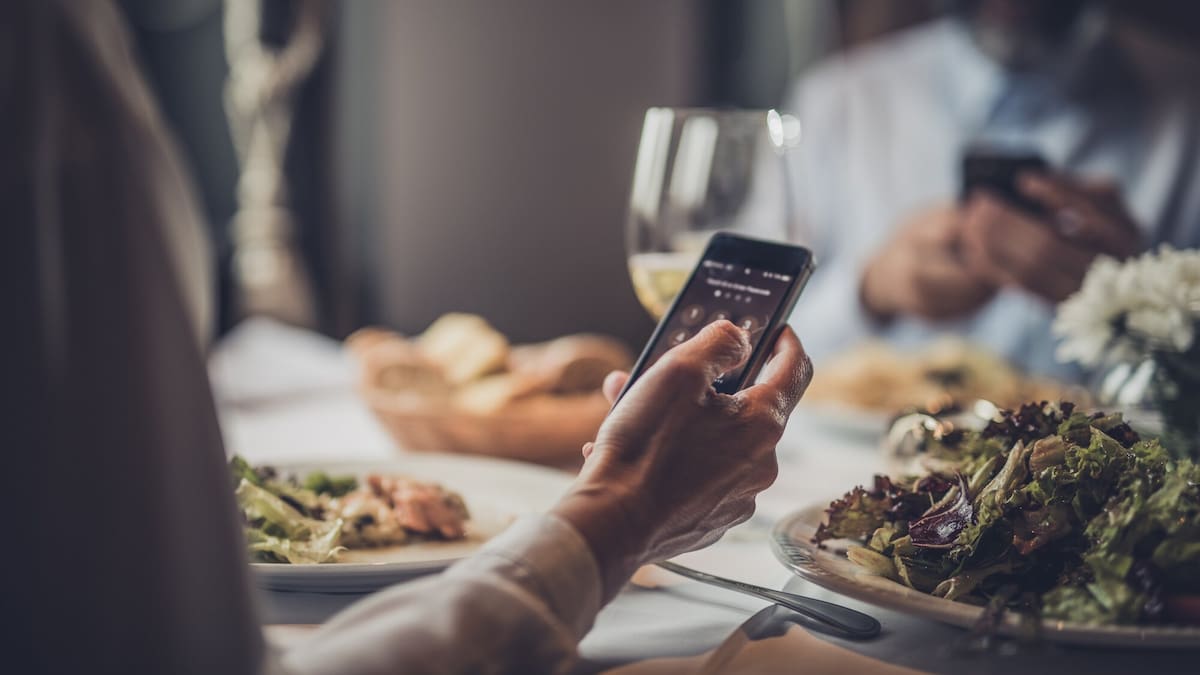
At some point, we gave up human contact in the name of efficiency.
If you think your local pub has a strict dress code, how would you feel about living in Greenfield, Massachusetts? Since it opened last year, local lesbian bar Last Ditch has insisted that all patrons wear a
Covid-preventing KN95 mask unless eating or drinking. Recently the owners made a tentative step towards post-pandemic life, suggesting via Instagram that from now on masks would be optional on Saturday nights. It did not go down well.
The backlash was fast and furious. Online comments accused the bar of ableism, eugenics and putting profits ahead of its disabled community. Others went further, describing the suggestion as “white supremacy”, which would lead to a “mass disabling event”.
“I hope your venue gets firebombed for robbing my fellow immunocompromised people of their Saturday plans just to scrape extra revenue from ablists [sic]” was one typically thoughtful piece of feedback.
The story has launched a thousand opinion pieces, including a few brave columnists taking the side of the aggrieved customers (where would we be without the ever-tolerant Guardian?). But whatever your view, the argument in Massachusetts says a lot about the conditions under which we share a room with other people. Here in Auckland, we’re increasingly arranging things so we don’t have to interact with anyone in it.
QR code ordering is only the most egregious example of this trend. A little part of me dies whenever I am handed a menu and asked to place my order via an app. On some very bleak occasions I’ve not even been given a menu – just a link to a website where I can browse what’s on offer while my friends do the same. It saves money on staff and printing, but so does putting customers in a dark cellar and tossing food down a hole.
It is hard enough to keep people’s phones away during a meal, why make it compulsory to get them out? This week I interviewed comedian Aziz Ansari, who told me he still uses a flip phone. Why? “Because if you saw me walking down the street with a laptop clipped to my waist, you’d be like ‘this seems a bit much’. That’s how I feel about the smartphone. It’s just a bit much.”
At some point we gave up human contact in the name of efficiency. You can choose from a menu without seeing a waiter. You can order takeaways on your phone and request they be dropped at your gate. You can pass through a supermarket without saying two words to anybody. A recent study shows that every year the number of words we say aloud each day drops by around 300.
And yet human beings learned to thrive by learning to talk. Before the internet, even before the written word, we passed on information, wisdom and stories exclusively by opening our mouths. Our brains even reward us for doing it, in that incredible way evolution has of encouraging the behaviours that help us survive.
According to the World Happiness Report and the World Health Organisation, our young people are among the loneliest and saddest in generations. Might the fact they’ve eliminated any opportunity to speak to other humans be part of the problem? Gen X and Boomers played a part too. How many times have you heard complaints about a “waiter that wouldn’t leave us alone”? How many times have you screwed your nose up after being told that the only table left is the communal one?
And look, I don’t want to drag service staff into this but some of them might also be culpable. Remember that brief period in Woke 1.0 when radical hospo politics had us all believing that wanting your waiter to smile was a form of emotional slavery?
As for us customers, we might not make this stuff worse by choosing the automated checkout over the human one, but it certainly won’t make things any better. Eyeballing another human is good for the soul, which even multinationals are starting to realise is also good for business.
The WSJ this month reported that McDonald’s and Burger King are “pivoting back to humans”, in an attempt to counter perceptions that “our restaurants seem rushed, impersonal and sterile”. A profit-led business case is probably the sickest argument for embracing humanity but, let’s be honest, it’s the one that’s going to have the most impact. When even our fast food joints realise we have a problem, you know the tide is about to turn.
Perhaps the psychological breakthrough the rest of us need is to realise that inconvenience isn’t a barrier to a good life; it’s sometimes the best part. Most of the wonderful things that happen to us begin with something unexpected, often involving another human being. Ordering your fries at the bar rather than through an app won’t change your life. But the conversation you have while you’re waiting just might.
What you’ve asked, and what he’s shared.