
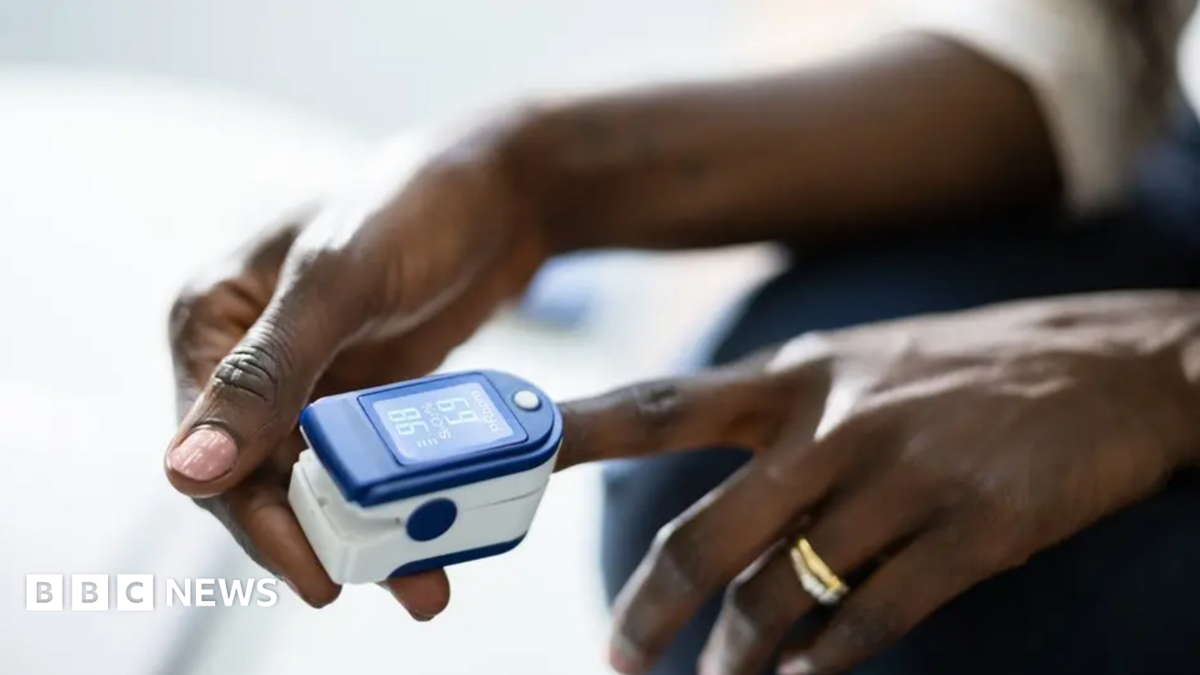
Research had raised concerns that monitors could overestimate oxygen levels in people with darker skin pigmentation, particularly when oxygen levels were already low.
“We’ve known for some time that the monitors or probes that we use to measure oxygen in patients can be inaccurate at times in patients who have darker or different [skin] pigments,” said Dr Dhruv Parekh, a Consultant in Critical Care and Respiratory Medicine.
That did not mean fingertip oximeters were considered unsafe in normal clinical use, as doctors and nurses had generally used them alongside other observations and tests, rather than relying on a single reading alone.
But the limitations had become particularly important when people were monitoring themselves at home.
During the Covid-19 pandemic, for example, patients had increasingly used pulse oximeters without a clinician beside them.
“What recent studies have shown, is when you’re unwell, it may show that in people with darker [skin] pigments are being falsely reassured that their oxygen levels are better than they are”, Parekh said.
He added: “We need to ensure that when we are showing whether oximeter’s work in people, that they work across the board, not just in white Caucasian people, but across all different [skin] pigments and backgrounds and ethnicities.”
As a result, researchers started to investigate if oxygen levels could be measured in a different way.