
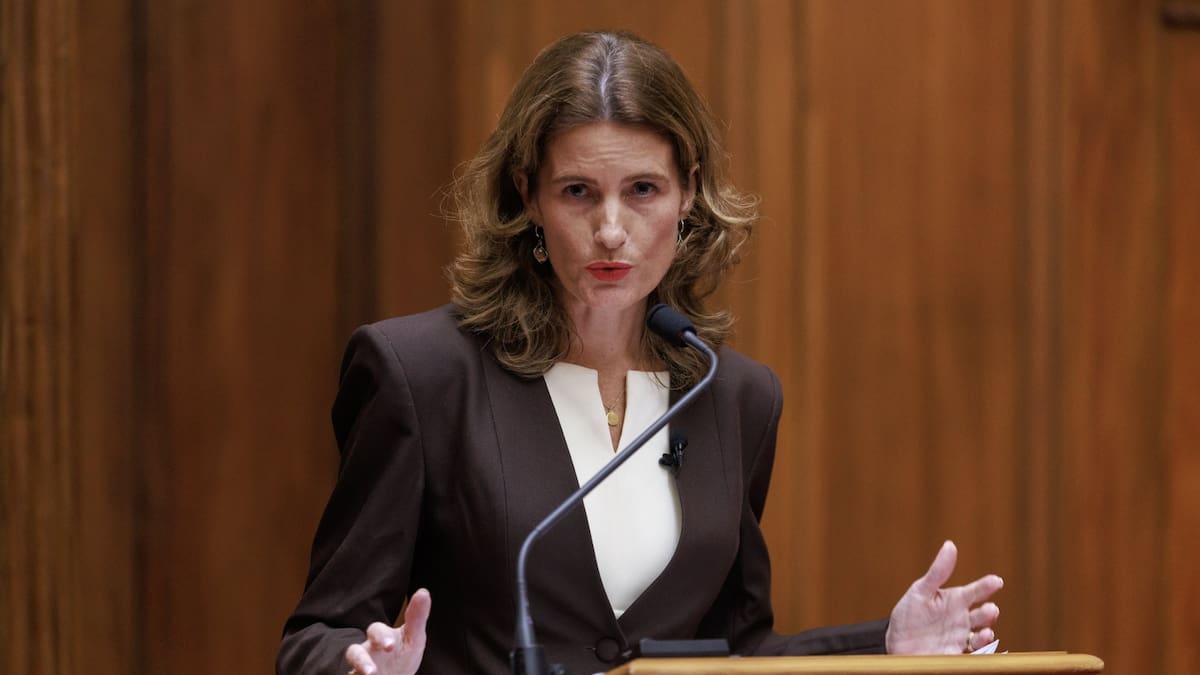
Addressing those at a BusinessNZ conference a few weeks later, Willis similarly expressed her desire to adjust tax brackets once the Government’s finances were in better shape.
However, she went further, clarifying that she would have more to say on the matter after Treasury published its pre-election economic forecasts on September 29.
In the meantime, the Herald has obtained a copy of the advice on fiscal drag that Inland Revenue prepared for Willis.
The document, released under the Official Information Act, shows that on July 8, Willis essentially asked the department how much more tax people were paying every year due to bracket creep.
Inland Revenue noted that in the year to March 2010, the average amount of income tax paid on every dollar earned was 21.4 cents.
This fell to 18.9 cents in 2011/12, when National finance minister at the time, Bill English, adjusted tax brackets.
Thereafter, the average amount of tax paid per dollar earned crept up every year to a peak of 22.6 cents in 2023/24, before easing back 22.3 cents in 2024/25, when Willis’ tax bracket adjustments started taking effect.
Inland Revenue noted the increases amounted to hundreds of millions of dollars every year.
It said that on average, every year between 2012/13 and 2023/24, people paid the equivalent of 0.2% of Gross Domestic Product (GDP) more in tax than they would have, had they paid the same tax rate they paid the year before.
So in 2023/24, people paid an average of 22.6 cents of tax in every dollar earned. Had they paid the previous year’s average of 22.2 cents, they would have paid $1.3 billion less tax – the equivalent of 0.3% of GDP.
The situation turned around in 2024/25, once Willis’ bracket adjustments started taking effect.
People paid $933 million less tax – the equivalent of 0.2% of GDP – than they would have, had they paid the same average tax rate they did the year before.
Inland Revenue’s advice didn’t include figures for 2025/26.
Willis is yet to specify how good a state the books would need to be in for National to commit to adjusting income tax brackets again, notwithstanding the fact bracket creep goes a long way in quietly propping up the Government’s finances.
National’s budget responsibility rules, which she suggested may determine whether she would make changes, require the Government to return the books to surplus (according to the new, rosier “ObegalX” measure) in 2028/29, and maintain a surplus over time.
They also require the Government to bend net core Crown debt below 40% of GDP and keep it there over time (pre-Covid, debt was below 20% of GDP).
As at the end of May, debt was at 41% of GDP and the books were $6.8b in deficit.
Both measures were better than what Treasury forecast at the May Budget.
In May, Treasury saw debt peaking at 46% of GDP in 2027/28, before dropping back to 44% by 2029/30.
However, it saw the books getting back to surplus by 2028/29, as per National’s rules.
Treasury will unveil its updated forecasts when it releases its Pre-Election Economic and Fiscal Update on Tuesday.
“It’s always been National’s values that people should be able to keep more of what they earn, and if we don’t adjust tax thresholds over time, that effectively means that we are taxing people more and taking more of what they earn,” Willis said.
National’s potential coalition partner, Act, wants to flatten the income tax rate structure, which would do away with bracket creep.
NZ First, on the other hand, is supportive of adjusting income tax brackets, but wants to go further by not taxing the first $14,000 of income people earn – a move that would be very expensive.
Jenée Tibshraeny is the Herald’s Wellington business editor, based in the parliamentary press gallery. She specialises in government and Reserve Bank policymaking, economics and banking.
Stay ahead with the latest market moves, corporate updates, and economic insights by subscribing to our Business newsletter – your essential weekly round-up of all the business news you need.