
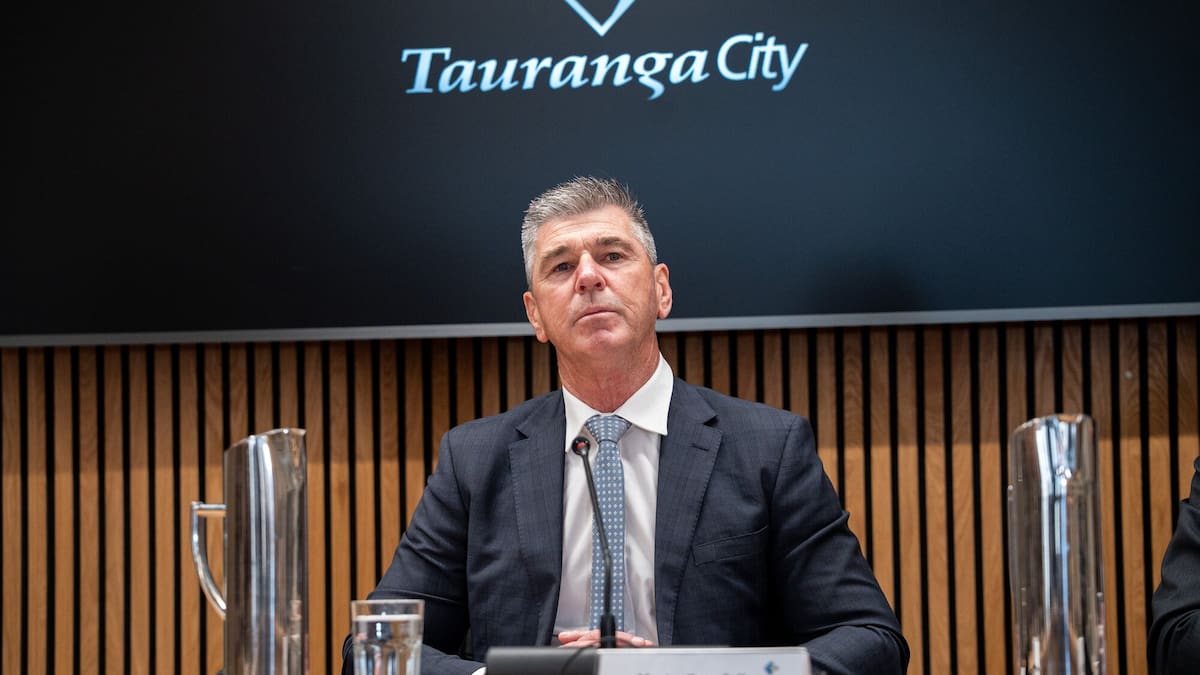
Mayor Mahe Drysdale thanked Grenfell for his contributions.
“We respect Mr Grenfell’s decision and thank him for his unwavering commitment to public service in our city over the past eight years,” he said in a statement.
“During this time, Mr Grenfell has helped lead Tauranga City Council through periods of significant growth, change, and challenge.”
The council would appoint an interim chief executive before recruiting Grenfell’s permanent replacement.
“There is a lot of work to be done, and we will be looking for a leader with the experience and expertise to help us drive significant change within the organisation as we appropriately respond to the Davison review and multiple other inquiries and investigations currently underway,” Drysdale said.
“My councillors and I will continue to demand of the interim CEO and senior leadership team that we see tangible, verifiable evidence of an overhaul of systems and processes through the organisational improvement programme currently in progress.”
Tauranga MP Sam Uffindell reacted to Grenfell’s resignation by calling it a “positive step forward”.
“This outcome reflects the strong wishes, as expressed to me, by our community,” he wrote on Facebook.
“My best wishes to the mayor, elected members and staff at TCC as we work together to improve governance, accountability and the well-being of our region.”
Grenfell has been the chief executive of the Tauranga City Council since 2018.
He worked with three mayors and one Government-appointed commission during his time in office.
The former police officer led a staff of about 1300.
Notable events of his tenure prior to the landslide include the elected council being fired and replaced with commissioners for four years, the controversial marine precinct sale, the Harrington St carpark build failure, the civic precinct development and construction of the council’s new administration building.
Grenfell previously spent seven years as chief executive of the Whakatāne District Council, and was a senior manager at the Upper Hutt City Council and the Hutt City Council before that.
Prior to moving into local government, he had 20 years’ experience with NZ Police, rising through the ranks to become Wellington’s top cop.
What the Davison report found
Six holidaymakers were killed when the landslide crashed into the council-owned Mount Maunganui Beachside Holiday Park campground on January 22, following record rainfall.
Davison’s 238-page review was made public on August 19. It found the landslide risk was known to the council but systemic issues meant it was not properly managed.
Issues included expert warnings about slip risks to the campground over decades not being properly escalated or mitigated, and staff not being educated about landslide warning signs.
Opportunities were also missed to evacuate the campground before the slip.
Davison did not find that any individual’s acts or omissions caused the deaths, and his review did not determine civil, criminal or disciplinary liability.
The council commissioned retired High Court judge Paul Davison, KC, to review its actions leading up to the slip. Photo / Alyse Wright
Davison made 10 “systemic recommendations” to the council and five directed to emergency response officials.
The council accepted all recommendations and is working to complete them.
The Government, WorkSafe, police and the coroner are also running inquiries into the slip tragedy.
Reaction to the report
Government MPs, former mayors and councillors described the review’s findings as “deeply confronting” and “gutting”, while others said they were not surprised it exposed systemic failures within the Tauranga City Council.
Grenfell said he had not been aware of a risk to life at Mount Maunganui before the fatal slip and, at the time, said he remained the right person to lead the organisation’s response to the review.
Other former council leaders said they could not recall ever being warned of the scale of the risk, saying concerns about slope instability never reached their desks.