
He insists the eye-watering headline loss masks a business that is finally starting to turn a corner.
Strip out the write-downs, and the picture looks markedly different: KiwiRail’s operating surplus jumped 45% to $162 million, freight revenue rose 10% and the volume of goods hauled on its network increased.
There’s also another $556m one-off write-off due to an annual review of the value of rail, ferry and related assets, based on accounting valuations.
For the past few years, KiwiRail has generated operating surpluses while simultaneously writing down huge amounts of its asset base.
KiwiRail reported an operating surplus of $111m for its services business in the 2025 financial year, but after non-cash items including impairments, it recorded a net deficit of $422.2m.
With a remit ranging from freight logistics to tourism and ferry operator to infrastructure stewards, Reidy is confident that although the numbers don’t look pretty, the turnaround is well underway.
KiwiRail has generated operating surpluses in recent years while simultaneously writing down huge amounts of its asset base.
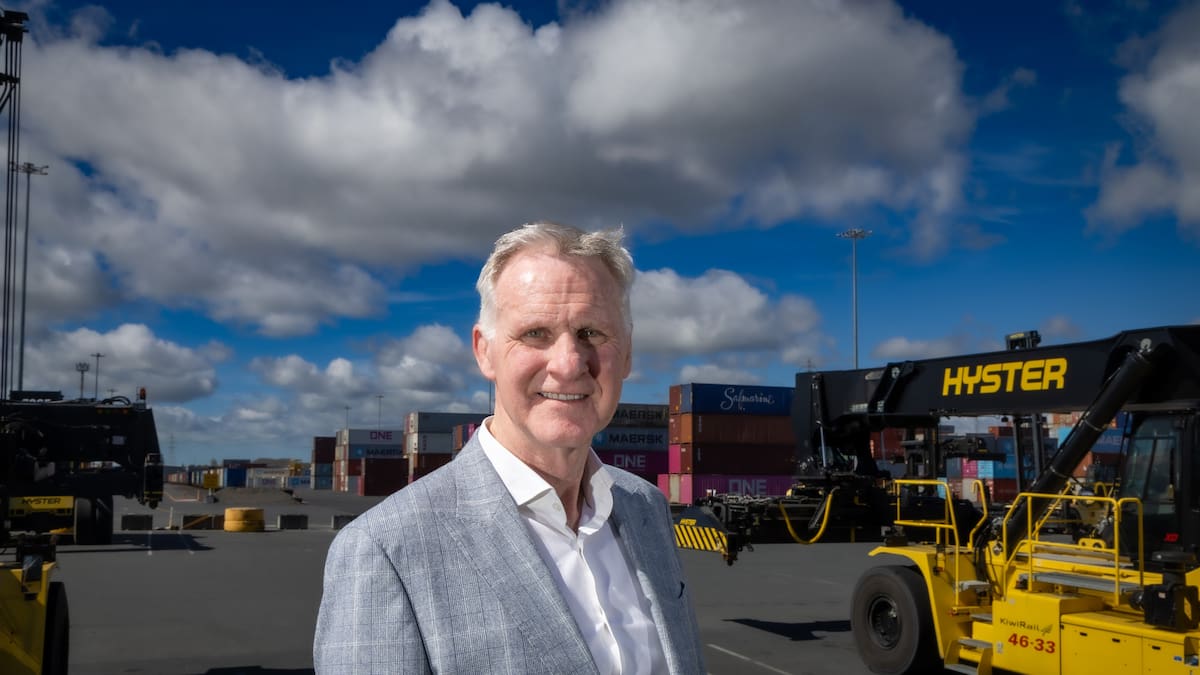
Standing at KiwiRail’s Southdown port, Reidy said he sees the yard as a key indicator of economic success (or otherwise).
“About five to six months ago it was a bit quiet here, but that was a low period of the season. But you’re now starting to see import containers are actually higher than what we would have thought, and I think all the ports are talking about that,” Reidy says.
The port sends about 85 trains a week to the Port of Tauranga, a number that’s been increasing steadily.
“We’re starting to see more shipping companies come in now, we’re starting to see more customers like Kmart come in.”
The freight market has been hurt by fuel costs, global supply chain disruption and weather events, but has picked up in the second half of the year.
Freight demand is expected to stay mixed in 2027, with import and export volumes steady but forestry under pressure because of weaker demand from China and higher fuel-related costs.
KiwiRail chief executive Peter Reidy talked to Katie Bradford about the company’s financial turnaround. Photo / Michael Craig
“We carry 25% of New Zealand’s import/exports. We’re in forestry, coal, import/export containers, domestic freight, so all of our sectors in the last year have seen significant growth. Our freight revenue is up 10%. Our volume is up 4% on a net tonne kilometre.”
KiwiRail is also helped by hefty boosts from the taxpayer in recent years, plus the three-year Rail Network Investment Programme (RNIP).
That programme currently covers 2024-27 and allows for better planning and projections for maintaining and upgrading the rail network.
Budget 2026 doled out $1.075 billion for the national rail network over the following three years, plus another $100m or so for ongoing renewals on the Auckland and Wellington metro networks.
In the past year, it’s completed $1.1b in capital projects. A big focus was on maintenance and renewals.
Reidy said looking back at 2022, when he took over as chief executive, it was clear a reset was needed.
“We had some real safety issues, we had ageing assets, there was a bit of a lack of confidence and where the company was going, and we had to really stabilise.”
A “customer-led” strategy was launched and Reidy said that has improved reliability across passenger and freight networks.
“When you’re reliable, customers will grow with you and as we increase our service, then you’re increasing trust with customers, and as you increase trust, volume grows. The end result is our profit, which is up 46% on last year.”
Over the next few years, the company hopes to reduce its reliance on taxpayer dollars.
And while the focus has been on investing in assets, there’ll be more changes coming.
“The next change is about how we work; that’s our systems, data, processes. That’s a big investment going forward.”
The Interislander ferry controversy has also dogged KiwiRail, after the National-led Government cancelled the planned iRex project.
But Reidy was confident that was behind them.
“Sometimes you can take those issues personally; I think you get through that.
“I think the team pivoted really well, we had a plan, okay it wasn’t accepted. That’s fine, we pivoted and I think the new model now is fine.”
Reidy said KiwiRail was working closely with Ferry Holdings (established to manage the ferry project) and there’s a clear capital plan.
“There’ll always be a cost pressure on all of us, but that’s the job that we’ve been asked to do. Our job from an inter-island perspective is to be moving people and freight and as long as the infrastructure is there and the ships are there, and all directions are looking positive that they will be.”
Revenue from the Interislander ferries fell 7.8% (from $144.8m) after the retirement of the Aretere and the move to a two-ship model.
The company’s annual report showed improvement in customer services and safety.
It was prosecuted for three safety incidents in the past year, down from 10 high-level incidents in 2024 and eight in 2025.
“We take these events extremely seriously,” the report said.
“The findings and recommendations arising from these incidents have informed improvements across our safety systems, training programmes and critical risk controls.”
Katie Bradford is a Senior Correspondent at the Herald. She has been a broadcast journalist for over 20 years and was based in the press gallery for 10 years. She specialises in politics, business and Auckland issues.
Stay ahead with the latest market moves, corporate updates, and economic insights by subscribing to our Business newsletter – your essential weekly round-up of all the business news you need.