
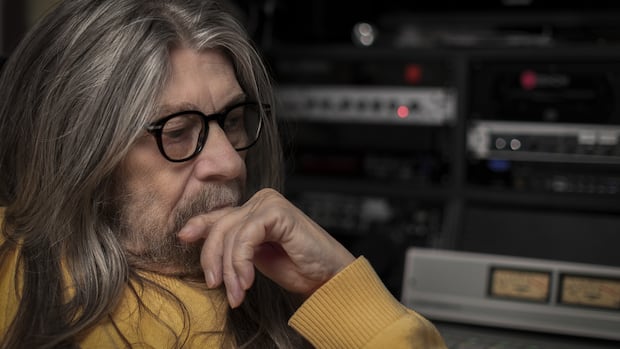
David Marsden, a pioneering radio DJ who brought alternative rock to the Canadian airwaves, died on Friday. He was 85.
The Toronto-born broadcaster helped define an era in the ’70s and ’80s during which FM radio was a breeding ground for creativity and destination for underground music.
“Canada has lost a brilliant, innovative broadcaster and steadfast champion of new and independent Canadian music,” announced NYthespirit.com, the online radio station he co-founded in 2014.
“His commitment to new ideas and supporting new Canadian talent will be sorely missed.”
CFNY: The Spirit of Radio
Born in Toronto and raised in Stratford, Ont., as David Michie, Marsden got his start in the music industry promoting “sock hops” and managing local bands.
He began his radio career as “Dave Mickie,” a fast-talking CHUM-FM DJ in the early ’60s. He made such an impression that renowned media scholar Marshall McLuhan referenced his speedy patter in his landmark book, Understanding Media.
His career in broadcasting spanned decades and stations, including stints at CBC-TV’s Music Hop, with host Alec Trebek. But he was best known for his years at the helm of beloved indie station CFNY-FM, the precursor to 102.1 The Edge.
WATCH | Marsden, then using the name David Mickie, on CBC’s Music Hop: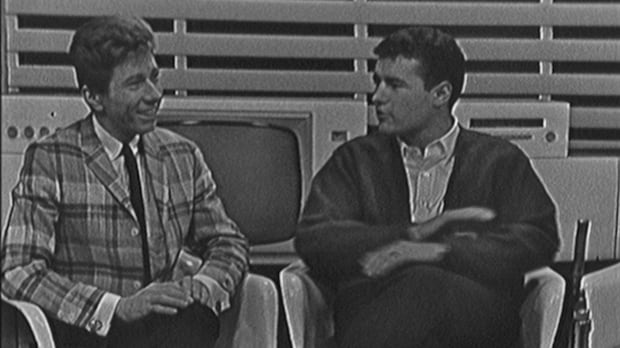
Alex Trebek and David Mickie welcome Gordon Lightfoot to Music Hop in 1963
On CBC Toronto’s after-school show for teenagers, host Alex Trebek brings back popular announcer David Mickie and introduces singer Gordon Lightfoot.
When Marsden became CFNY’s program director in 1979, it was a struggling, upstart station broadcasting out of a yellow house in Brampton, Ont., with an underpowered transmitter, says Alan Cross, who worked as DJ under Marsden.
“He decided that we needed to pivot away from the giants of the Toronto rock radio scene, which at that time were CHUM FM and Q107,” Cross told As It Happens host Nil Köksal. “There was just no way that we were going to compete at their level, playing their music. So we found different music to play.”
Marsden encouraged the station’s DJs to be “musicologists,” says Cross, eschewing standard corporate playlists for then-unheard bands like U2 and The Cure, or homegrown acts like Rough Trade and Skinny Puppy.
People will always find the music that they want to hear, no matter where they have to find it.- David Marsden
“This music gave people an opportunity to hear stuff that no one else was listening to, no one else was giving attention to,” Cross said.
“Not only did the audience respond to this music, so did the artists. There were all these left-centre artists that had no outlet on radio at all in North America. And suddenly they were getting it from this goofy little radio station in Toronto.”
That ethos inspired Canadian rock legends RUSH to write a song about CNFY called Spirit of Radio, a nod to the station’s tagline at the time.
WATCH | CBC’s Commotion on the legacy of CFNY:
Music journalist Liisa Ladouceur says there was nothing else like it.
“This guy is a legend of Canadian broadcasting. I knew him as the spirit of the Spirit of Radio,” Ladouceur told CBC’s Commotion earlier this year. “My favourite DJs would talk about him being their favourite DJ.”
In an interview with CBC Radio in 1991, Marsden said FM radio, at its peak, provided an alternative to traditional AM stations, which had “had become so trite and so boring that people were leaving it in droves.”
“People will always find the music that they want to hear, no matter where they have to find it. FM chose to play this music, and to play it in a creative sense,” he said.
“It wasn’t just playing records. We were creating pictures. We were creating theatre utilizing the music, sound effects, and spoken words. And it was that creative sense that allowed people to tune into the radio and [let] it go for six, seven, eight hours and perhaps enjoy an evening in their own special way.”
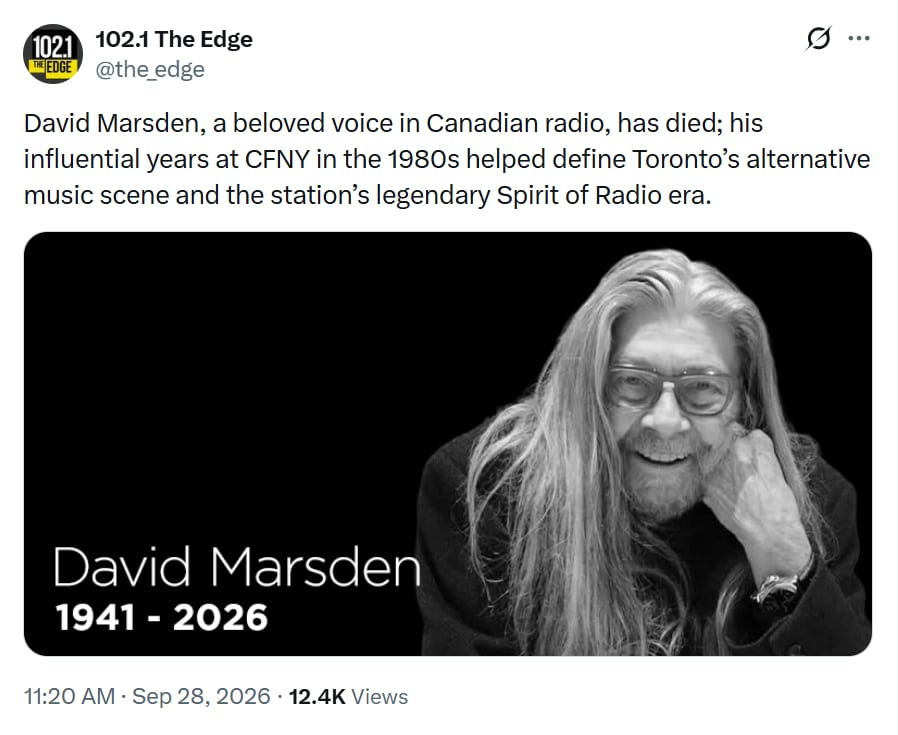 102.1 The Edge, which used to be called CFNY FM, pays tribute to Canadian broadcaster David Marsden. (102.1 The Edge/X)
Marsden stayed with the CNFY until 1988, when he left to pursue other projects.
The following year, the station was acquired by Maclean-Hunter, which was later acquired by Rogers Communications. Rogers sold the station to Shaw, which rebranded it as 102.1 The Edge. It currently airs under Shaw spin-off company Corus Entertainment.
He changed people’s lives, says Cross
Cross co-executive produced a documentary about the station’s heyday called CFNY: The Spirit of Radio, which premiered earlier this year.
Marsden was heavily featured in the doc, he says, and the crew invited him to join them on tour, where he did Q&As to glowing audiences.
“They would come up to him and say: ‘David, in the ’80s, I was growing up. I didn’t know who I was. I felt like an outsider. But the music and the people on that radio station helped me figure that out,'” Cross said.
Marsden was moved to tears by those encounters, he says.
“This love that he expressed over the radio over all those years was coming back at him,” Cross said.
“It’s tremendously sad that we’ve lost him. He was a friend. He was the mentor. He was a co-worker. He was all these things. But I’m so glad that he had the opportunity to come face-to-face with those listeners whose lives he changed.”