
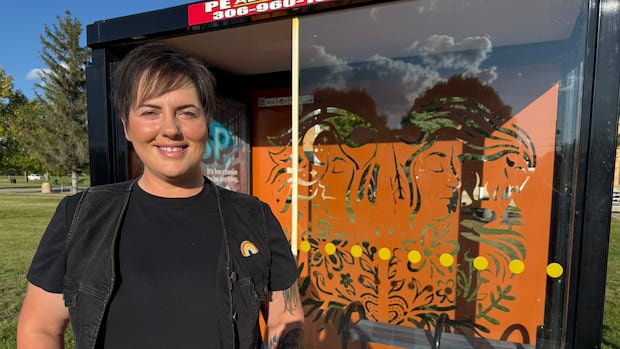
Métis artist Alex Powalinsky has been drawing and creating art since she could hold a pencil. Now she’s using her talents to promote truth and reconciliation in Prince Albert, Sask.
Powalinsky was one of four Indigenous artists chosen to take part in the city’s first round of transit shelter Indigenous art installations.
“It’s really giving a chance for people to see themselves reflected in the art that’s in our community,” she said.
Powalinsky’s design was laser cut into a metal panel that adorns the back wall of a city transit bus shelter on Sixth Avenue East, in front of Carlton High School. The brightly painted orange panel includes two faces, flowers and leaves.
“I want people to see and feel connection — beauty in diversity. I want them to think about our relationship to each other, to the land, to this place and what responsibilities come from that relationship,” Powalinsky said.
The city unveiled four pieces of Indigenous transit shelter art in May. In addition to Powalinsky’s piece, a green metal design by artist Ailah Carpenter covers the bus shelter on Second Avenue and 34th Street West, and vinyl wraps by Cheyenne Longman and Josh Wapiskisiw are affixed to two shelters on 15th Street East.
All of the shelters feature a QR code linked to an online description of the art and the artist’s biography.
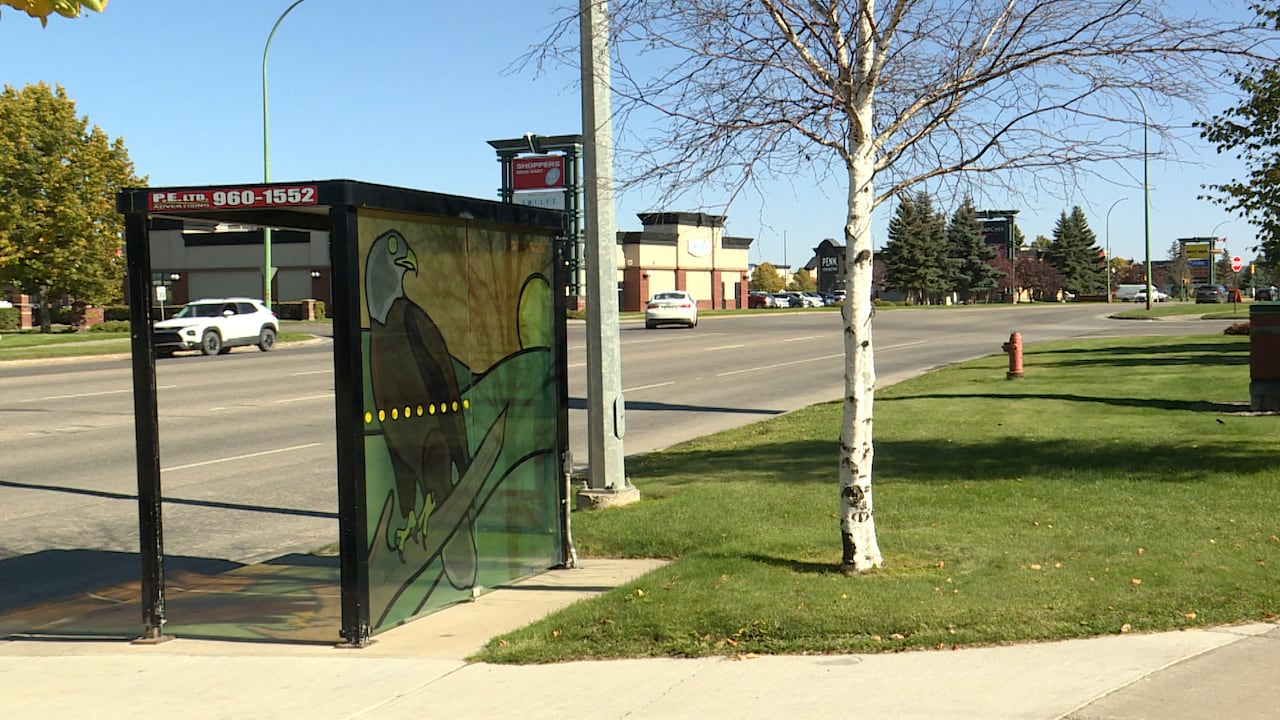 Original Indigenous art created by artist J.wapiskisiw in a bus shelter on 15th Street East in Prince Albert. The city says the art celebrates identity, culture and creativity. (Lisa Risom/CBC)
The City of Prince Albert formed an internal truth and reconciliation committee about a year and half ago to incorporate the Truth and Reconciliation Commission’s calls to action into projects.
The city put out a call this fall asking local Indigenous artists to submit designs for more bus shelters.
The first phase was funded by SaskCulture and Saskatchewan Lotteries. The second phase is funded through the city’s transit budget.
“I think the sharing of Indigenous culture through the artwork is really important, and it’s a way for us all to learn more about the Indigenous cultures and traditions,” said Judy MacLeod Campbell, the city’s arts and culture division manager.
She estimated about half of Prince Albert’s population is Indigenous. The artwork is meant to reflect the community’s demographics and foster reconciliation, pride and community belonging.
“We want to be a city that’s welcoming to everyone, not just from outside, but our own community as well,” she said. “And yes, I sure hope that it contributes to anti-racism and reconciliation.”
So far, the art panels have also reduced vandalism in the transit shelters.
Passage Home memorial
In addition to the bus shelters, the city also created a healing park and public memorial to commemorate Indigenous children who died away from home and survivors of residential schools, day schools and the Sixties Scoop.
The large bronze sculpture, Passage Home by artist Mary Longman, is a life-size representation of a traditional travois carrier with child-size moccasins inside.
According to Longman, the travois carrier symbolically offers a safe passage for children to return to their families and homelands to rest in peace.
Sheldon Natewayes is one of the people the city is hoping to reach with the Indigenous public art. He grew up in Sandy Bay, Sask., and is a member of Peter Ballantyne Cree Nation. He came to Prince Albert for employment and works downtown near the Passage Home sculpture.
“A lot of people have an appreciation for it and they’ll learn from it hopefully, take something from it,” Natewayes said.
“It’s nice to see when people pass by it. And it gives them a reminder that there’s still a place for our history in today’s settings as First Nations people.”
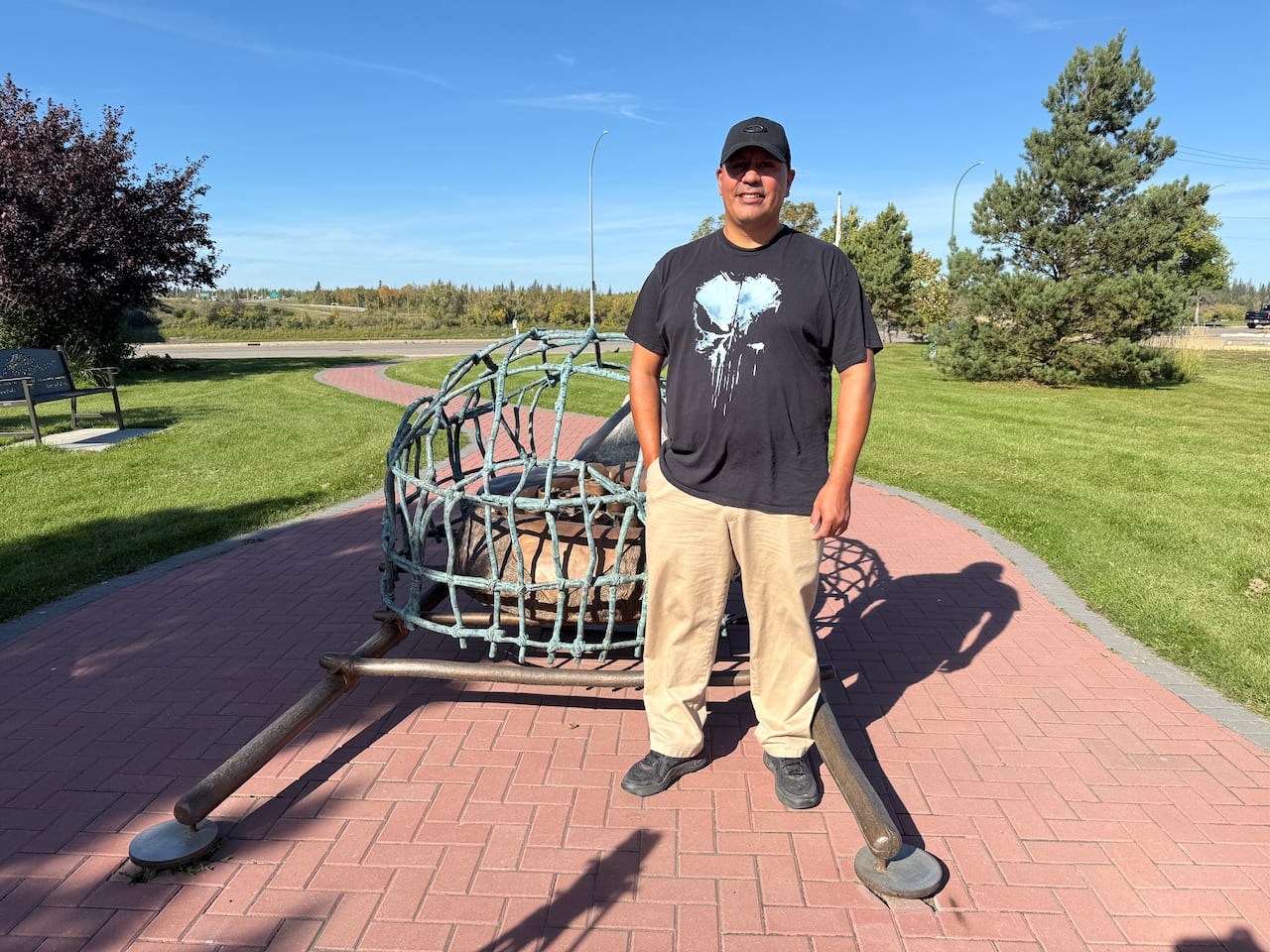 ‘A lot of people have an appreciation for it and they’ll learn from it hopefully,’ Sheldon Natewayes says about the Passage Home sculpture in Scarrow Plaza. (Lisa Risom/CBC)
The project was four years in the making and was installed in Scarrow Plaza, next to the provincial court house, on Aug. 22.
The city commissioned the piece in partnership with Common Weal Community Arts in 2022. The working group got financial support from the Northern Lights Community Development Corporation and government grants.
Natewayes also appreciates the Indigenous art in the transit shelters.
“It’s very welcoming when it comes to First Nations people in urban settings,” he said.
In his spare time, Natewayes creates his own art. He plans to enter a design in the latest call for transit shelter submissions.
It features an eagle wrapping its wings into the shape of a heart, with elders and families in the middle.
“It represents coming together as a community, because it takes a community to raise a family,” he said.
“The heart remembers the love of a family. It represents the culture from the eagles, and then the people standing around it represents a community.”
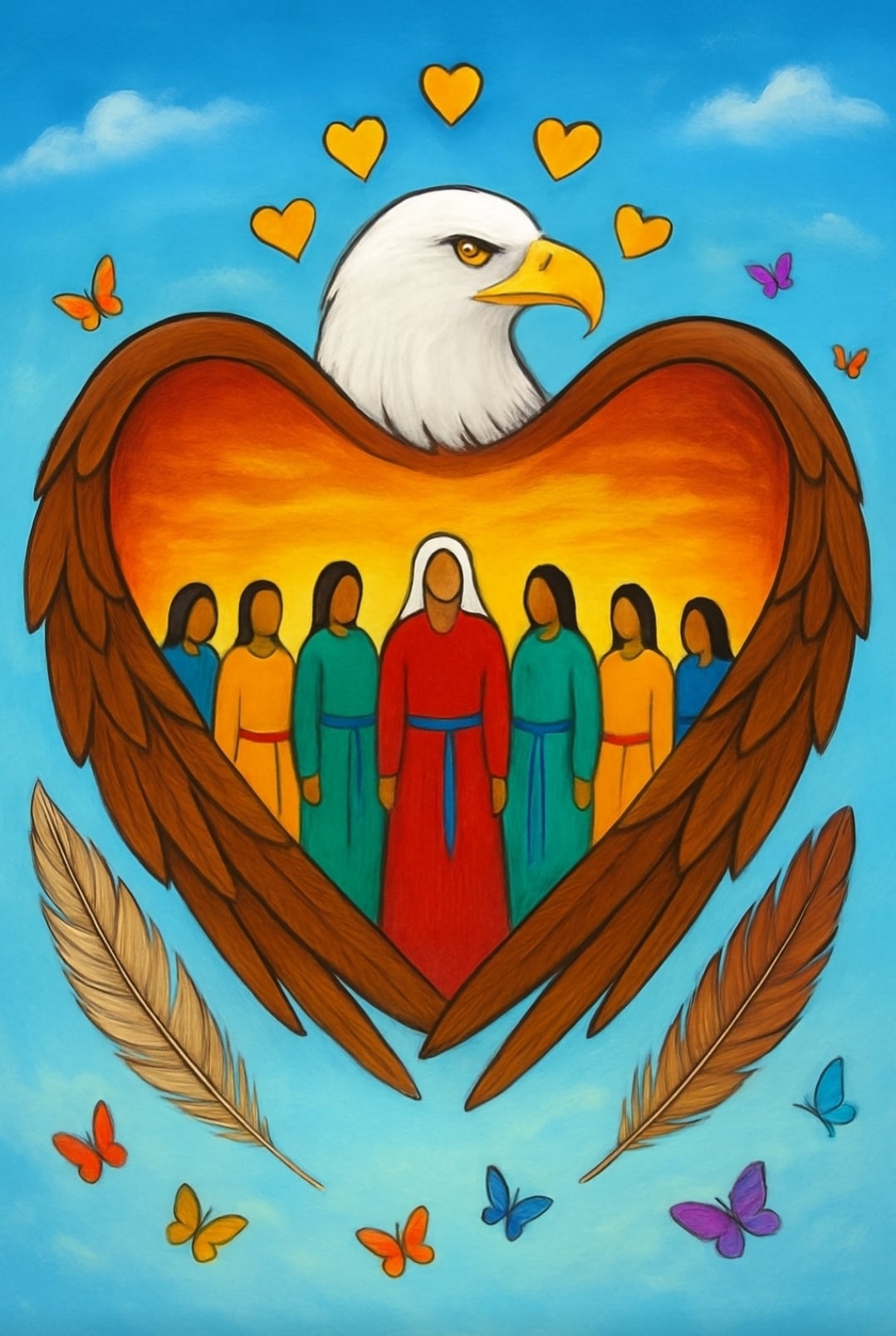 Sheldon Natewayes submitted this design to the City of Prince Albert’s Indigenous transit art project. (Lisa Risom/CBC)
The call for transit shelter art is open to Indigenous visual artists residing in Saskatchewan. Special consideration will be given to artists from the local area and underrepresented groups, the city said in a news release.
Three designs will be selected — two for metal designs and one for vinyl wrap — and each artist will receive a $1,000 honorarium.
The Truth and Reconciliation Commission’s calls to action were released in 2015 to address the legacy of residential schools and advance reconciliation. The commission called upon all levels of government, organizations and individuals to to use the calls to action to help foster reconciliation and inclusion.
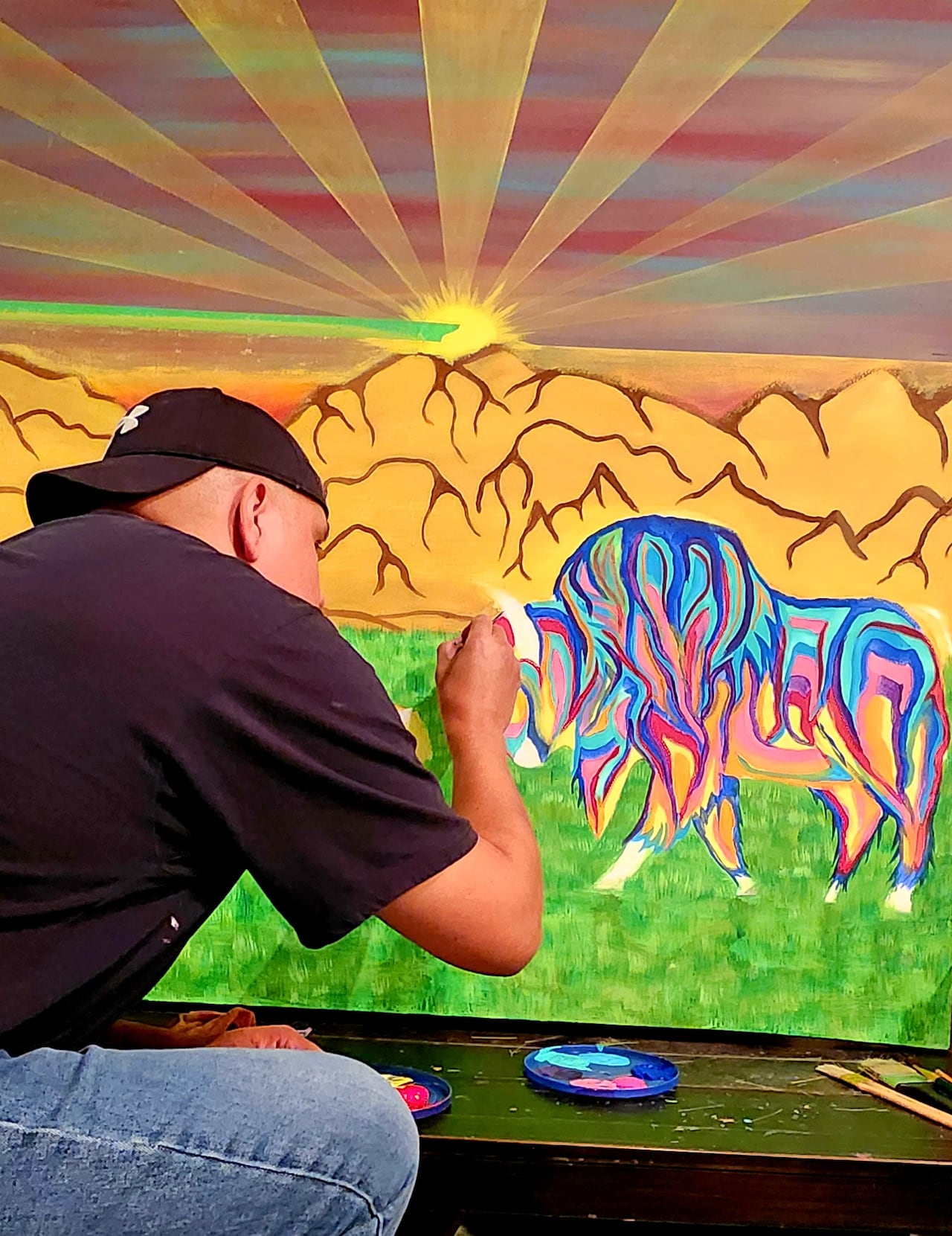 Sheldon Natewayes paints and creates art in his spare time. (Sheldon Natewayes)