
One quick thing: Govt’s Rs 1 lakh crore deep-tech fund hits pause.
In today’s newsletter:
Finally, Apple Pay comes to IndiaWhy Flipkart employees are unhappy Doordash dashes to Hyderabad for India GCC
P.S.: Tune into Tech3 Podcast, your daily dose of tech and startup insights. Monday to Friday! Check it out on Spotify or Apple Podcasts. And don’t forget to sign up to The AI Edge, our weekly newsletter on all things artificial intelligence (AI).
Was this newsletter forwarded to you? You can sign up for Tech3 here
 Top 3 Stories
Finally, Apple Pay comes to India
It’s been a 12-year wait… but Apple Pay has finally arrived in India.
Driving the news
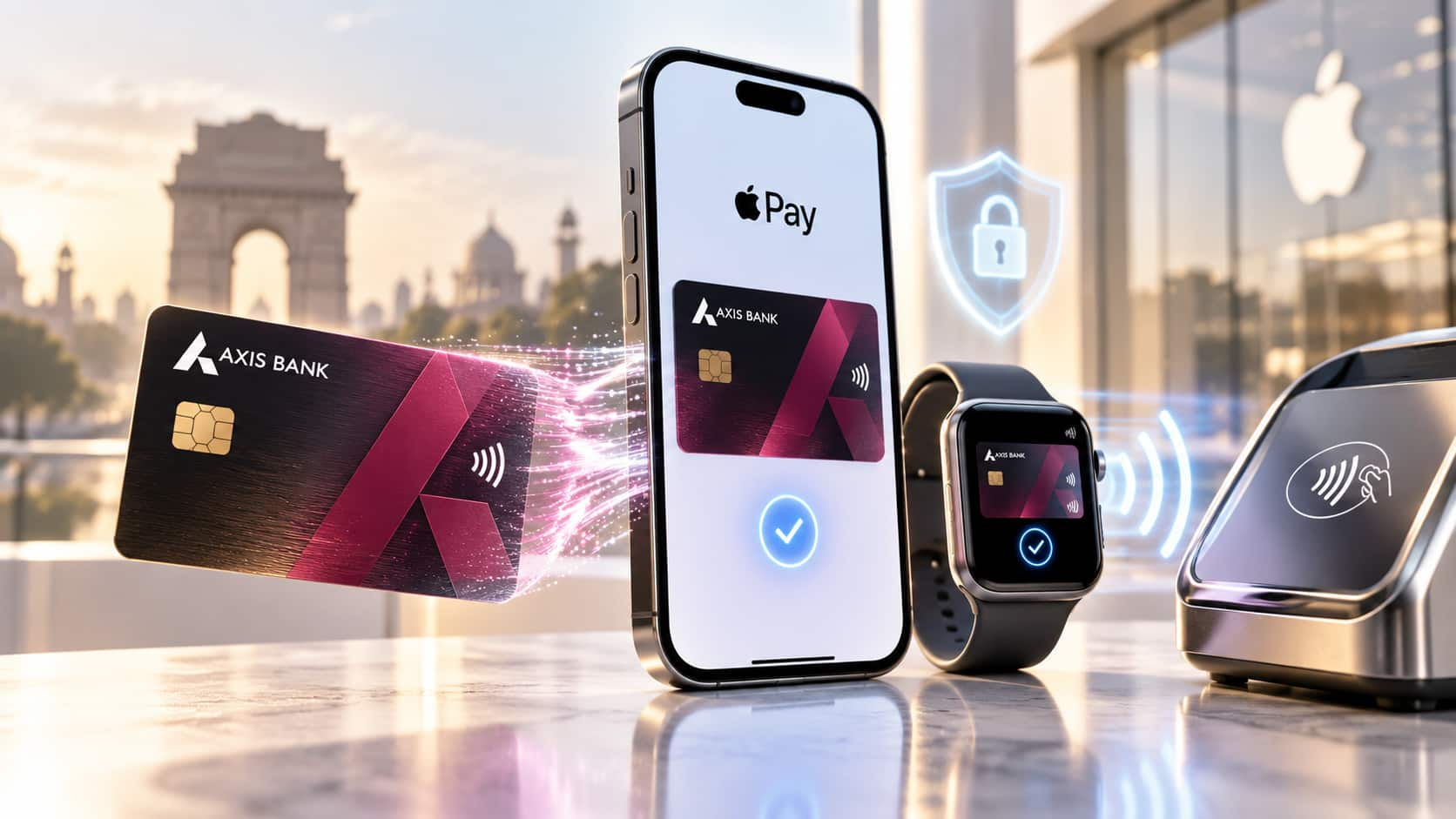
Apple Pay launched in India today in partnership with Axis Bank.
The launch comes after months of negotiations with the banks.
Customers with Axis Bank cards can add it to their Apple Wallet and make online and offline payments.
While payment gateways will enable an Apple Pay option on the checkout page, customers can tap and pay with an iPhone or Apple Watch at offline point-of-sale (POS) terminals.
Apple has also signed up a group of Indian payment service providers and offline point-of-sale (POS) companies to bolster merchant acceptance in the country.
This includes partners like Cashfree, Juspay, Mswipe, Paytm, PayU, Pine Labs, Razorpay and Worldline. What’s missing? Behind the news
While Apple has an outsized market share among premium and affluent customers in India, credit card payments have grown more slowly over the last couple of years.
Meanwhile, UPI has become the de facto payment method for most digital transactions in the country.
Apple and Axis Bank are betting on the ecosystem to encourage customers to use Apple Pay over other payment methods.
The bottomline
The rise of NFC payments in the country and the expanding payment infrastructure make the launch timing more opportunistic.
Axis Bank could be hoping the partnership nudges customers to use Apple Pay more than they otherwise would. Apple Pay could also offer customers a faster, more seamless payment experience.
Disquiet among Flipkart employees amid IPO delay

For years, Flipkart employees have been told to think of their ESOPs as a long-term wealth-creation opportunity.
The problem now is that “long term” has become increasingly difficult to define. An exodus?
At least 10 executives at the VP and SVP levels have exited Flipkart in recent months, according to people familiar with the matter, even as the Walmart-owned e-commerce giant continues to evaluate its IPO plans.
The comparisons are becoming harder to ignore.
Wealth creation galore
Meesho, which started eight years after Flipkart, listed in 2025. Swiggy went public in 2024, unlocking more than $1 billion in payouts for over 5,000 employees.
Groww, founded by former Flipkart employees, has also moved rapidly towards the public markets.
And now even Snapdeal, once considered to have fallen behind Flipkart, is working towards an IPO.
Therefore, employees aren’t just comparing salaries anymore; they’re comparing the liquidity attached to their equity.
Flipkart’s ESOP buybacks
To be sure, Flipkart has not been short of employee liquidity events. The company says it has created more than $1.5 billion in value for employees through ESOP buybacks since 2017, including its latest exercise.
But for many long-tenured employees, the big question remains whether there will be a larger, company-wide wealth-creation event through a public listing. The company view
In a joint statement, Walmart and Flipkart said an IPO “remains an active part of our strategic roadmap” and that the company will move forward “when the timing is right”, without offering a timeline.
The irony is particularly stark: Flipkart helped create a generation of Indian tech executives and founders who went on to build companies of their own.
Now, some of those companies are giving employees something Flipkart’s staffers have been waiting years for – a defined route from paper wealth to real wealth.
For Flipkart, the challenge may no longer be simply convincing employees that the company has a future. It may be convincing them that they will personally participate in the value created along the way.
Doordash dashes to Hyderabad for India GCC

India’s talent pool is getting another US tech suitor. Food and grocery delivery platform DoorDash is the latest to tap the country’s tech workforce to support its global operations.
Driving the news
DoorDash is opening its first India office in Hyderabad, starting with 500 employees.
The company plans to scale the team to over 3,000 employees within two years.
The HITEC City hub will be one of just three DoorDash-owned Customer Experience and Integrity (CXI) centres globally, alongside Tempe, Arizona, and Mexico City.
The centre will initially house CXI and general and administrative teams, with specialised capabilities such as fraud review and technical operations potentially added later. By the numbers
DoorDash serves more than 56 million monthly active consumers across 40-plus countries and processed over 3 billion orders annually, the company said.
Hyderabad’s GCC boom
DoorDash’s entry adds another global name to Hyderabad’s booming GCC ecosystem.
The Telangana government says the city has more than 500 GCCs employing over 5 lakh people, and is targeting 100-plus new centres.
Telangana IT and Industries Minister D Sridhar Babu said the investment reflects Hyderabad’s emergence as a global talent hub and highlighted the potential for the centre to build capabilities serving markets outside India.
Hyderabad already has GCCs of several global digital commerce giants including Amazon, Walmart, FedEx and Uber.