
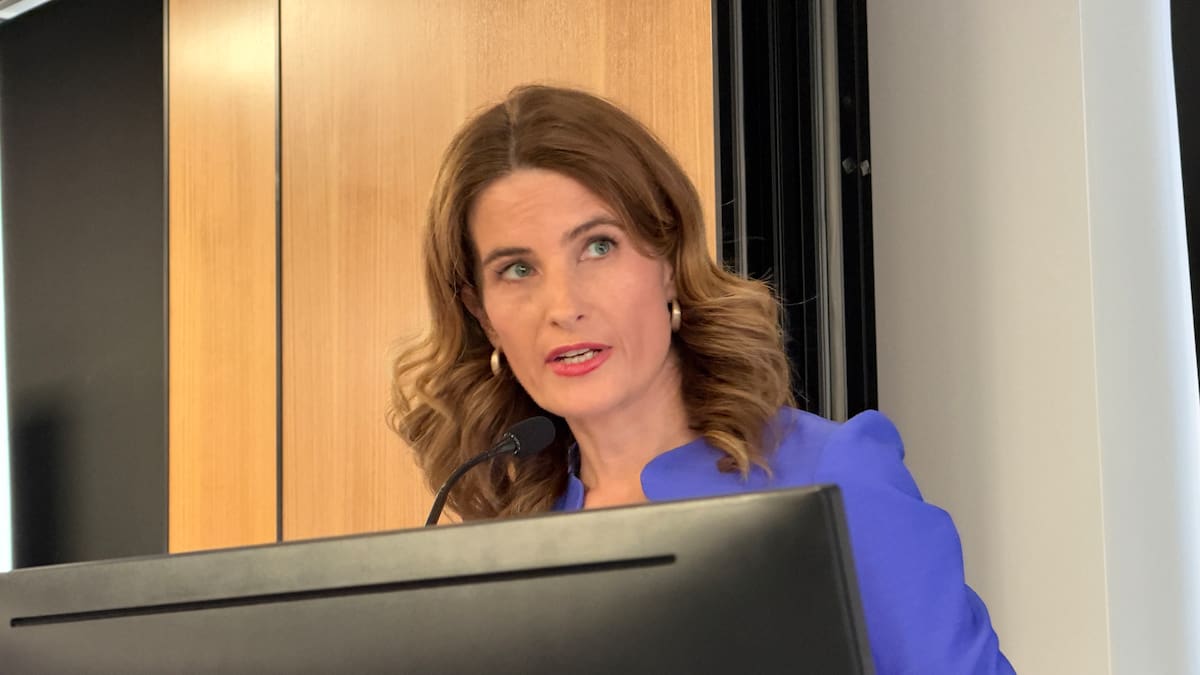
“The definition of stupidity is doing the same thing over and over again and expecting a different result.” Edmonds said.
Willis tallied Labour’s promises and how much the Labour Party said they would cost. These come to $27.1b of new spending.
She then added Labour’s two tax changes, introducing a capital gains tax and scrapping the Investment Boost Tax credit.
This comes to $8.34b in new revenue.
The difference between the two numbers is the amount of spending Labour has promised but has not said how it would pay for.
Willis alleges it will be made up in borrowing or hidden taxes.
There are some things Labour is likely to contest. Willis has claimed the party’s public transport fare cap will be funded through the core Crown balance sheet. Labour says it will fund this by reprioritising spending from the National Land Transport Fund.
Willis is likely to dispute this, noting Labour is already planning to cut the revenue forecast to flow into the fund by freezing fuel taxes and road-user charges.
Labour has also said it would fund some of this spending through the operating allowance – the pot of new money set aside for each Budget. There’s over $21b that could be included in a fiscal plan for the next Parliament, although most is likely to be needed for funding cost pressures in health and education.
On Tuesday, Willis announced that National is likely to campaign on spending the bulk of these allowances on core health services.
“Labour’s hidden bill has now hit $18.8 billion, and that money ultimately has to come from New Zealand taxpayers.
“It works out to $2263 in additional tax for the average Kiwi household every year,” Willis said.
“It is remarkable that Labour’s hidden bill has grown, even after announcing a $5.5 billion tax hike on businesses by cancelling Investment Boost.
“Chris Hipkins has refused to tell Kiwis how he’ll pay for his promises because he doesn’t want them to know how much additional tax they’ll have to pay,” she said.
Willis pointed to comments made on Newstalk ZB’s Mike Hosking Breakfast to justify her claim that the “hidden bill” amounted to more tax.
Hipkins told Hosking he would hit surplus in line with the Government’s forecasts, which suggests the only fiscal lever Labour would pull to hit surplus is additional taxation.
“Conveniently for Chris Hipkins, his prospective coalition partners in the Greens, Te Pāti Māori and Opportunity have a suite of new taxes they want to impose on New Zealanders, and he’ll be able to use those to pay for his hidden bill,” Willis said.
“Labour does not have a credible economic plan. All Labour has is an irresponsible, unaffordable shopping list which will be paid for by hitting every New Zealander with a growing tax bill.”
Updates on the previous Hidden Bill from June, according to the National Party:
Labour’s growing list of promises:
Freezing fuel excise duty and road user charges for three years: $3.14bSmall business package: $1.56bApprenticeship policy: $227mMāori trades training policy: $84mGraduate nurse guarantee: $526mInfrastructure programme: $795m
Offset (roughly cancels out):
Reversing income-related rent changes, offset by reversing Accommodation Supplement changes
Added revenue:
Cancelling Investment Boost: $5.55b
Labour hits back
Labour issued a separate attack on National, saying it had failed its economic warrant of fitness.
“Nicola Willis told New Zealanders to judge National on the economy. Well, the results are in.
“Prices are up. Unemployment is up. Public services have been cut. And hundreds of millions of dollars have been wasted,” Edmonds said.
“National promised to bring down the cost of living. Instead, it has made it worse.
“Prices are rising twice as fast as pay. Pay has gone up 2% while prices have gone up 4.1%. Kiwis are working hard and falling behind,” she said.
“171,000 Kiwis are unemployed, and those still in work are being squeezed by higher power bills, higher fuel costs and higher rates.
“Power bills are up 25% since National took office, seeing a doctor costs 21% more, and Auckland households are paying an average of $800 more towards their rates each year,” Edmonds said.