
On Oct. 1, 1958, NASA was born! The space agency officially opened for business on this day. President Eisenhower had signed the National Aeronautics and Space Act into law two months earlier in response to the Soviet Union’s launch of Sputnik.
The U.S. didn’t want to get left behind in the space race, so Congress created NASA as an organized effort to advance space research and technology.
NASA absorbed the National Advisory Committee for Aeronautics (NACA) along with its 8,000 employees and three laboratories.
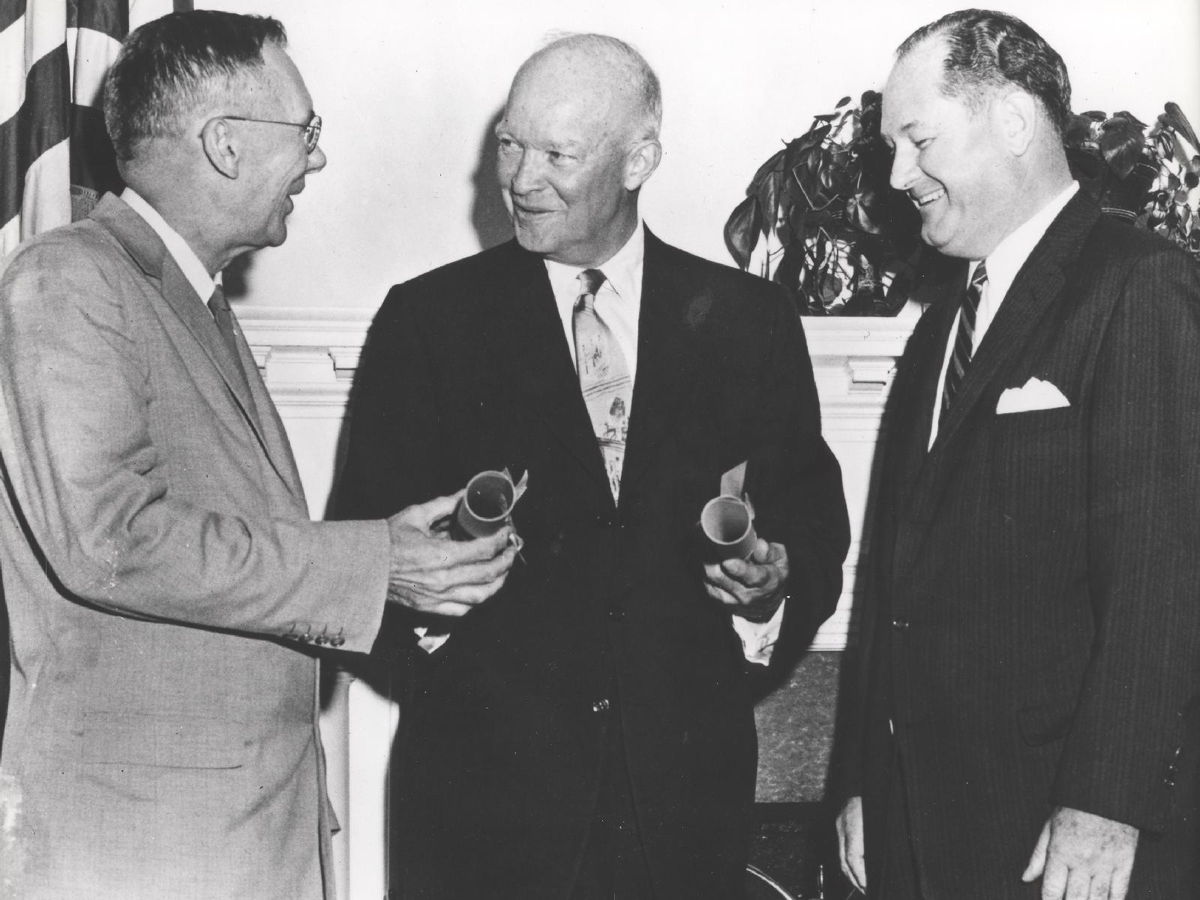
President Eisenhower commissioned Dr. T. Keith Glennan, right, as the first administrator for NASA and Dr. Hugh L. Dryden as deputy administrator as they signed the National Aeronautics and Space Act (Pub.L. 85-568), into law 1958 that led to NASA’s opening on Oct. 1 of that year. (Image credit: NASA)Why it mattered
When NASA officially opened its doors on Oct. 1, 1958, it opened a new era of space exploration for the United States.
At the time, the U.S. was on the back foot racing to catch up to the Soviet Union after the launch of Sputnik and show the country’s technological prowess on the world stage. NASA’s existence began as the National Aeronautics and Space Act, which then President Dwight Eisenhower signed on July 29, 1958 after the act’s passage by Congress.
You may like
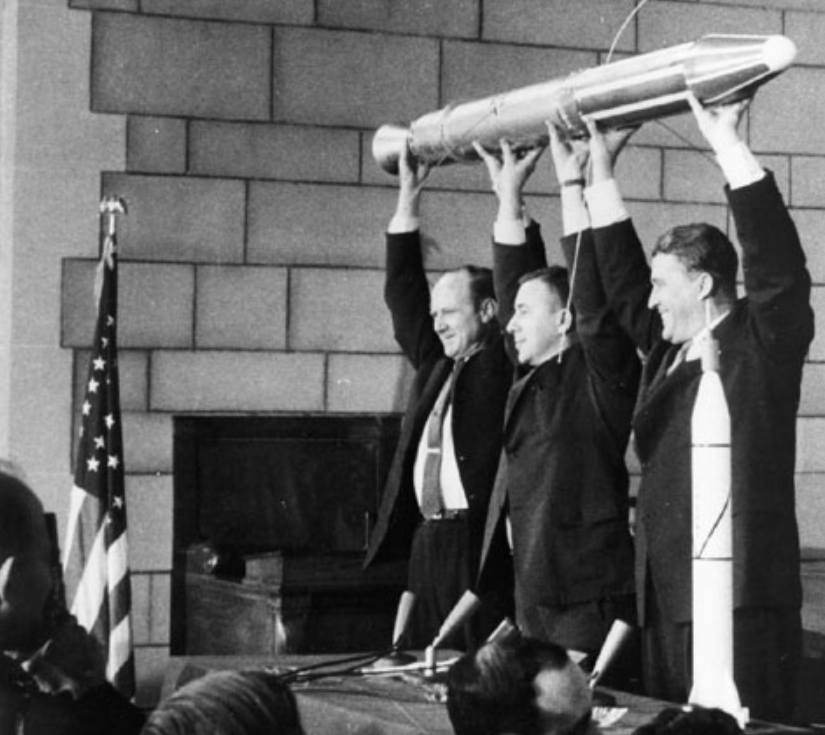
The United States’ first successful satellite, Explorer 1, launched on Jan. 31, 1958, and discovered the radiation belt around Earth. NASA would open its doors by the end of the year. (Image credit: NASA/JPL)
It was Eisenhower who pushed for a civilian-led space agency, which – as mentioned above – found its roots in the existing National Advisory Committee for Aeronautics, or NACA.
“Although a former military commander, Eisenhower believed a civilian agency would be more effective than assigning space to the military, where inter-service rivalries had already demonstrated a lack of results in launching a satellite,” NASA wrote in a history account for the agency’s 65th anniversary.

The first successful U.S. satellite launch actually predated NASA’s creation (Explorer 1 launch on Jan. 31, 1958). NASA led U.S. efforts in the Space Race with the Soviet Union to be the first to land astronauts on the moon (a race NASA and the U.S. won in July 1969 with the Apollo 11 moon landing).
NASA ultimately opened its doors to international cooperation with the joint U.S.-Soviet mission Apollo-Soyuz Test Project, leading to joint operations at Russia’s Mir Space Station and a more international collaboration on the still-flying International Space Station.
Human spaceflight aside, NASA has also maintained a robust planetary exploration (including the first rovers on Mars) progarm, Earth observation missions and astrophysics probes, including ever-more-advanced space telescopes.
On Oct. 1, 2026, NASA’s 68th anniversary, a commercial SpaceX rocket launched four Crew-13 astronauts, including two NASA astronauts to the International Space Station alongside crewmates from Canada and Russia, in a well-timed celebration of the space agency’s history.
“Well Happy Birthday to NASA,” said NASA astronaut Zena Cardman, who provided live commentary for the launch. “What a great day to light a candle.”
Want more space history? Check out our full On This Day In Space Story archive and watch our On This Day In Space videos on YouTube.
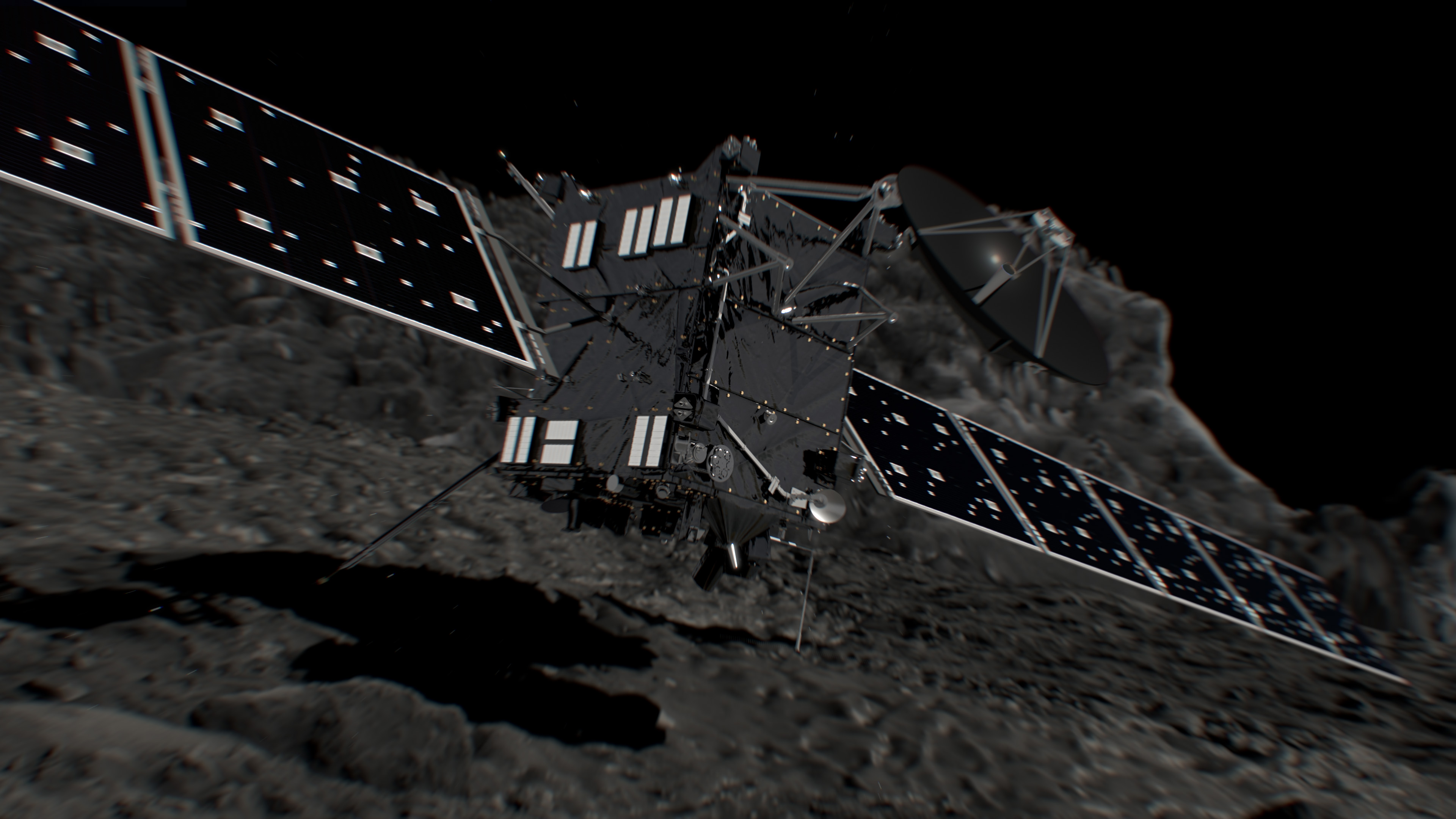
On this day in space! Sept. 30, 2016: Europe’s Rosetta crashes on Comet 67P