
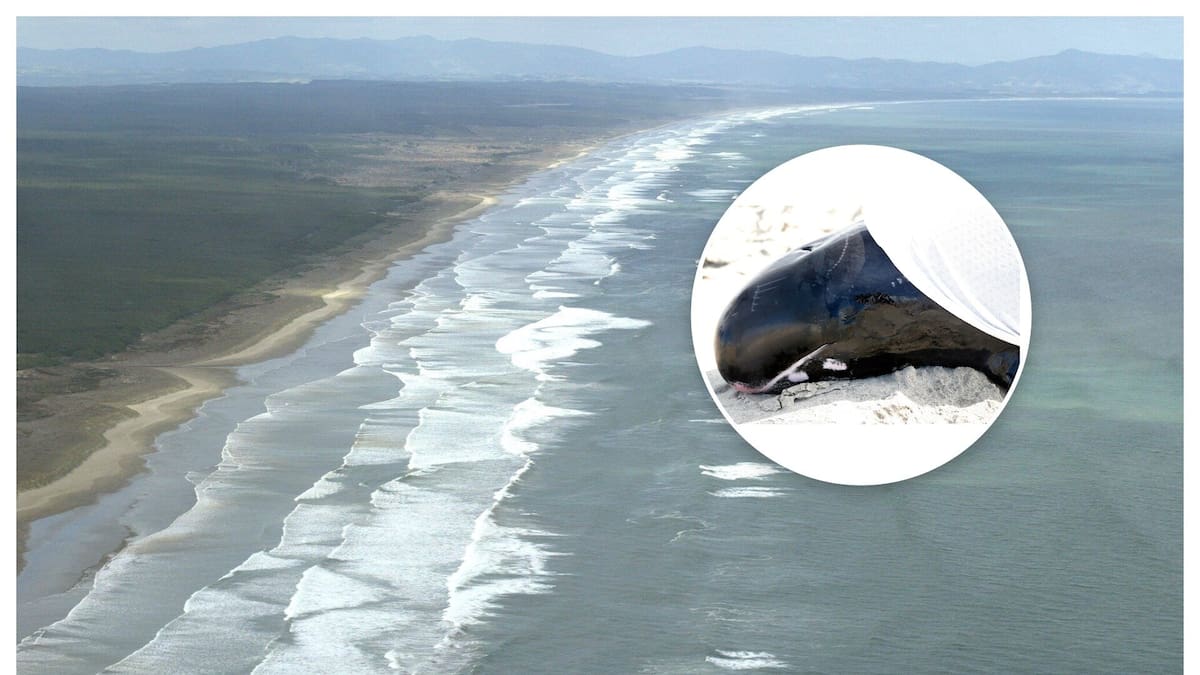
“Some had died overnight and the condition of others had really deteriorated. It was more humane to make the decision to euthanise them.”
The whales were understood to be pygmy killer whales, a rarely seen species. About 15 had beached, with 11 being euthanised, according to Brown.
She said cultural protocols were observed before the animals were removed.
“Everything was done under the cultural karakia and processes we need to follow when we’re dealing with taonga such as whales.”
Whales are considered family and tūpuna (elders) in Māori culture.
Brown said the whale carcasses are expected to be buried on Ngāti Kuri whenua after a service.
Brown said while thankful to those who arrived to help, the response highlighted the need for more community training.
“As lot of people came with the right intentions and wanted to help, but many didn’t necessarily know what to do.
On reflection, we would like to see more training around whale strandings, how to handle whales and what not to do.”
DoC Northern North Island Operations director Joel Lauterbach said they are investigating the stranding.
DoC was first notified of the stranding about 7pm on Thursday and staff responded to the site. Lauterbach said conditions on the beach were challenging and hazardous, with an incoming tide and fading light, and staff withdrew when it was no longer safe to continue the response.
“The whales, which can be up to 2.6 metres long, are spread across several kilometres of beach and conditions remain challenging.”
DoC is working closely with Ngāti Kuri, NgāiTakoto and Te Aupōuri at the site. The whales are being moved for burial and tikanga processes are underway.
“Our immediate focus is working with iwi and gathering information to understand the full circumstances of the stranding,” Lauterbach said.
DoC won’t be undertaking media interviews on this at this stage while we continue to gather information and establish the full picture.