
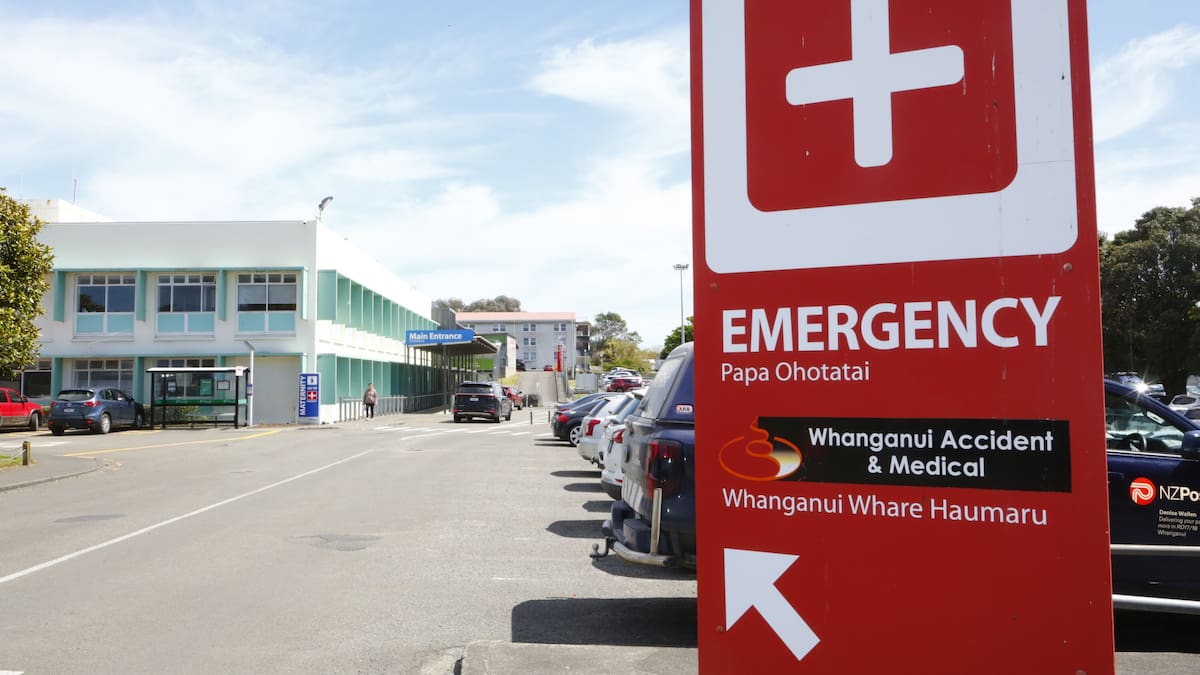
Health NZ group director operations for Whanganui Kath Fraser-Chapple said the changes would increase capacity, improve patient flow and create a safer environment for patients and staff.
“Demand on Whanganui Hospital’s Emergency Department continues to grow. These improvements will help support more timely assessment and treatment for patients and contribute to shorter stays in the Emergency Department.
“The ED will remain fully operational throughout the works.
Kath Fraser-Chapple, Health NZ Te Whatu Ora group director operations for Whanganui, said the changes would contribute to shorter stays in the emergency department.
“Both clinical and operational staff have been involved in planning the project and provided feedback that helped shape the final design.”
Fraser-Chapple said the ED recorded 6666 presentations from July to September – “an increase of 6.5% on the previous winter”.
Last month, the New Zealand Nurses Organisation claimed Whanganui Hospital’s ED reached 680% capacity across a week.
Fraser-Chapple said the 680% figure appeared to be based on patient turnover across the week, rather than the number of patients in the ED.
Fraser-Chapple previously said the work would begin in October and told the Chronicle it was expected to start “once the contractor has been appointed and building consent requirements have been completed”.
The project will repurpose existing space within the ED to create two additional ambulatory treatment spaces. These rooms can be closed for single-patient examinations.
The mental health assessment room would have room access changes and security features, Fraser-Chapple said.
The new ED staffroom will be built alongside the existing facility – which ED staff will continue to use until the new area is complete.
“Future development needs for the Emergency Department will continue to be assessed as part of ongoing service and infrastructure planning,” Fraser-Chapple said.
“Any future funding decisions will be considered through Health New Zealand’s normal planning and approval processes.”
Outside the ED, Health NZ reported progress in elective treatments and first specialist assessments at Whanganui Hospital.
In a statement last week, Health Minister Simeon Brown said the Central region, which includes Whanganui, now leads the country on both figures.
“Whanganui recorded the largest improvement nationally for elective treatment … the largest gain of any district in the country, up 20.8 percentage points.
Shorter waits for first specialist assessments and elective treatments are two of Health NZ’s health targets, to be achieved by 2030.
“We know there is more work to do, and that is exactly why now is the time to build on this progress,” he said.
New Zealand Nurses Organisation delegate and nurse Maura Skilton said the two additional ambulatory treatment spaces were good news, but “still not enough”.
“Nurses all over the country have struggled through the worst influenza outbreak in a decade, overcrowding in our hospitals and hours – and sometimes days – long waits in emergency departments,” she said.
“Our next step is to work with Te Whatu Ora and the Minister of Health to ensure patient demand and health care is delivered timeously.”
Clinic rooms and discharge lounge
Last September, the Government announced its $100 million investment in 21 upgrade projects to national hospital facilities.
Whanganui Hospital got $1.5 million in capital funding towards additional ED clinic rooms for fast-track services, relocating the discharge lounge and repurposing a shower area into a clinical space to increase capacity.
The clinic rooms and discharge lounge were expected to be finishedby June, and the new clinic room by April, according to Health NZ.
Noam Mānuka Lazarus (Ngāti Whātua o Kaipara) is a multimedia journalist at the Whanganui Chronicle.