
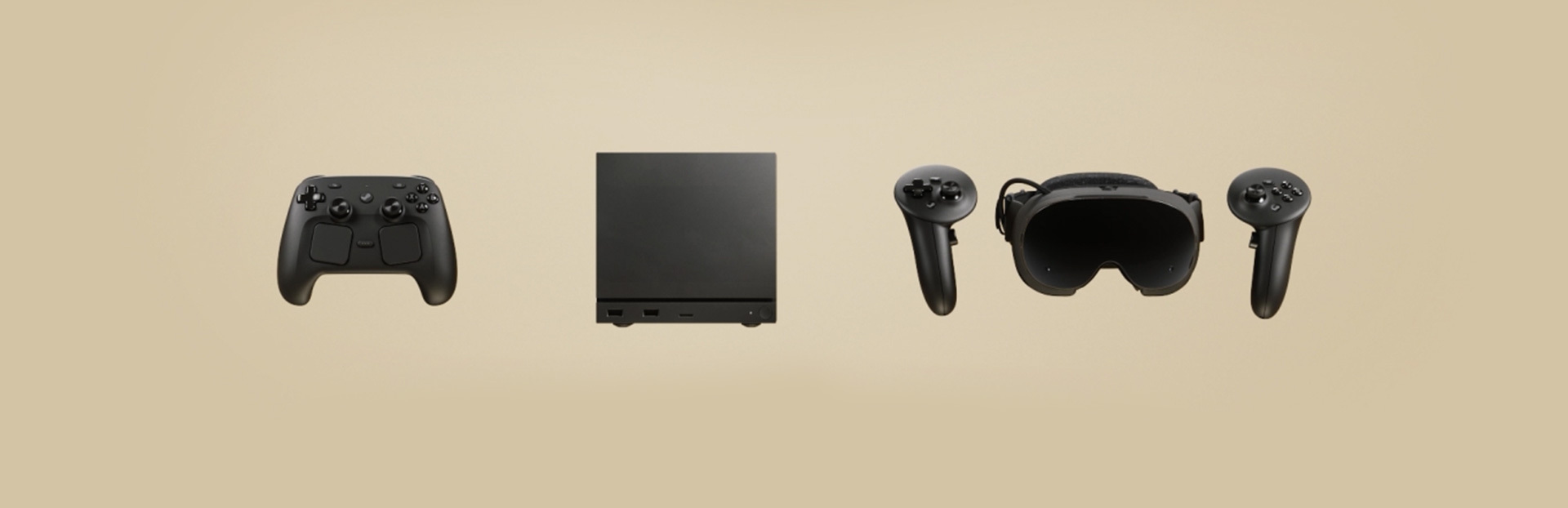
Steam’s client beta now lets you set a manual Pyrowave bitrate of up to 1 Gbit/s for Remote Play, and Valve’s own note says what that costs: “more bandwidth increases latency”. The Steam Beta Client Update that raised the ceiling went out to the Preview and Beta channel on October 2 at 02:07 UTC, dated October 1 by Valve.
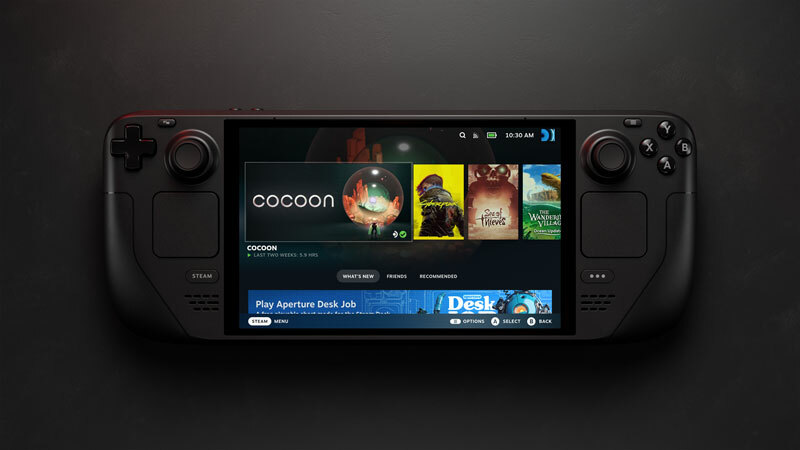
Steam’s Remote Play streams games from a PC to Steam’s own devices as well as to headsets. Image: Valve
It also wiped everyone’s manual figure. “Pyrowave bitrate has been reset to the automatic default”, Valve says, so anyone who had tuned the number by hand is back on automatic until they set it again.
Valve raised the ceiling and warned against reaching for it
Valve pairs the new limit with the warning: “Pyrowave manual bitrates can be increased up to 1 Gbit/s”, and “more bandwidth increases latency”. For a streaming codec that is the whole trade, since a VR stream that arrives late is worse than one that arrives slightly softer.
Pyrowave is the newer of the codecs Steam streams with, and it can use up to 10 times the bandwidth of a conventional encoder, with gigabit ethernet as its practical floor. A manual 1 Gbit/s setting on a gigabit link therefore leaves nothing spare for anything else on the wire.
Valve publishes no latency figures at any bitrate, so there is no way to say what 1 Gbit/s costs in milliseconds on a given link. The ceiling is the only number Valve gives.
Two new convars tune the automatic mode
Valve added “@PyrowavePSNR and @PyrowaveHeightFactor to tune automatic bitrate calculation”, and points to an objective bitrate evaluation document in the public pyrowave repository for the detail behind them. The automatic mode got work of its own in the same update, which Valve describes as improving “the automatic Pyrowave bitrate calculation to improve visual quality”.
Three other Pyrowave changes are in the release. Valve fixed “gradually increasing video latency when using Pyrowave on slow network links”, reduced audio dropouts, and added a dialog “to recover if your network isn’t able to handle current streaming settings”.
There is also a new Steam menu option to stop desktop streaming, which is the first thing to reach for when a stream has taken over a machine you are trying to use.
The reset wipes the number you chose
The reset is the part that will reach most owners. A manual bitrate chosen weeks ago for a specific room and a specific router is gone, and the stream a reader gets after updating is whatever the automatic calculation decides, which Valve has also changed in the same build.
Owners who want the old number back have to type it in again. Owners who never touched it are on a calculation Valve says it has improved, and the convars are there for anyone who wants to push at it.
This is the Steam client, not SteamVR
These changes sit in the Steam client’s Preview and Beta channel, which is a separate release from the SteamVR 2.18.2 beta and from SteamOS 0.4.3 for Steam Frame, both of which Valve posted on October 1. Opting into one does not opt you into the others.
Valve does not say when any of it reaches the stable client. For now the 1 Gbit/s ceiling exists mainly as a number Valve has told you not to treat as free.
Note: Links to online stores in articles can be so-called affiliate links. If you buy through this link, MIXED receives a commission from the provider. For you the price does not change.