
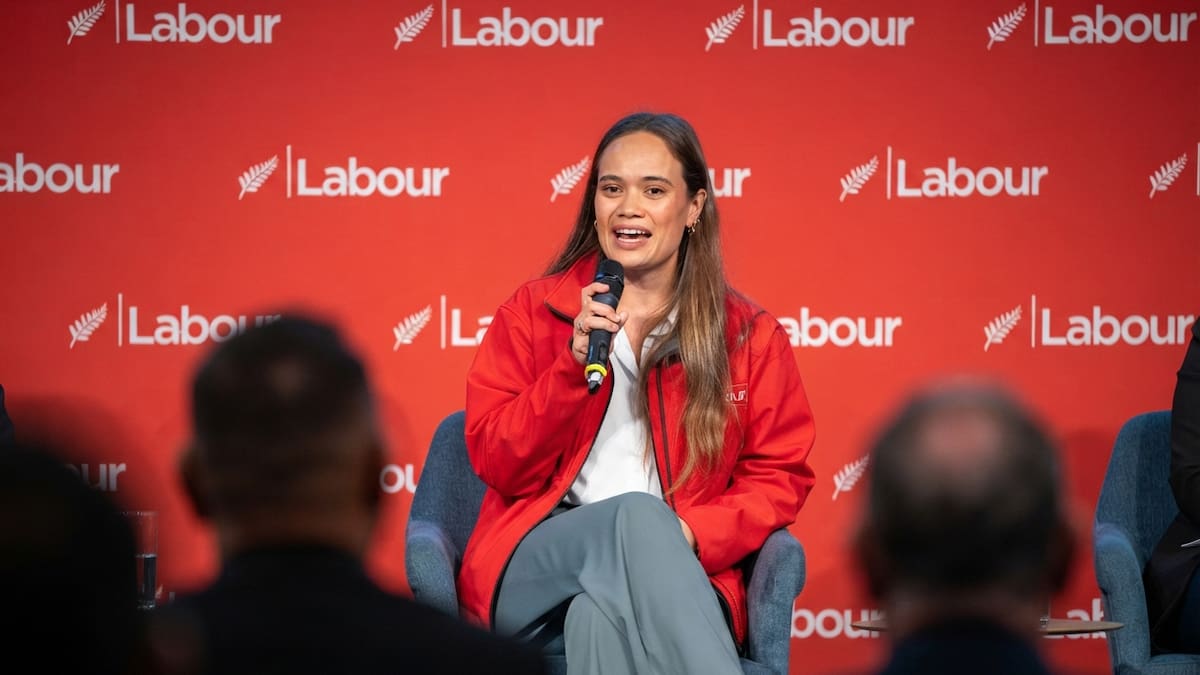
“People aren’t asking for much. Just tell them the real price upfront and make it as easy to leave a subscription or membership as it was to join,” Williams said.
“And those extended warranties? In many cases, what they cover is already your right under the Consumer Guarantees Act.”
Consumer NZ chief executive Jon Duffy said consumers had been calling for similar measures for decades.
“It’s great to see it emerge as part of a major political party’s manifesto. These issues have been around for a long time, but there’s also modern things that have really come to the fore in the last decade,” Duffy said.
“Commerce has increasingly become digitised and a lot of the reference in the policy to not being able to unsubscribe from a service is a real frustration. I know it frustrates me, and it frustrates many consumers where the user flow is a labyrinth to find your way out of.”
Consumer NZ CEO Jon Duffy says political consensus on the issues facing consumers is beginning to grow.
Duffy supported Labour’s plan to tackle “drip pricing”, where companies advertise a low headline price and incrementally reveal mandatory fees, taxes, or surcharges during the checkout process.
Labour’s proposed changes echo policies overseas, notably in Australia, which Duffy described as “world-leading” in its consumer protection rules.
“We’ve been advocating for New Zealand to follow the Australian model, so while we think what Labour’s putting out here is really good and it’s a step forward for consumers, it could go further. We could have an overarching ban on unfair trading practices, which can be a simple amendment to the Fair Trading Act.”
One area that concerned Duffy was subscription traps, noting many companies exhibiting the behaviour in New Zealand are multinational.
He said he was interested to learn how Labour planned to enforce its proposals against overseas-based companies and whether it had thought through the practicalities of enforcement.
Retail NZ chief executive Carolyn Young is broadly supportive of Labour’s proposal but questions its implementation and enforcement. Photo / Jason Dorday
Retail NZ chief executive Carolyn Young echoed the sentiment on implementation and questioned what would be classified as a hidden fee.
“If a retailer is selling online, is it reasonable to expect that when you get to the checkout, you’ll see a freight charge and that that’s not deemed as a hidden fee?” Young said.
“We know when you’re buying tickets through any of the ticketing agencies that the price advertised for the ticket doesn’t include all of the add-ons, but does that classify as not being transparent?”
Young also questioned Labour’s proposal to crack down on extended warranties being forced on customers.
She acknowledged the need to clarify what an extended warranty gave customers beyond traditional protections, but said Labour needed to be clearer on what was included.
As for the proposals relating to “junk” car insurance policies, Young did not take issue with the actions of sales associates but believed it needed to be made clearer to customers what those products provided.
Young also highlighted a quieter Labour announcement, in which Williams confirmed plans to regulate merchant fees to 1%, as recommended by the Commerce Commission.
“It is so complicated because no one transaction incurs the same fee. In terms of that space, really understanding the landscape across the big and small retailers or merchants, we should be able to get to a good spot.
“We are happy to support that in terms of the broad sense, but we have to make sure that it was fair and equitable.”
As for a ban on credit and debit card surcharges, Young reiterated Retail NZ’s opposition and said her view was mixed on whether the next Government would implement one, regardless of the election’s outcome.
First Retail managing director Chris Wilkinson. Photo / Mark Mitchell
First Retail managing director and retail analyst Chris Wilkinson said Labour’s proposed principles were already commonplace in Britain and the European Union.
“I believe that this would be logically supported across the House – no matter which party proposed it. Essentially the law responds to the changing ways that interact and transact with businesses online and is trying to catch up with the ever-evolving ways that technology both makes life easier – and harder,” Wilkinson said.
“Conversely, we know that consumers are increasingly empowered using AI to help them unravel complex technology subscriptions, or challenge billings, so at the same time these changes are proposed, people are also finding their own solutions.”
Wilkinson said because these changes were happening globally, retailers and e-tailers in New Zealand were already marketing their products similarly, particularly large international chains aiming for uniformity.
While he praised the proposal’s intent, Wilkinson suggested it should be a business-as-usual proposal, rather than an election driver.
“Consumers seem more worried about uncertainty around taxation now, which has slowed footfall and economic activity, and that is being felt widely across NZ.”
Tom Raynel is a multimedia business journalist for the Herald, covering small business, retail and tourism.
Stay ahead with the latest market moves, corporate updates, and economic insights by subscribing to our Business newsletter – your essential weekly round-up of all the business news you need.