
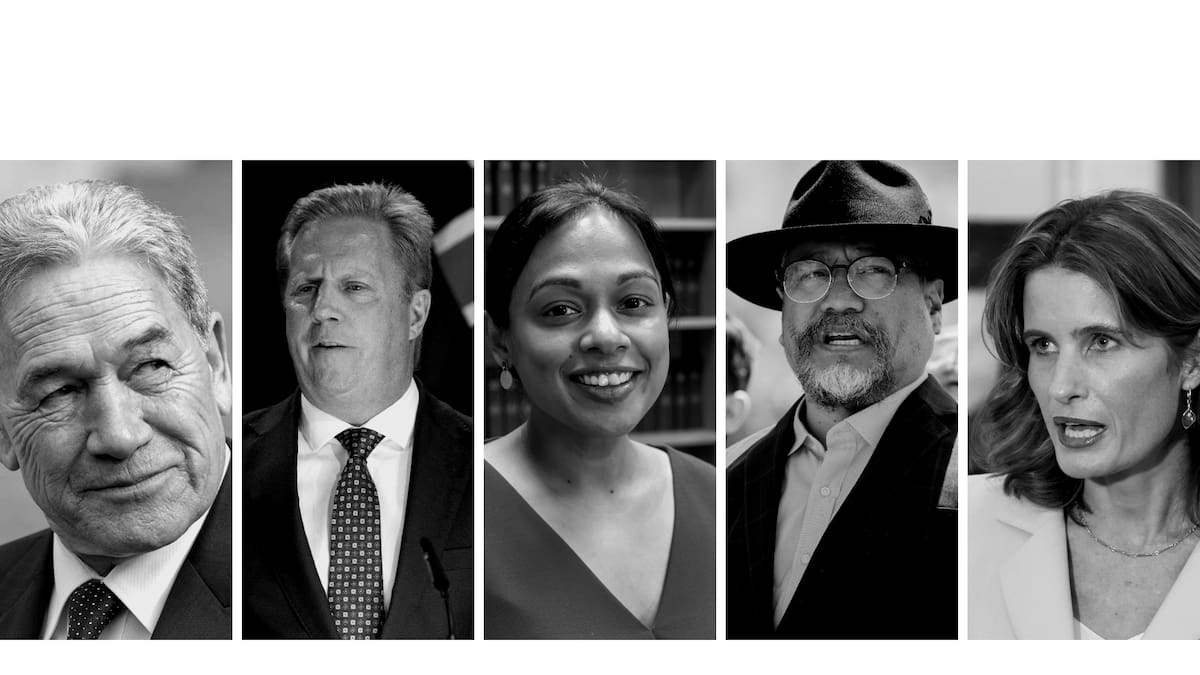
Its position on Peters remained unchanged, she said.
However, the fact it was absent from the formal bottom lines suggests it might not be a deal-breaker if the governing coalition needed Opportunity after the election and Peters wanted to keep Foreign Affairs.
If he wanted it again, and there were no obvious impediments, he would almost certainly get it for a fourth term.
Peters bristled in an interview on Newstalk ZB’s The Country last week when host Jamie Mackay suggested he did not want to be Foreign Minister again.
That was more likely because people were presuming to know what he wanted before he had made it clear. And he hasn’t made it clear.
The decision to post his right-hand man and foreign affairs adviser Jon Johansson to Stockholm has been interpreted, perhaps overly, as Peters not planning on holding the portfolio again.
One thing Peters has made clear is that he won’t be talking about ministerial posts before the election.
There are several reasons Peters may not be the next Foreign Minister, even if the coalition is returned to government.
The prospect of another three years of international travel may be too wearying. The mind might be willing but an 81-year-old body could be resisting.
If Peters returned to Government with a much bigger party, and substantial gains in a new coalition, he may want to put greater focus on pursuing a domestic agenda.
It’s unlikely his coalition partners would give both Defence and Foreign Affairs to New Zealand First, and Peters opted for Ron Mark to return to the Defence portfolio.
Several National MPs could have a claim on the portfolio. It automatically brings prestige and requires a senior member of the Government, who can foster good relationships, is an independent thinker, not dogmatic, and has a clear view of New Zealand’s place in the world.
The last National Foreign Minister was Gerry Brownlee, the current Speaker of Parliament.
He took over in May 2017 after Murray McCully stepped down after almost nine years in the job, and having had only five months in the job, Brownlee may have a sense of unfinished business.
Even if re-elected to Parliament in his list-only position, it is unlikely he would be returned to the ministerial post. He is too valuable as Speaker.
Trade Minister Todd McClay would have the strongest claim to the role, being familiar with the issues and the international circuit for two years in the Key-English Government and three years in the current one.
The downside would be losing one of the world’s more experienced Trade Ministers, who has considerable influence at present.
But someone such as Simon Watts could pick up Trade.
It is also possible that, with the current drive to consolidate ministries and ministers, Foreign Affairs and Trade could be combined under McClay.
The last person to hold the combined Foreign Affairs and Trade portfolio was Don McKinnon from 1990 to 1996, when it was split again.
McClay would probably need to relinquish Agriculture under that scenario.
Former Defence Minister Mark Mitchell might have a claim on it, having had international experience briefly as Defence Minister in 2017 and this term as the leading Five Eyes minister.
Another possibility would be for Luxon to replicate what David Lange did in his first term as Prime Minister and keep the portfolio for himself, with an active associate.
In the event of a major shake-up in coalition configuration and the possibility of Act or New Zealand First getting Finance, then Foreign Affairs could be a suitable consolation for current minister and National Party deputy leader Nicola Willis, assuming she survived the election as a list MP.
She would certainly have the skills, seniority and experience to do it.
If the Coalition lost the election to a Labour-led Government, then Labour’s foreign affairs spokeswoman Vanushi Walters would be a clear frontrunner for the position.
However, if the Green Party’s election result reflected current or higher polling (16% in the 1News-Verian poll), it would be in a position to demand some significant portfolios, particularly with Finance going to Labour.
Depending on the final result, it could have a claim on something as important as Foreign Affairs. Teanau Tuiono, No 4 on its list, has been the party’s foreign affairs, defence and disarmament spokesman.
It’s not unheard of. Germany has twice had Green Party ministers of foreign affairs, most recently between 2021 and 2025, with former co-leader Annalena Baerbock.