
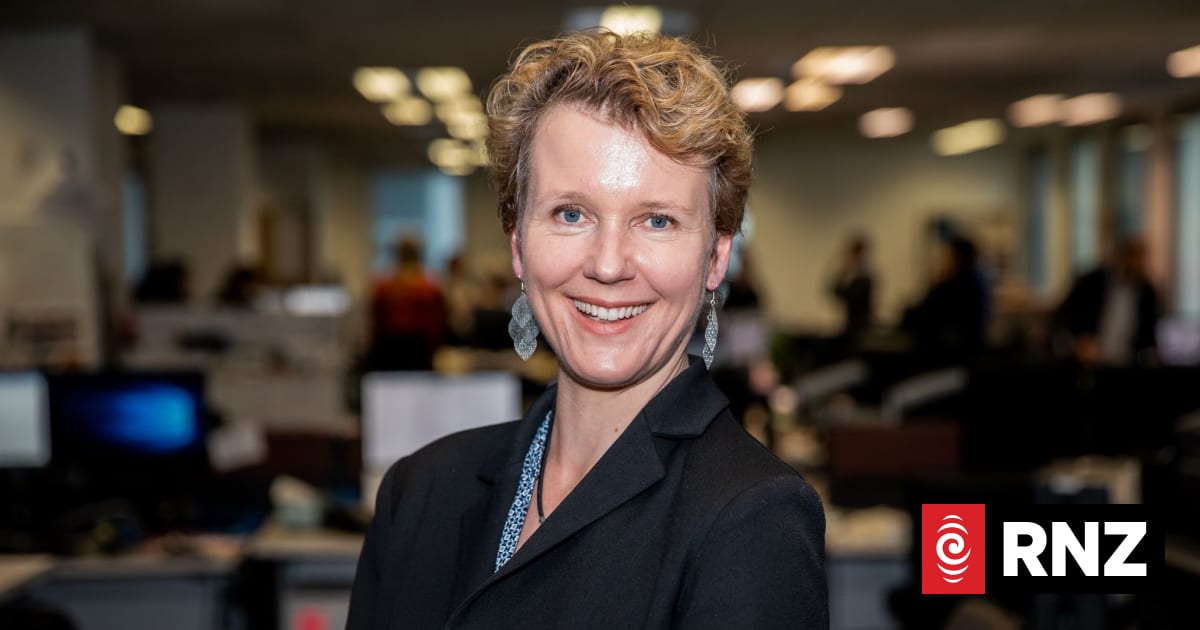
Infometrics chief forecaster Gareth Kiernan can remember putting his forecasts together back in 2019, and thinking how boring it was. “Nothing had really changed and things had evolved in line with our expectations.”
That had been the way through much of the second half of that decade, he said.
But since then, everything has been different.
Now, forecasts that are a bit boring would be a welcome reprieve.
First there was Covid, where predictions of economic doom turned out to be unfounded – at least at first.
The uncertainty of economic forecasting
Then there was the inflation surge, which took the Reserve Bank by surprise.
Russia’s moves against Ukraine sent an economic shock around the world, US President Donald Trump’s trade tariffs added volatility, and then conflict in the Middle East sent oil prices soaring again. Sharemarkets have continued to hit highs despite warnings of an impending bust.
That’s tough going for economic forecasters, who as ANZ’s Sharon Zollner once said, have at times had track records that seemed designed to make weather forecasters look good.
What makes forecasting difficult?
Kiernan said forecasting was always more difficult when outcomes could be heavily influenced by the actions of a few people.
“At the moment, President Trump is an individual with a large amount of influence, whose decisions are highly unpredictable and don’t seem to follow any logic or consistent ideology.”

Infometrics chief forecaster Gareth Kiernan.
RNZ / Rebekah Parsons-King
He said it was also hard to forecast for things with no precedent, such as the Covid-19 pandemic, or when variables or outcomes were moving outside historical boundaries. At the moment, that is the case for people trying to make forecasts about what might happen with sharemarkets.
“As a forecaster, these are often the sorts of situations where you need to make a call about when and how quickly a variable might return to normal or, more bravely, why this time is different and we’re not going to get a correction.
“Sometimes these variables can be reasonably incidental to a broader forecast, but often the assumptions you make as a forecaster will have significant flow-on effects to other parts of the forecast – a correction in the US stock market could have significant negative effects on business and consumer spending, weighing heavily on broader economic growth as well, stretching government finances further …”
He said when forecasters were making assumptions about things on a continuum, it was easy to be slightly wrong. But when it was a binary outcome, such as whether conflict would continue in the Middle East or not, or whether petrol prices would stay very high and as a result keep household spending down, it started to be a more “all or nothing” forecast.
ASB acting chief economist Kim Mundy said, with every update she tried to make the point that everything could change quickly, because a lot is hanging on what happens in the Middle East, which is very difficult to predict.
Does it matter?
Zollner said it could be a problem when forecasts were being relied on to create policy, such as by the Reserve Bank.
“I don’t think we’re brave enough to actually ask the question, given our forecasts are so bad, should we even be trying to use those forecasts to set monetary policy or should we just basically have rules based on the here and now with a fairly high threshold to diverge from those?”
She said it would be interesting to research whether that would lead to better outcomes over time.
“I think the best that monetary policy can do is stay nimble and humble, open-minded to all the reasons they could be wrong and to changing their minds.”
She said that had been the tone of recent Reserve Bank communications.
“I think they’ve been quite wise in how they’ve characterised the uncertainty and the fact that to some extent the market is going to be expected to make up its own minds as the data unfolds.”
Zollner said the Reserve Bank was taking a different approach to that of the US Federal Reserve, which had moved to offer markets less guidance.
She said the Reserve Bank was taking a different approach to that of the Federal Reserve, which is moving to offer less forward guidance.
“There is certainly a range of views out there about what the best reaction to uncertainty is… They have to [take a view]. They can’t just abstain and say, oh, I don’t know, we’ll come back in a year and see how things are looking. They have to do their best to balance the risk of getting it wrong in either direction. They’re very open about that, but that’s the best they can do and that is what they are trying to do. That’s a reasonable approach.”

Kelly Eckhold.
Supplied / LinkedIn
Westpac chief economist Kelly Eckhold said central banks sometimes used scenario analysis to explain how things could change if inputs changed.
Mundy said it also highlighted one of the reasons why the Reserve Bank was emphasising how data dependent it was, as well as using things like business visits in its work.
“It’s also part of why we think the RBNZ will continue to hike over the coming two meetings to get the OCR back towards neutral levels. It’s easier to respond to unforeseen developments, such as inflation proving stickier than expected, from neutral settings, than from a position where monetary policy is still accommodative.
“In general, navigating a negative supply shock where uncertainty is elevated is a tricky spot for any central bank to find itself in.”
How do we get back to more certainty?
Eckhold said, to return to a more predictable environment, there would have to be a return to a Washington Consensus.
“Instead of pushing individual agendas, there’s a greater willingness to work together multilaterally to solve issues, as opposed to going off and starting your own war or your own trade way, all those sorts of things that have been going on in the last 10 years.
“It really picked up most significantly when Russia annexed part of Ukraine…then it’s been overlaid with tensions with China, which have ebbed and flowed depending on administrations, then even more aggression with the Ukraine and Russia and now the Middle East as well.”
Sign up for Money with Susan Edmunds, a weekly newsletter covering all the things that affect how we make and spend money