
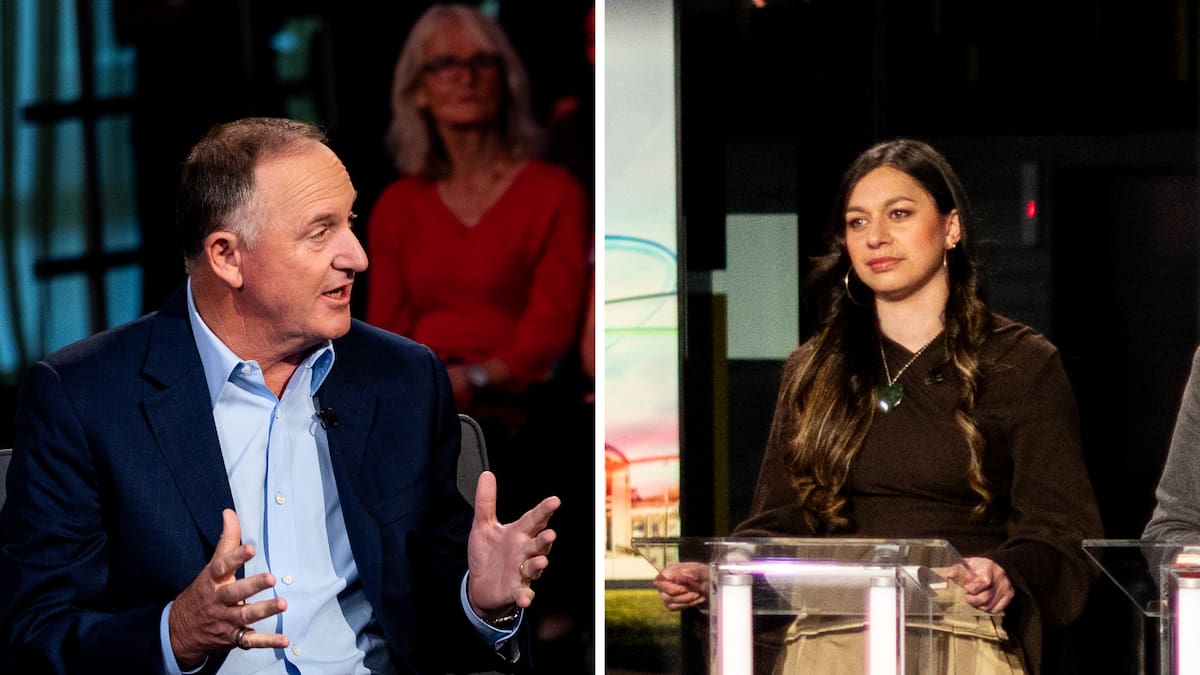
He made his points so calmly and convincingly that he appeared to win a debate he wasn’t actually contesting. At times, he did better than either of the Chrisses at their debate.
Seemingly out of nowhere, Key decided to take issue with a section of Tuesday night’s leaders’ debate which pondered whether it was morally acceptable to be a billionaire.
Key asked “what sort of wowsers have we become?” and compared celebrating successful businesspeople with celebrating sportspeople and artists.
“We’re going to celebrate the Warriors and the All Blacks … but if you’ve built a world-class space company like Peter Beck, that’s morally offensive?
“If you’re Graeme Hart and built the best packaging business in the world, that’s morally offensive?” Key asked, rhetorically.
“That is nuts!” he said, saying New Zealand needed to celebrate all success, including success that made people wealthy.
Later, he also took aim at the Greens’ and NZ First’s opposition to gene technology, warning it was undermining New Zealand’s competitiveness in agriculture. Again, gene technology was only tangentially related to the debate topic, but Key clearly wanted to make a point about National’s opponents and their allegedly ruinous policy so he went ahead and made it.
Paul was also watching Tuesday night’s leaders’ debate and posted to social media that she did not think it was morally acceptable to live in a society with billionaires.
Bridge warmed Paul up by saying he was going to ask about “the ‘B’ word” – billionaires.
“A few grenades lobbed in that panel before,” Paul said, referencing Key.
Asked whether billionaires were immoral, Paul, who at times seemed to have more fun debating Bridge than her fellow candidates, said: “Well, Ryan, you referenced my TikTok video so clearly you’ve watched the two-and-a-half-minute video that I made about it – and it’s parasitic.”
Paul said she did think being a billionaire was immoral.
“They need to pay their fair share. I’m not saying they should not exist altogether, I’m saying they need to pay their fair share. Why do nurses, teachers and tradies pay more of an effective tax rate [than billionaires]?” Paul said.
As is often the case with these battle royale formats (there were seven candidates on stage), it was impossible to pick a winner.
Paul seemed to have the most fun, but also showed a bit of policy backbone often lacking from her blunt, sometimes crass, social media blasts.
National’s finance spokeswoman Nicola Willis was probably the most accomplished debater. In a time when voters are clearly feeling fed up with the status quo, and all parties agree things have been tough, it is very hard to be the incumbent.
She wisely got stuck into Barbara Edmonds over Labour leader Chris Hipkins signalling during Tuesday night’s debate he might soften the one-hour reading, writing and maths mandate in schools, leaving it to schools to determine.
The panels were pretty clear: education is key to the future.
And education was a topic on which most public commentators seemed to think National leader Christopher Luxon bettered Hipkins.
Edmonds herself had a decent interjection. When Willis explained Luxon’s openness to phasing out bottom trawling, she said she was “in agreement with the Prime Minister – that’s how this works”.
“They’ve had a vote of confidence twice, by the way,” Edmonds said to some laughter.
Candidates at the Future of New Zealand debate. Photo / Dean Purcell
Te Pāti Māori’s Oriini Kaipara didn’t do a great job explaining why her party hadn’t costed its climate policy (she said it would evolve as the climate evolves).
NZ First’s Shane Jones’ ear-splitting interjections may have had viewers reaching for the volume control. What plays well in Parliament doesn’t always play well on TV.
Poor Opportunity’s Daniel Eb, standing next to Jones, looked positively deafened.