
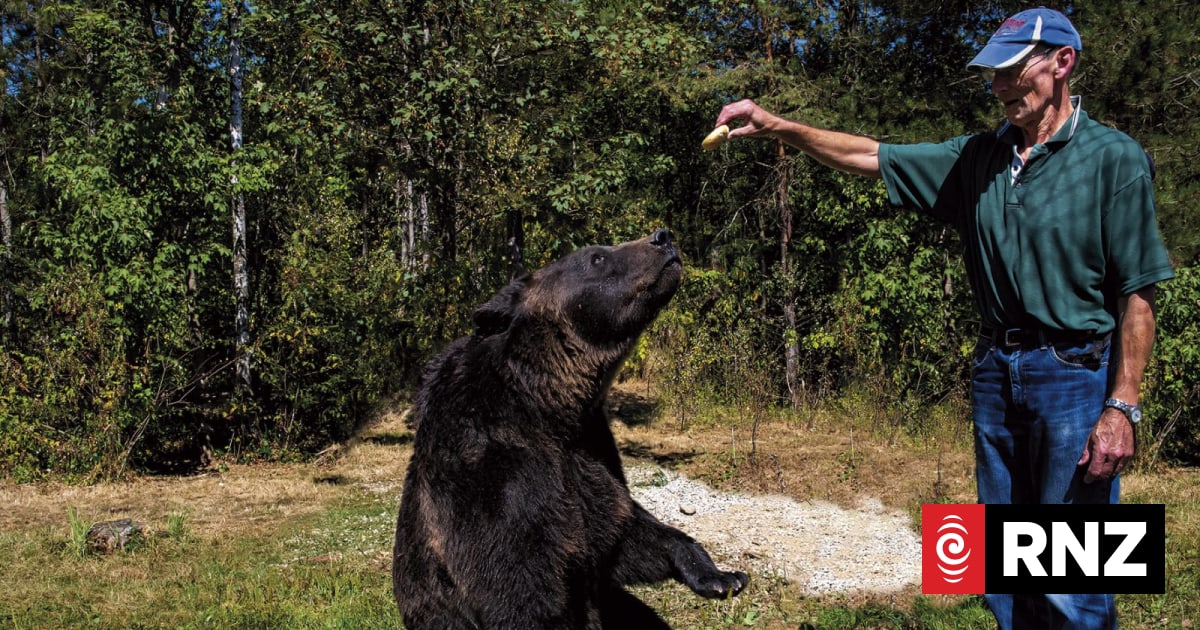
Winter is closing in at a forest in Bavaria, and former Wellington zookeeper John Pickard is giving the resident bears there a helping hand to hibernate.
He works at a bear sanctuary run by the German charity Gewerkschaft für Tiere eV, where 11 bears live on 11 hectares in fenced off enclosures on a reforested block once used by the German Army during the Cold War era.
Several of the bears are ex circus animals, and others have come from Eastern Europe where they were used as money earners after the collapse of communism, Pickard told Country Life.
The Kiwi among bears in Bavaria
Follow Country Life on Apple Podcasts, Spotify, iHeart or wherever you get your podcasts.
“They’ve been in private ownership, terrible little cages, boxes, even cages in the corner of restaurants.
“One was going to be made into a dancing bear. She’s had all her teeth cut off flat.”
There are several bear sanctuaries in Germany, and Pickard said it was good to see the number of bears needing rescue were declining.
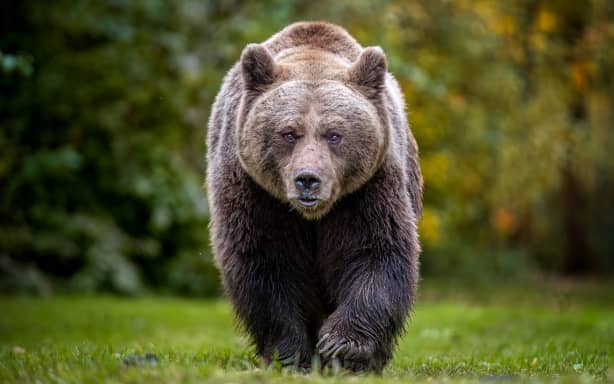
Rescue bear Lucy, one of the bears Gnadenhof für Bären in Bavaria, run by the charity Gewerkschaft für Tiere eV
Gewerkschaft für Tiere eV
“The last circus bear that was in Germany was here. He got confiscated. The circus had left him on the side of the motorway in a parking area in his wagon unattended for several days, and that was reported to the local council and they confiscated them and sent them to us.”
Pickard is on his second stint looking after the bears since starting at Gnadenhof für Bären not far from Munich in 2011.
“The first thing is to get them back into a natural yearly rhythm. Most of them haven’t been allowed to hibernate and so we do that, mostly… with the diet.”
As winter draws near, the bears are being fed 16 kilograms of food to prepare them for their long winter sleep.
Pickard said it took them a long time to drop behaviours forced on them living in cages.
“They often have that stereotype behaviour that you see of bears in zoos where they’re pacing backwards and forwards and things like that, and it reflects the size of the cage they came out of usually.”
Pickard, 70, lives on site and starts the day off making up the feed and giving it to the bears at close range while remaining protected behind the wire.
“It’s a very active job. I could say it’s almost starting to wear me out. I’ve only got six months to go, I’ll make it,” he laughed.
The basic diet is a mixture of vegetables, fruit and nuts, with bread “good for weight gain” in the run up to winter.
Sometimes hunters drop off a deer carcass for the bear’s weekly serving of meat.
Pickard learnt a lot about bears during a year at the zoo in Cologne and was involved in the successful breeding of sun bears at Wellington Zoo.
With many years under his belt observing the mammal, he has contributed papers on bear behaviour for zoology publications.
“It’s a challenge to me, being able to work with an animal like this and being able to get on with them without being actually in contact with them.
“Understanding them, basically, and being able to read their behaviour because when you look at stuff about brown bears, it often says that they don’t really signal their behaviour very much.
“Well, I disagree with that. If you work with them long enough, you can read them.”
Pickard plans to return to the Bay of Plenty and work with conservation groups looking after New Zealand’s endangered birds.