
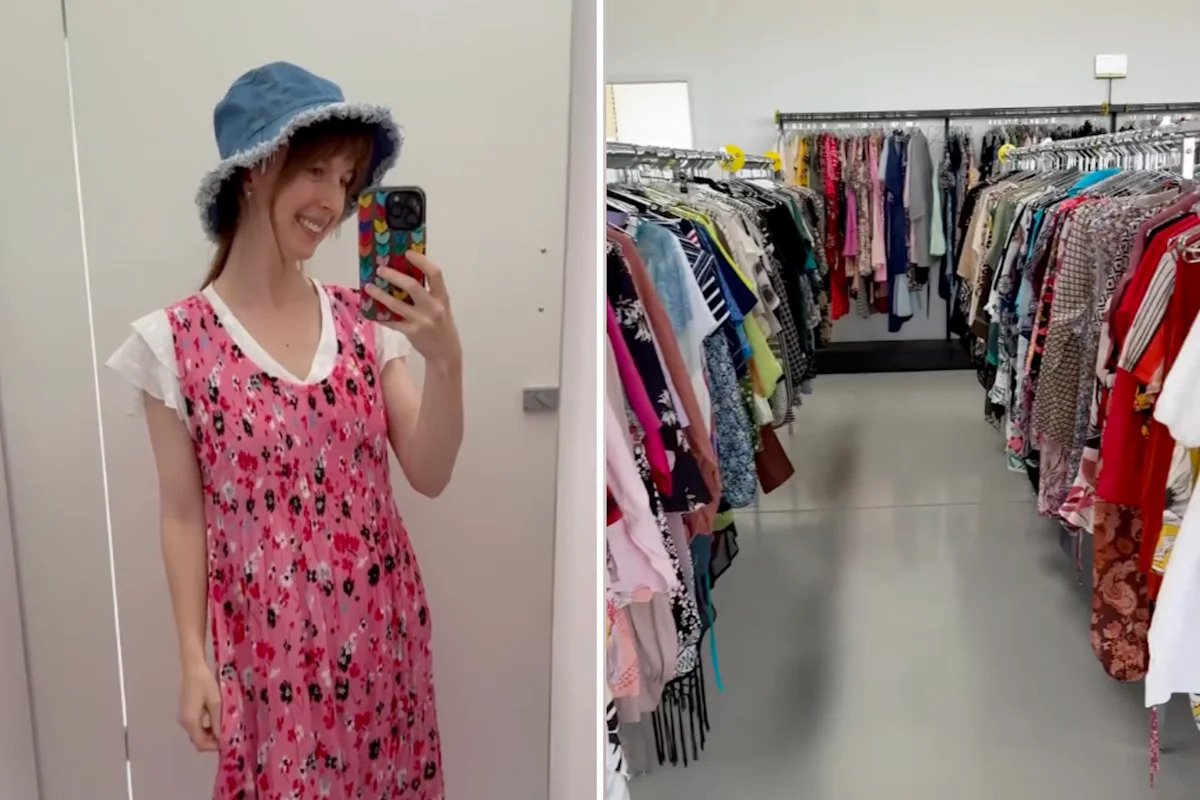
As Aussies complain about budget clothing carrying premium price tags in op shops, one store is bucking the trend and offering a cheap solution to turn over an influx of fast-fashion donations.
Kate Hannah has been thrift shopping for more than 15 years. But because of ultra-fast fashion brands such as Shein, Temu and Kmart’s Anko, browsing the aisles “presents a unique challenge”, she said.
“Before you just didn’t have this glut of the really cheap ultra-fast fashion clogging up thrift stores for the employees to deal with, and also for customers to have to sift through,” she told Yahoo News.
On a recent trip to the Salvos Store in Treendale, south of Perth, she found a solution she was happy to see.

On the store floor, Kate found a bin labelled for Shein clothing only.
“Fill a bag for $10,” the sign reads, adding that no refunds will be accepted.
In a second bin of Anko clothing, the store posted that it was selling pieces for $2 each.
“I think it’s great to see,” Kate said. “I’ve been to op shops over the years that were selling at a per kilo price.”
Have you spotted a cheap deal at a charity shop? Contact newsroomau@yahoonews.com

Kate believes two new bins at her local thrift store are a great solution to thrift stores’ overwhelming problem. Source: Kate Hannah
Why are clothes reselling for so cheap?
Dr Tamzin Rollason, a lecturer at RMIT and expert in sustainable fashion consumption, said Kate’s recent thrift find “is really an indication of a problem that op shops and thrift shops are having to deal with”
As ultra-fast fashion grows, clothing largely made from plastics such as polyester, elastane, and nylon is also being made “fast” and “poorly constructed,” Dr Rollason explained.
She said these “poorly made” garments only give shoppers a few wears.
She said the “crazy thing” is that because the textiles are made of plastic, the fabric lasts forever.

Over the past few years, op shops across the country have been inundated with fast-fashion brands. Right: Sustainable fashion expert Tamzin Rollason. Source: Kate Hannah/RMIT
In a statement shared with Yahoo, Shein argued that while its clothing is sold at an “affordable price”, it does not necessarily mean “low-quality or disposable clothing”.
It claims Aussie customers have said re-wearing clothing is the “norm”, pointing to a 2025 Global Circularity Study that surveyed more than 600 Shein customers in Australia and found that 30 to 40 per cent of respondents have worn Shein garments 50 times “before passing them on”.
“The same study found that 81 per cent of Australian respondents had often or sometimes donated clothing to charities or non-profits in the previous 12 months,” Shein added.
For years, many op-shops and thrift stores across the country have reported being burdened by fast-fashion brands.
While donating clothing bought from ultra-fast-fashion retailers to Salvos or Vinnies may seem well-intentioned, Dr Rollason said it actually passes on a costly stress.
Every year, charities across the country spend an estimated $13 million combined to send 60,000 tonnes of unusable donations to landfill, according to Planet Ark’s Recycling Near You.
“That’s money [charities] can’t spend on supporting families escaping from domestic violence or communities that have been affected by natural disaster, homeless people,” Dr Rollason stressed.
Roughly 30 per cent of all donations to Vinnies are made up of fast-fashion brands, Anuja Mukim from the St Vincent de Paul Society told SBS’ The Feed.

Kate stresses that the “ultimate onus” should be on manufacturers, not shoppers looking for affordable clothing options. Noosa Council/Facebook
Some Aussie stores are outright banning brands like Anko, Shein, or Temu from their shop floors because of low sales, she added.
RELATED:What should Aussies do instead of donating?
Dr Rollason said the best way to avoid “shifting the burden off to a charity” or throwing clothes in the landfill is to be more intentional when you shop.
However, thrift shopper Kate stresses the “ultimate onus” should be on manufacturers.
“As consumers, we’re empowered to make choices, but people do have limitations,” the Bunbury resident said.
“There are cost factors to think of as well. It’s important not to put the burden solely on people at an individual level.”

If you have clothes you would like to get rid of, but they’re not good enough quality to be resold, Dr Rollason also recommends clothing collection services such as Upparel and After, which can take them off your hands.
These textile recycling companies offer ways to divert clothing from landfill, costing $20 to $150 depending on the amount of clothes.
Yahoo News has reached out to Kmart for comment, but did not receive comment in time for publication.
You can also follow us on Facebook, Instagram, TikTok, X and YouTube.