
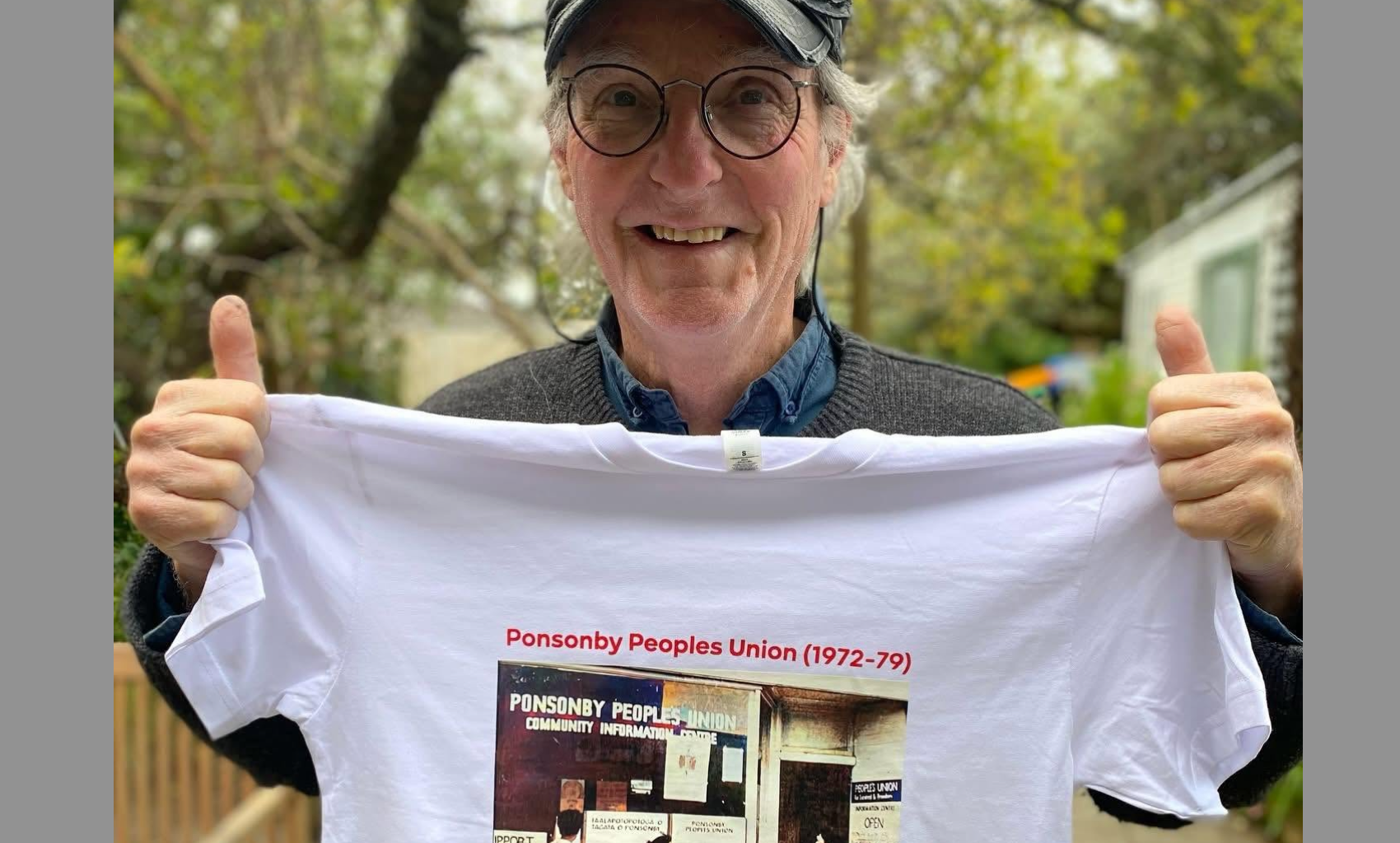
Comment: Roger Fowler died earlier this year. I went out to his Māngere home at the weekend where his partner Lyn still lives. He is still there in a glass cabinet with photos of whānau and friends who have also passed, in the memorabilia of their lives, in the large living room where many gathered over the years, and where we talked about the last parts of his life.
The story of his life is positive, I will come to that. But the last parts were marred by the many casual cruelties of our health system.
Lyn can document them in great detail. She was his constant presence and support. The many hurts to Roger and his whānau are still felt as she recounts just some of them with me. The story does not need the detail. The pattern, the picture, the essence is what matters both for Roger’s whanau and for the many other stories which match and confirm his.
The constant shifting between places, public and private, for different services. The practical challenges of transport and personal movement involved.
The overwhelming documentation, its varying availability and use.
The changing people and authorities, even treatment preferences, to navigate.
The harsh and demeaning language of some clinicians.
The defensive and protective response to questions or possible criticism.
The silence and silencing of staff in the face of patient maltreatment.

Want to stay across stories like this? Start your day with Newsroom’s top stories and analysis in your inbox.
All of this far too common experience culminating for Roger’s whānau with a decision taken in a carpark that a vital, physician-ordered service be described as wasteful and denied because he was in a final stage of death, which he was not.
An insult deepened by silence in response to an approach to a regulatory authority, followed by a simple, probably automated, request to evaluate their non-existent service.
It all dehumanised and diminished Roger and his whānau to objects. To numbers and costs. The very opposite of a good health service.
While politicians and health administrators prattle about being “patient-centred”.
I’ve recently been involved, through Kaitiaki Hauora, with two genuinely patient-centred community based organisations (“Patient Voice” and “Patient Safety”) which respond and seek solutions to the many experiences with mirror Roger’s. Another “Health Hikoi” travels the motu on the same task, gathering stories and solutions. These are all about humanising our health services and bringing people together in that cause. They rally human stories against accounting reports.
It’s really obvious how much this matters to us all and how much it relates to under-funding, under-staffing, over-stress and disorganisation of our health services.
We need more health and more care in our approach to healthcare.
Roger never claimed to be special or sought special treatment. He was the antithesis of those. I was very struck by the cruel irony of this. His whole life was devoted to community service – as a political activist and provider of all kinds of social assistance in his community.
His own solution to everything was practical action from housing, to food, to education wherever it was lacking. The solutions always related to and involved community. Public services with fair access and cost delivered with aroha.
In the end he was badly let down by public services which have lost touch with that. I want to honour Roger not just be drawing attention to this but by expanding that attention to the wider faults and processes which create such experiences. I don’t recall Roger being one to say simply ‘this is no good!’. But rather to address what the causes, consequences, and possible creative responses are.
He wrote and performed a song about this very thing – “Ballad of Rau Williams” – in honour of a 63 year old man who passed due to refusal of treatment. He asked:
Would all those officials still coldly declare
We can’t do a thing – we’re sorry to say
Would they still shrug their shoulders and all turn away?
They call it rationing, they can say what they will
But who needs a hospital with a licence to kill?
We all need a health system that embodies a duty and intent to care and too often we do not have that.
The current multiple health crises are the outcome of a process which did not begin with the present government but rather is the entropy which began right when the public health system was established way back in the late 1930s.
As a core part of the social security system established then was a fully public health system based on community values. The private doctors at that time were part of the British GP group which campaigned to have the primary health care system left in private hands. They succeeded.
In many ways that system (private but mainly public funded) was suitable enough for society at that time – though not of course for marginalised, especially Māori communities. As society and economy changed (under governments of different names) more and more of the health service shifted into private hands. Private hospitals and clinics, laboratories, midwifery, the list goes on. Strongly public funded but privately owned and operated, filling gaps both by design and default.
Today our nominally public health system spends as much on other services as its own. Its own service has been industrialised into a model of corporate financing and delivery far closer to applied capitalism than common interest. No wonder it struggles to deliver what people need where and how they need it.
Because this hybrid (mongrel?) private/public model is evolved in haphazard fashion no-one really understands how it should work – the Ministry of Health, which is ostensibly the “steward” of the system, is itself as much a passive captive of it than master planner and director.
I’m frequently in discussion with both private and public managers, financiers and clinicians in the system who express intense frustration about it. This matters, but not as much as the hurt and frustration of patients and their whānau. The politicians will not solve this by bickering and tinkering, not by simply throwing more money at it. The system has to be re-thought back to its core based on community values.
Roger and his experience is something of an inspiration to that.
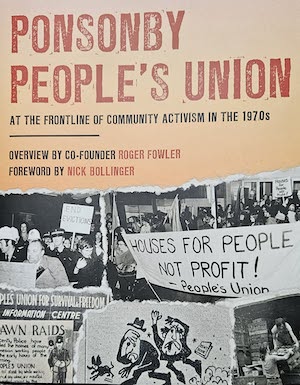 ‘Ponsonby People’s Union – At the Frontline of Community Activism in the 1970s’, by Roger Fowler and other activists, was published this weekend.
As it happens he passed away around the time that the Ponsonby People’s Union which he, with others, founded was recognising its 50th anniversary. A good publication and associated events currently mark the story of this community and political activism which should be instructive and inspiring to others today. The whole ethos of the Peoples Union was one of practical service from transport to food to tenancy advice combined with political education and agitation (and plenty of celebration too).
This was the era of the Polynesian Panthers on migrant rights, Ngā Tamatoa on Māori rights, housing rent and quality, anti-nuclear and other peace and environmental causes, women’s rights – you know, the same issues we have today if in some different forms.
Roger never left that path at either the local, national or global level. From Māngere to Palestine he was a voice, a companion and a contributor wherever he saw unfairness. When I reflect on his life I realise how limited and weak any efforts of mine have been.
I was sure, as we left their home after a few short hours of talanoa, that Roger and Lyn want their pain to generate response. Kaitiaki Hauora, other health issues campaigners like Health Coalition, Ora Taiao, the many kaupapa Māori and patient voices together articulate the need for stronger, public, community providers where care drives cost not cost drives care.
We all die. But we have a right to do so after good healthcare, not without it.