
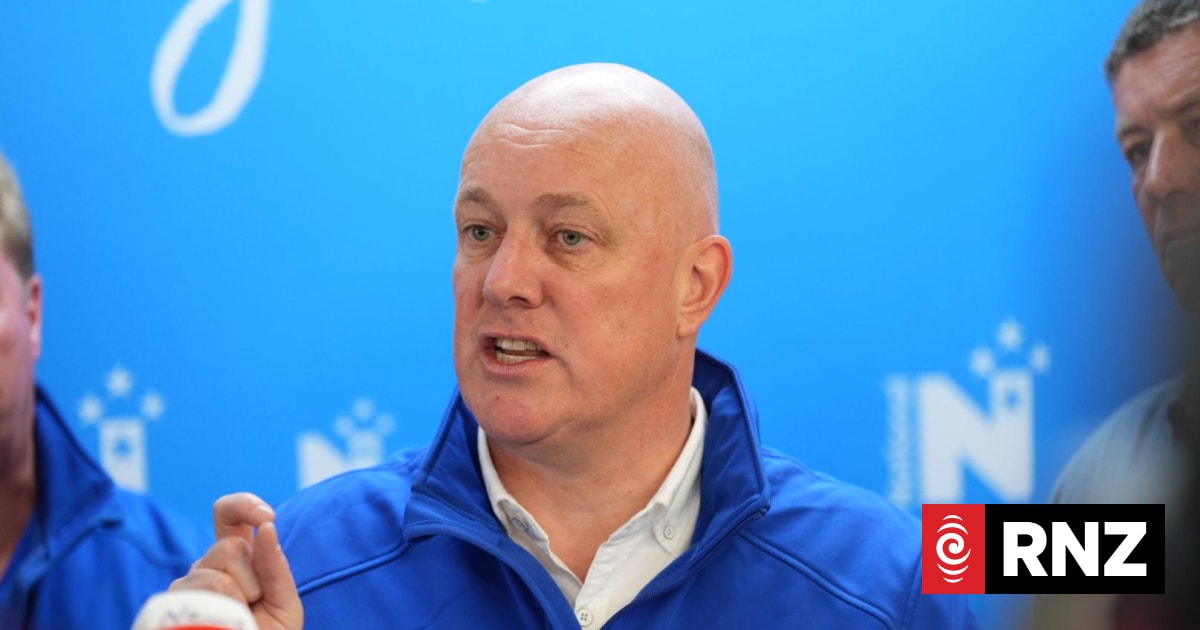
AI may represent a “huge opportunity” for New Zealand, but there are still “serious dangers and evils” associated with the technology, says Christopher Luxon.
Luxon is sticking with the coalition government’s strategy of regulating with a light touch, while Labour is promising to dump the strategy if elected.
Meanwhile, an AI expert says the way AI was used to help write the strategy raises questions.
The National Party leader said he thought there were “some serious dangers and evils associated with artificial intelligence” at the leader’s debate last week, suggesting a new framework is needed.
But asked later by RNZ if he stood by the official national AI strategy – launched in July 2025 – or would commit to changing it, Luxon did not address the question. “AI represents a huge opportunity for New Zealand” to get wealthier, he said in a statement.
While there were dangers, these could be managed, he said.
National’s technology spokesperson Penny Simmonds said on Friday the party was sticking with the strategy. “Yes, but look, we’re keeping a really close eye.”
Labour told RNZ it would replace the strategy with its action plan to set up high-level oversight, like Australia has just done.
Draft versions of the NZ strategy were changed a lot during a process in which AI helped with ideas at the final stage.
“AI was used for some aspects of content ideation,” the Ministry of Business, Innovation and Employment (MBIE) said in the frontpiece of the short strategy report.
AI lecturer Dr Andrew Lensen of Victoria University – who had used the Official Information Act to question MBIE’s process- said it remained unclear how much AI had to do with contributing ideas to the final version.
Lots on reducing barriers, less on safeguards
The final strategy has much more to say about barriers than safeguards.
The drafts mention reducing barriers to businesses adopting AI just twice, while the final version refers to barriers more than a dozen times.
The drafts mention safety – or variants like “safeguards” – more than a dozen times, but the 22-page final version has three mentions. The 37-page Australian AI plan mentions safety more than 50 times.
Simmonds said the final strategy was balanced. “It’s proportionate to the risks that are there.”
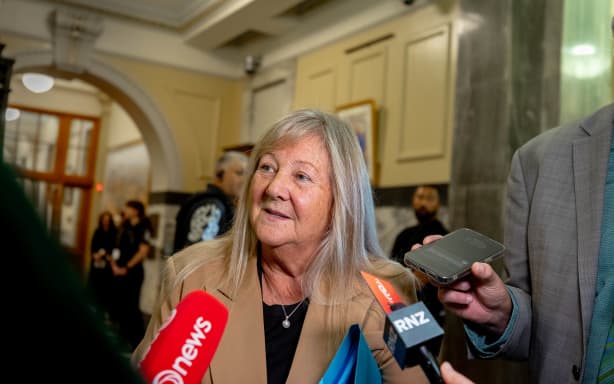
National’s technology spokesperson Penny Simmonds
RNZ / Mark Papalii
Lensen said the two drafts had some balance, but the final version was “very starkly different”.
“In the last 12 months we’ve seen a lot of issues with AI… and their strategy quite clearly doesn’t address those sufficiently,” Lensen told RNZ.
The strategy itself says part of its role is to address “media coverage that often emphasises dystopian scenarios”, which created uncertainty.
Lensen said some reporting was melodramatic, but “the coalition’s approach of trying to underplay it, which is what I think they have done, is equally as dangerous”.
‘AI policy window is open. We need to act’ – OpenAI
The threats have mounted rapidly this year.
Since advanced AI models began escaping testbeds and hacking government and company systems of their own volition in May, AI developers themselves have been urging lawmakers to step in, and some have done so in other countries.
“We need to act… We’ve reached a new chapter in AI capabilities, and that demands a new chapter for AI policy,” said US developer OpenAI – whose test models hacked the Australian government.
Rival Anthropic set out a plan to slow developers down and work on policy.
The unprecedented autonomous hacking, swarm behaviour and models’ use of chatrooms to hatch plots has fuelled a renewed global debate whether AI poses an existential risk to humanity. Microsoft founder Bill Gates says it does.
Australia responded quickly by adding new AI control mechanisms up to the highest level of government and a joint select committee to look at regulation, after earlier setting up an AI safety institute, which many countries have.
Canberra’s national AI plan – released in December – says: “Government will not hesitate to intervene.”
NZ’s national strategy talks about updating laws and rules to match any new risks, and Simmonds echoed this on Friday.
“The AI strategy… as well as the business guidance that we put out then as well, and the public service framework, is all about promoting responsible use of AI,” she said.
The strategy talks about the “responsible” development, use and innovation of AI a dozen times – “New Zealand will be a confident, capable, and responsible player in the global AI economy.”
A Cabinet paper in June 2025 – which sought approval of the strategy- mentioned “responsible” AI seven times. It backed the economic focus.
But there is new global debate about responsibility framed as starting mainly at the point of “use”. Since the unprecedented autonomous hack of Hugging Face, the debate has shifted to the loss of control of AI models and systemic risk.
“What if we create something that acts intelligently and volitionally in the world, becomes faster and more capable than human beings across many domains, and receives a huge amount of agency that human beings have surrendered to machines?” asked New York Times commentator Ezra Klein last week when he interviewed a top OpenAI safety exec who had just quit, saying it was likely models were setting out to evade controls.
The NZ strategy mentions autonomy once.
It also says legislation and regulatory tools would be updated where “new risks and unintended interactions with AI arise”.
What updates?
Asked by RNZ what his government had updated since mid-2025, Luxon did not say.
Simmonds said: “We’ve got officials across a number of government departments looking very closely at any changes that are occurring globally. We want to be fast followers of good practice rather than trying to be right out in the front.”
Lensen said it was “all moving very slowly” amid the fast-moving threats.
MBIE said it had updated digital technology standards in line with Australia; appointed 35 local experts to eight international standards committees; and was developing advice for ministers on AI and copyright and on datacentres. It had also put out AI guidelines for business.
Lensen called this “underwhelming”.
Standards could be helpful guides but needed the enforcement power of legislation, he said. There was a member’s bill on deepfakes, but more was needed, he said.
The ministry said it continued to assess whether existing settings remained fit for purpose.
“Existing laws continue to apply to AI, with targeted changes considered where evidence shows they are needed.”
Lensen said of the coalition Government: “I don’t feel like they’ve been doing that effectively at all. They haven’t actually addressed the risks at all, to be honest.”
AI riches versus risks
New Zealand ranks 32 out of 45 high-income countries in Global Index on Responsible AI. The UK is seventh, Australia is 22nd, and the US is 25th, with seven much lower-income countries ahead of NZ.
Hipkins agreed the threat was existential in the leaders’ debate last week.
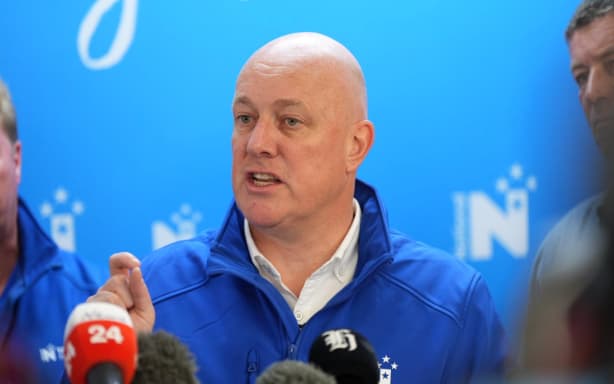
National leader Christopher Luxon.
SANELE CHADWICK / RNZ
Luxon, pressed on this, said: “Well, I think there are some dangers.
“I think what we need to do in order to deal with those dangers is work with other like-minded countries to make sure we have got the regulatory frameworks in place … now is the opportunity for us as political leaders and business leaders to come together and work out a framework where we can get the benefits of AI but we also can manage those dangers,” he told the debate.
Simmonds on Friday said: “He [Luxon] said there is both opportunities and risks to it. So we have to be careful that we’re not so heavy-handed in dealing with the risks that we stifle the opportunities. And we also have to be really careful that we don’t regulate on hypothetical scenarios.”
The coalition Government has for several years promoted a “light touch” approach to AI, while emphasising the risk of falling behind on AI and the datacentre rollout.
“We believe that business is best placed to decide how to incorporate AI into their operations, rather than through direct government intervention. I am therefore proposing that government take a light touch, principle-based approach to enable AI innovation to flourish across the economy,” says the June 2025 Cabinet paper.’
In 2024, Technology Minister Judith Collins said: “We already have laws that provide some guardrails; further regulatory intervention should only be considered to unlock innovation or address acute risks and use existing mechanisms in preference to developing a standalone AI Act.”
Luxon told RNZ last week the risks needed managing by working with like-minded countries, adopting the OECD principles and sharing insights with the Five Eyes intelligence group.
The National Cyber Security Centre was working on “both the productivity opportunity and managing the risks”, he said.
The national strategy does not use the term “national security”, by contrast with Australia’s strategy that is almost twice as long.
The minister’s foreword in the strategy embodied its overall tone: “The Government aims to encourage investment in AI adoption by reducing uncertainty, removing unintended and unwanted barriers to AI in legislation, and providing clear guidance on responsible AI innovation within New Zealand’s existing legal framework.”
The Privacy Commissioner said in 2025 the strategy missed the chance “to fully consider risks, concerns, and barriers to uptake”, and missed out on analysis of safeguards.
‘Staff were encouraged to use Copilot’
Lensen began questioning MBIE on how it drew up the strategy soon after it came out.
It had declared up front that AI helped with “ideation” – ideas – for the final version.
It told Lensen that its staff were told how to use AI properly and that they consulted widely on the strategy.
Between doing the drafts and the final version in May 2025, the ministry got licences for staff to use Microsoft’s Copilot AI model.
“Staff were encouraged to use Copilot to compare documents, generate ideas and images, summarise content, rewrite passages of text, and clarify citations etc.”
Lensen said: “That sort of does raise some concerns around … whether it’s a human in the room who’s actually driving this.”
He said it was a “strange approach”, given all the consultation and how important the document was positioned as.
RNZ asked Luxon if the way MBIE formed the strategy using AI raised questions for him, but he did not address the question.
Many public agencies have begun using Copilot a lot more in the past several years.
Labour would replace it
Labour told RNZ it did not use generative AI to prepare its AI action plan, which it said took years to develop.
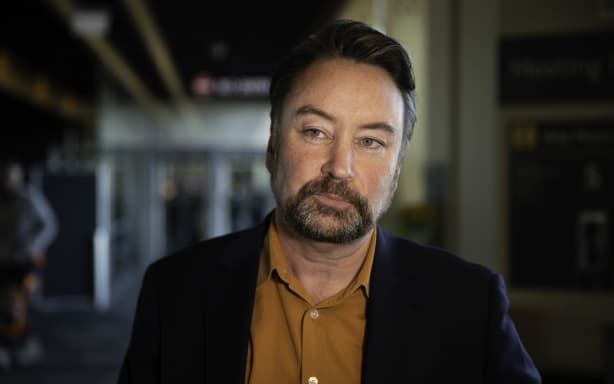
Labour’s technology spokesperson Reuben Davidson.
RNZ / Angus Dreaver
The plan launched on the campaign trail promises to establish an Office of AI within the Department of the Prime Minister and Cabinet – similar to Caberra’s new AI office – and work with Australia on regional safety standards.
“We’ve set out our action plan… the action plan and the steps in the action plan supersede the strategy,” said Labour’s technology spokesperson Reuben Davidson.
“That strategy wasn’t fit for purpose when National brought it in and it’s even less relevant now.”
Davidson said their new AI minister would seek assurances from big tech developers that they would quickly warn New Zealand if models escaped from testbeds, which did not happen when OpenAI’s models hacked the Australians.
Simmonds said National did not want to set up a separate AI office or safety agency – it was better to spread out the AI response across departments.
As for Australia’s select committee on AI, they would watch what it came up with and had not ruled out following suit.
There was existing legislation that could apply to AI – privacy and consumer guarantees, for instance – and guidelines and business pilots, she said.
“We’ve got to be very clear that there are opportunities and risks.
“It’s a fast-moving technology and we have to be really careful that we are watching closely with what is happening in other parts of the world.”