
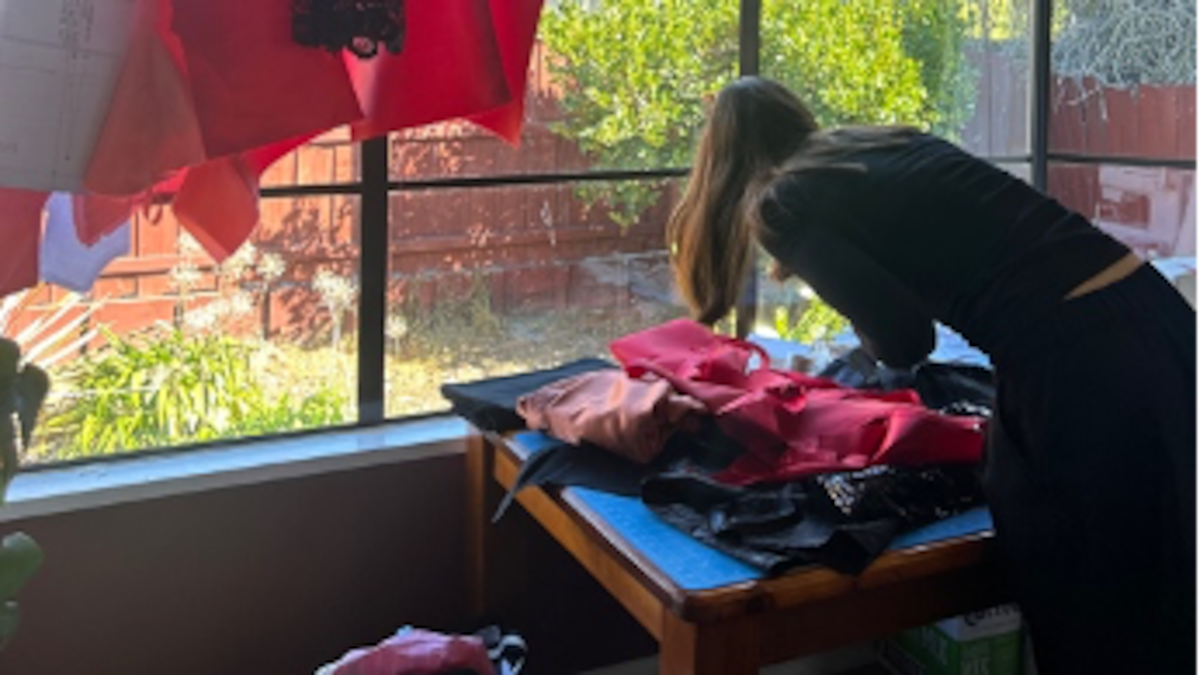
She is particularly interested in satin and silk and made her first pair of shorts from an $8 metre-long piece of fabric from Tom’s Emporium.
Jessica Kinzett taught herself to sew.
She calculated she could make four pairs of shorts in her size from the one piece of fabric, noting this was better value for money than anything off the rack.
After wearing them to a 21st birthday, where friends repeatedly asked where they could buy them, she was encouraged to turn her hobby into a business.
“Nowhere really sells what I am making, or if they do, it’s so expensive. If it works out, it works out; if it doesn’t, it doesn’t. But I hope it does; it’s fun.”
Kinzett is entering a clothing market worth $5.14 billion in New Zealand, with clothing, footwear and personal accessories retailers generating that amount in sales in the year to March 2026.
After purchasing her own sewing machine, she is building her collection from her flat in St Albans while balancing fulltime study and working two jobs.
Her ambitions extend beyond Christchurch, with dreams of showing her designs at international fashion weeks including Milan and New York.
“When I volunteered at New Zealand Fashion Week last year, I felt that this was where I was meant to be,” she said.
Christchurch-born designer Caitlin Crisp, who recently opened New Zealand Fashion Week 2026, said young designers should not underestimate the city as a starting point.
“The power of online media is huge,” she said. “I think you can build a very strong brand and following based in Christchurch. Christchurch has a small but strong manufacturing industry.”
Caitlin Crisp opening for New Zealand Fashion Week this year. Photo / Cameron Pitney
Crisp said Kinzett should not be afraid to pursue her ambitions and there was much to learn along the way.
“What worked for me might not work for her. Find what works for you and build on that,” she said.
New Zealand Fashion Week creative director Dan Ahwa said there is room for emerging New Zealand labels, but they need to establish their audience and unique offerings.
“Having a point of difference is important in a market already saturated by sameness.”
Ahwa said designers hoping to turn a collection into a sustainable business need to “[understand] the customer, price intelligently, production and cashflow, and create reliable relationships with retailers, suppliers and collaborators”.
Kinzett hopes to complete her pieces by the end of October, with her patterns still to be graded and a launch video to be released in November.
As a marketing student, she wants to focus on the packaging, labels and tags to create a complete customer experience.
Designing all her own patterns, she intends to offer a more elevated alternative to typical Kiwi summer clothing.
“I feel like a lot of summer clothing is beachy styles, which is cool, but I’m a city girl.”
She aims to have her pieces worn year-round.
“I know how annoying it is when you have amazing garments in your wardrobe and feeling like you can only wear them when you’re feeling good.
“Even when you are feeling not like your best self, you can wear Kinzett.”
Crisp said building a fashion career was a long-term process, having graduated from fashion school and started her career in the industry.
“It doesn’t matter where you come from. It’s about what you do with that talent, how much you want it, how hard you’re willing to work for it and refusing to give up,” Crisp said.