
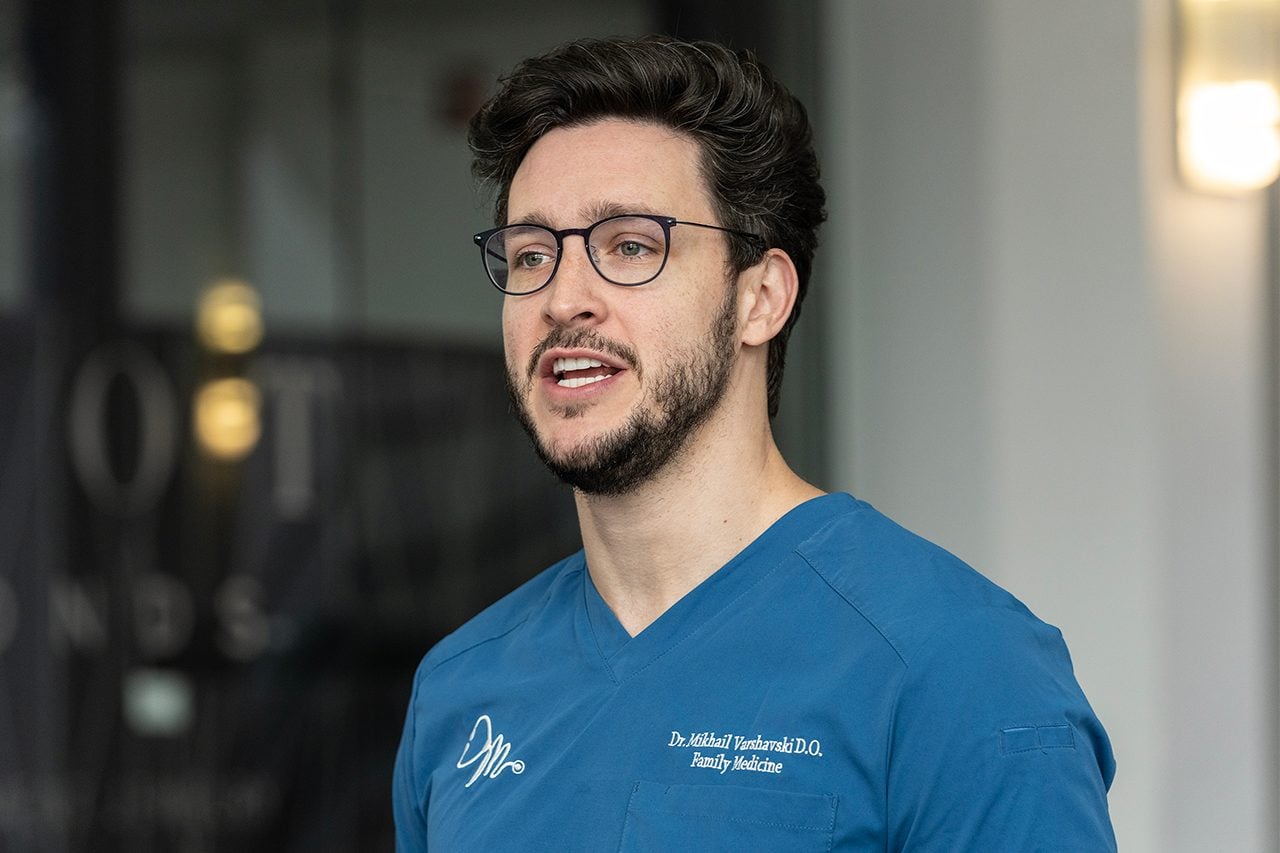
Mikhail Varshavski, DO—better known to his millions of online followers as Doctor Mike—has the kind of schedule that makes you wonder how he does it all. He’s a practicing family medicine doctor, not to mention a podcast host, a boxer, and an online media personality with more than 15 million subscribers on YouTube alone.
So when it comes to staying fueled throughout his jam-packed days, he knows the importance of protein on both a professional and personal level. The 36-year-old doctor is now partnering with Quest Nutrition. It’s something he says was a natural fit, because he was already a fan of their products and felt comfortable recommending them.
Ahead, Doctor Mike speaks candidly with The Healthy, sharing his thoughts on the “trend” of protein, his healthy aging advice, and why he devotes so much time to debunking prevalent health myths.
Find out how your favorite stars stay well when you subscribe to The Healthy newsletter
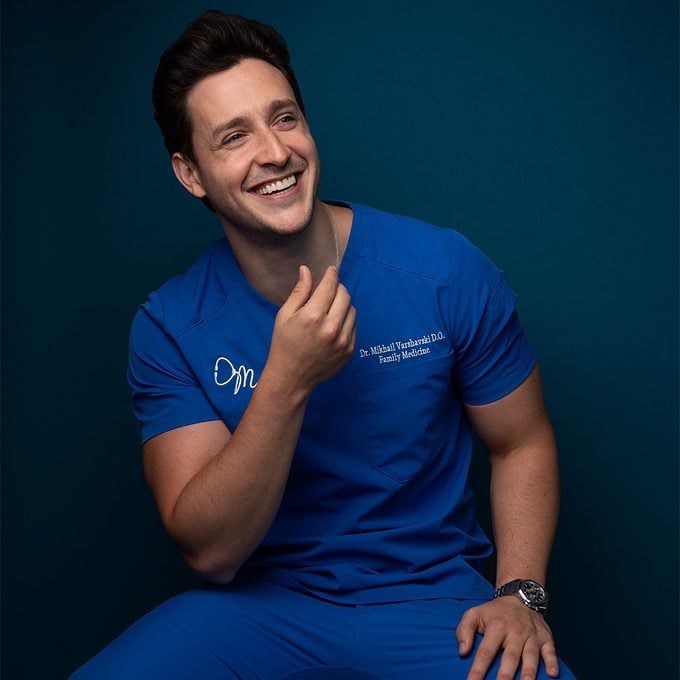 COURTESY DM OPERATIONS INC.
The Healthy: It’s fair to say protein has become a trendy health conversation in recent years. As a medical expert, what’s your take on it as a “trend”? Are there components you wish people were more mindful of?
Doctor Mike: Yeah, when it comes to nutrition, dieting fads are not new. This has been a staple of nutrition communication in media since the earliest days of media and health. So usually what happens with fad diets, there is a lot of times negative components or dangerous components. But what gets me excited about this new movement is that it’s focusing on a macronutrient. That is one that helps a very vital organ in our body known as muscle, and muscle is extremely important for longevity, not just for living longer, but having a healthy lifespan where you can be functional, you can be independent, you can be strong, you can basically show up at your highest potential. So while I’m usually downplaying trends or oftentimes trying to have people pump their brakes … very early on in those trends, when it comes to protein, I get kind of excited.
The one situation that I would want to point out to your readers is that when it comes to protein, we need to realize that, while this is a macronutrient that can support muscle, it can bring calories to the body in a way where you’re getting a secondary benefit by stimulating muscle synthesis.
We also need to realize that nutrition goes past one number, the same way that we in healthcare oftentimes say that your weight can have an implication on your health. It’s not the sole implication; it’s only one number and only a single glimpse into your health. There are many other factors at play. And when it comes to nutrition, just because you eat protein does not necessarily you’re always eating healthy or complete. So we need to not overly zoom in on protein and realize there’s a lot of other valuable nutrients that we could be missing out on.
The Healthy: Obviously we know about the classic forms of protein, such as eggs, meats, or nuts, but let’s talk about snacks specifically. Which protein-packed snacks would get Doctor Mike’s thumbs up?
Doctor Mike: Well, if I’m giving this a hierarchy rating, for me, whole-food protein snacks are always what people should strive to eat, if possible. So, right away, what comes to mind is a Greek yogurt, a cottage cheese, you mentioned eggs—I love hard-boiled eggs for breakfast, that’s kind of my go-to snack in the morning. But at the same time, we have to remember that the best protein snack that I would recommend is one that you can actually use, meaning that it’s something that you can transport easily, something that you enjoy eating, something that could be a part of your routine.
That’s why I’m so proud of this partnership with Quest because I love their products. I’ve been eating them for years, and I very much have recommended them to friends and family even before this partnership, from their protein bars [to] the Quest protein chips. [They’re] very delicious, tasty treats that also help me match and meet my protein goals throughout the day, especially when I’m on the go, being that I am not just practicing as a doctor, but also making content on social media. I’m a professional boxer, an amateur race car driver. So I’m desperately needing to manage my time. And I realize that whenever I make a recommendation in a public health sphere, the best recommendation is one ultimately that people can follow. And when it comes to these protein snacks, Quest is my choice.
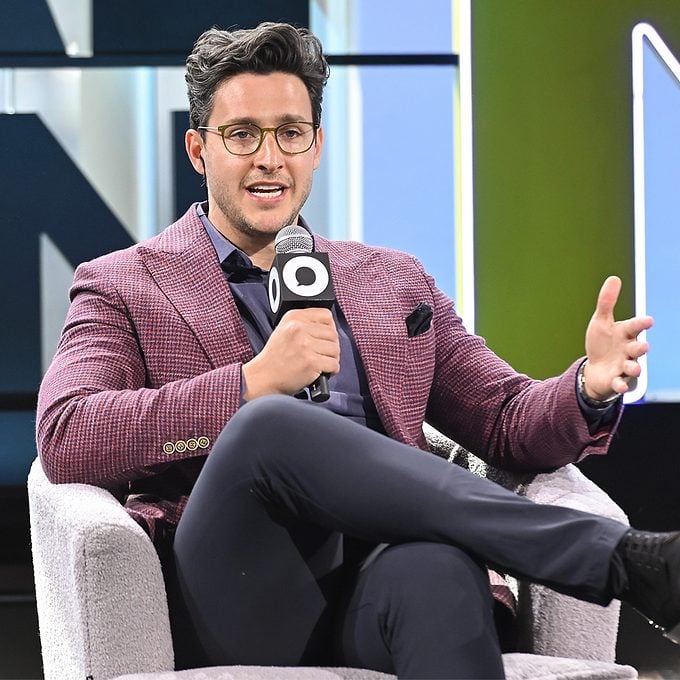 Noam Galai/Getty Images
The Healthy: Related to that, obviously your millions of followers pay attention when you endorse something. What drew you to this particular partnership?
Doctor Mike: Yeah, we’re actually incredibly protective of the partners that we work with, because we understand that when I discuss a partnership, it’s different than when a random influencer does it. So I understand that there’s an added value of authority when I speak on a subject.
So for me, given the fact that this was a product I’ve already endorsed, recommended on a personal level, on a professional level, nothing was changing about my messaging in bringing upon this partnership. And that’s what made it a no-brainer for us. It was a partnership that I was excited to dive into headfirst, and it’s, again, a product that makes meeting your protein goals, perhaps meeting your fiber goals, a little bit more accessible. And in this day and age, with how busy folks are, how difficult it is to meet your nutrition goals, I thought that partnering with Quest for me, again, was a total no-brainer.
The Healthy: If you were talking about the idea of longevity or healthy aging to your patients or your online followers, what are one or two things you’d want them to know or think about?
Doctor Mike: I think it’s a very hot topic right now. I’ll give you two things and my second one is a bit of a two-parter. Number one: In order to have healthy aging, you need to avoid bad habits that shorten your lifespan, that shorten your ability to stay independent, to stay functional, to achieve your goals. And usually this means not smoking, not over-consuming negative products like alcohol, drugs, that’s the general picture. So, avoidance of bad habits is the best thing that you can do to improve your lifespan and your functionality.
The second thing is making sure you’re taking into consideration the few pillars of healthy living, which means healthy eating—a whole foods, plant-focused diet, not necessarily only plant-based, but plant-focused diet where you’re getting fruits, vegetables, healthy proteins; exercise—150 minutes is what we recommend weekly, generally speaking, [though] it can be dependent on the individual that we’re speaking to; and getting enough hours of sleep—crucial, undervalued, so much so. And then the final one is about mental health, which means something different to different people. For some, it means maintaining healthy relationships [with] friends. For some, it means getting help when you need it, working with a mental health specialist, with your primary care doctor, to make sure that you’re functioning to your best self.
Now, I mentioned that the part two was gonna be a two-parter. Because there are these pillars that are required for healthy living, you want to make sure that shiny objects don’t discourage you or distract you from investing in those healthy pillars. There are many shortcuts that are marketed online, on television, all over the place, that can actually promise you a miracle shortcut, whereby, you stop doing one of those healthy pillars in hopes of buying the miracle cure-all supplement, and that just does not exist.
The Healthy: Speaking of, you use your platform to do a lot of debunking—or perhaps simply explaining—either prevalent health myths or misconceptions. Why is it important to you to do that? And what do you wish more people understood?
Doctor Mike: For me, I think the absence of evidence-based healthcare providers on social media over the last decade online has hurt us tremendously, has hurt patients tremendously.
Because social media was a place where folks were coming to seek information, seek answers to their questions related to their health, and we were not there for them. Who was there for them? People who were spreading misinformation for their own gain. And we are now behind on trying to figure out how to learn these algorithms, learn these platforms in order to deliver a meaningful message.
I view social media as an extension of my practice as a family medicine doctor. You know, the beauty of my specialty is that we practice in the hospital, in the clinic, in the nursing home. We even make home visits sometimes. But then we were absent from the one place where people were seeking answers, and that’s why I’ve invested so much time in order to get people the answers that they want, whether they’re on the right, the left, the center, it doesn’t matter ’cause the truth should be for everybody. And scientific truth can absolutely change, but what we know now should be given to the people in the most unbiased, transparent way possible.
For daily wellness updates, subscribe to The Healthy newsletter and follow The Healthy on Facebook, Instagram, and Google. Keep reading:
This interview has been edited for length and clarity.